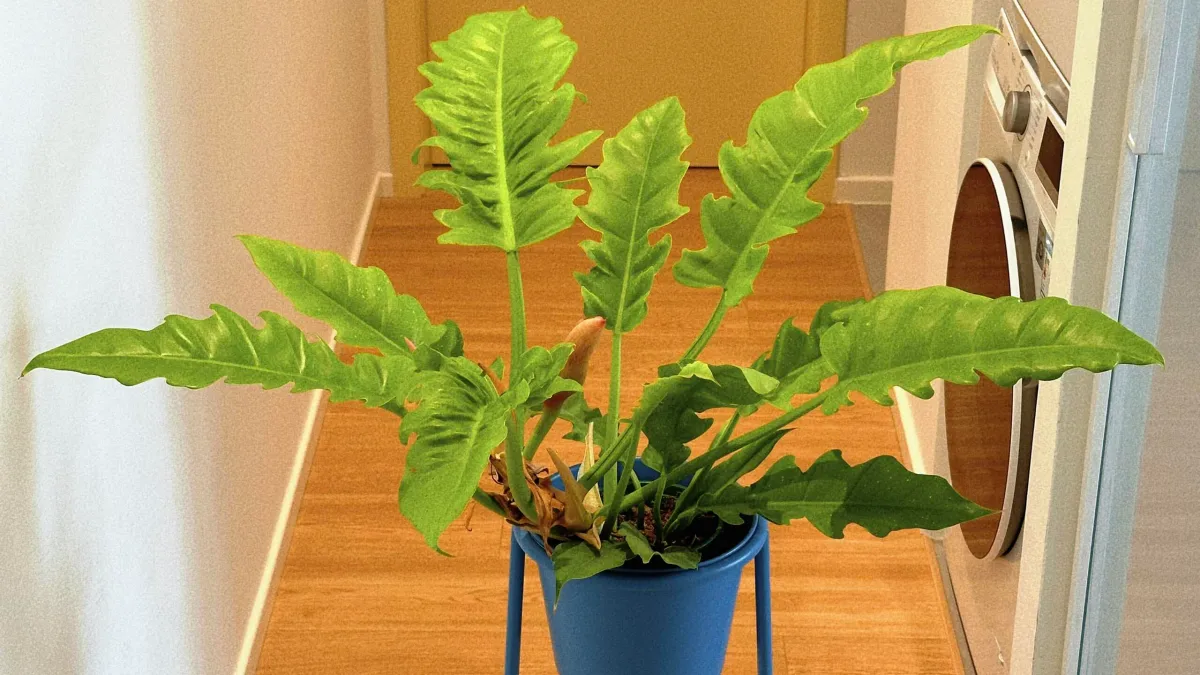
My Philodendron Ring of Fire did not impress me right away.
When I first started growing it, the plant was still small and the leaves were mostly scattered with light variegation. It was pretty, but not the kind of dramatic “flame” plant I had expected from photos online. For a while, I even thought of it as a quieter, more affordable stand-in for Philodendron Caramel Marble — nice to have, but not something I watched closely every week.
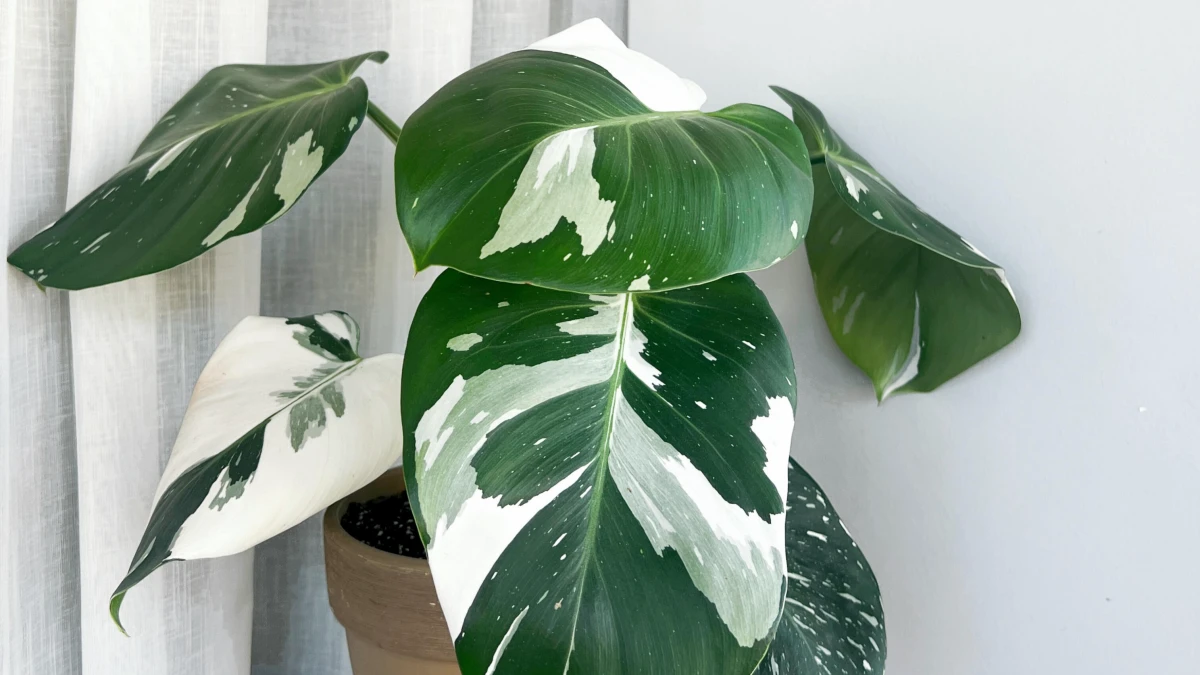
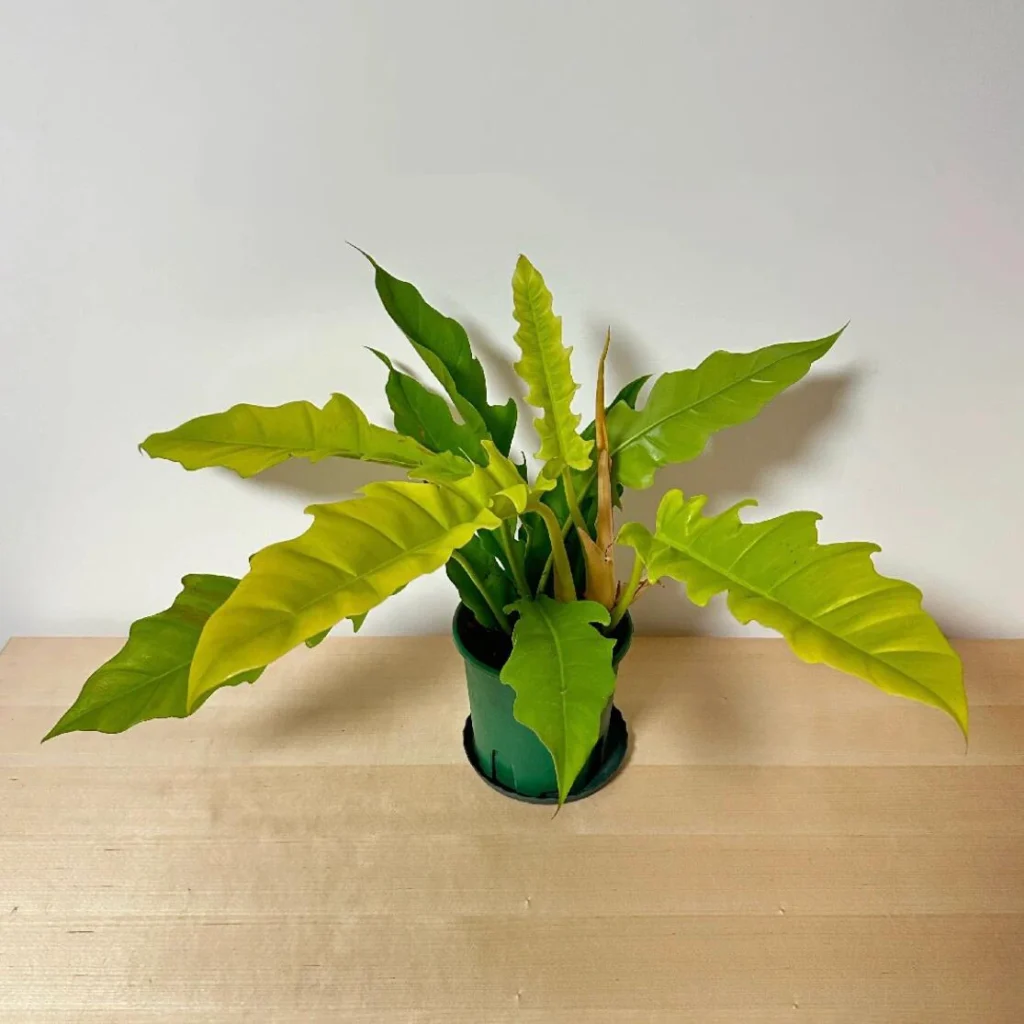
That changed after I moved it into a brighter and warmer spot for summer. With stronger filtered light and more active growth, the new leaves started to show richer color. The gold became warmer, the pale sections stood out more, and a few leaves even developed softer orange and pink tones.
That experience changed how I see this plant. I do not think Ring of Fire is a plant you should judge by one or two early leaves. This guide is not about forcing perfect variegation. It is about giving the plant enough light, warmth, root stability, and patience so it has a real chance to grow into its name.
Quick Notes for Real Indoor Growing
Before getting into the details, this is the simple version of how I grow Philodendron Ring of Fire indoors. It does not need complicated care, but it does need enough light and a stable root environment if you want better color.
| Need | What I Do |
|---|---|
| Light | Bright filtered light, not harsh direct sun |
| Water | Water when the top 2–3 cm of soil feels dry |
| Soil | Airy aroid mix with bark, perlite, or pumice |
| Humidity | Better around 60%, but it can still adapt below that |
| Pot | Do not rush it into a much larger pot |
| Growth | Slow to moderate, faster in warmth |
| Main issue | Low light makes the plant greener and less dramatic |
If I had to choose one thing to watch most closely, it would be light. Ring of Fire can tolerate a less-than-perfect spot, but better color usually starts with better brightness.
Why the Variegation Can Look Weak
Philodendron Ring of Fire does not always look fiery when it is young. Small plants often produce leaves with scattered variegation rather than large blocks of cream, gold, orange, or pink. That can feel disappointing if you bought the plant because of dramatic mature photos, but it is not always a sign that something is wrong.
I would not judge a Ring of Fire by one or two leaves. One leaf may come out mostly green, while the next one may carry more yellow or cream. The pattern can shift as the plant matures, especially when it starts growing more actively.
Variegation is not controlled by care alone. Genetics set the plant’s basic potential, and growth conditions decide how much of that potential you actually see. I do not worry about one plain leaf. I pay more attention when several new leaves in a row become greener, smaller, and less marked.
The Light Level That Actually Changed Mine
The biggest improvement in my Ring of Fire came from better light, not from fertilizer or constant adjustments.
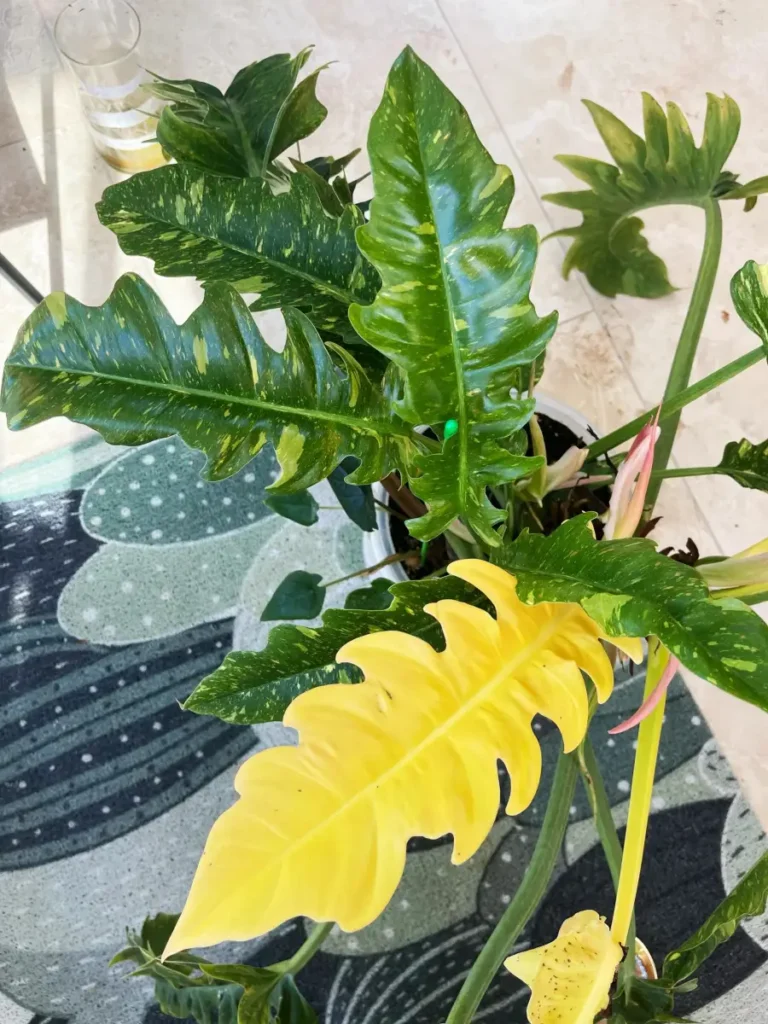
In my experience, this plant does best in bright filtered light. It can tolerate some lower light, but when I kept it too far from strong indoor light, the leaves stayed greener and the golden variegation looked weaker.
After I moved mine into a brighter, warmer spot, the new growth became more interesting. The gold looked warmer, the cream sections stood out more clearly, and some leaves started showing softer orange or pink tones. That does not mean every leaf became perfect, but the overall color improved.
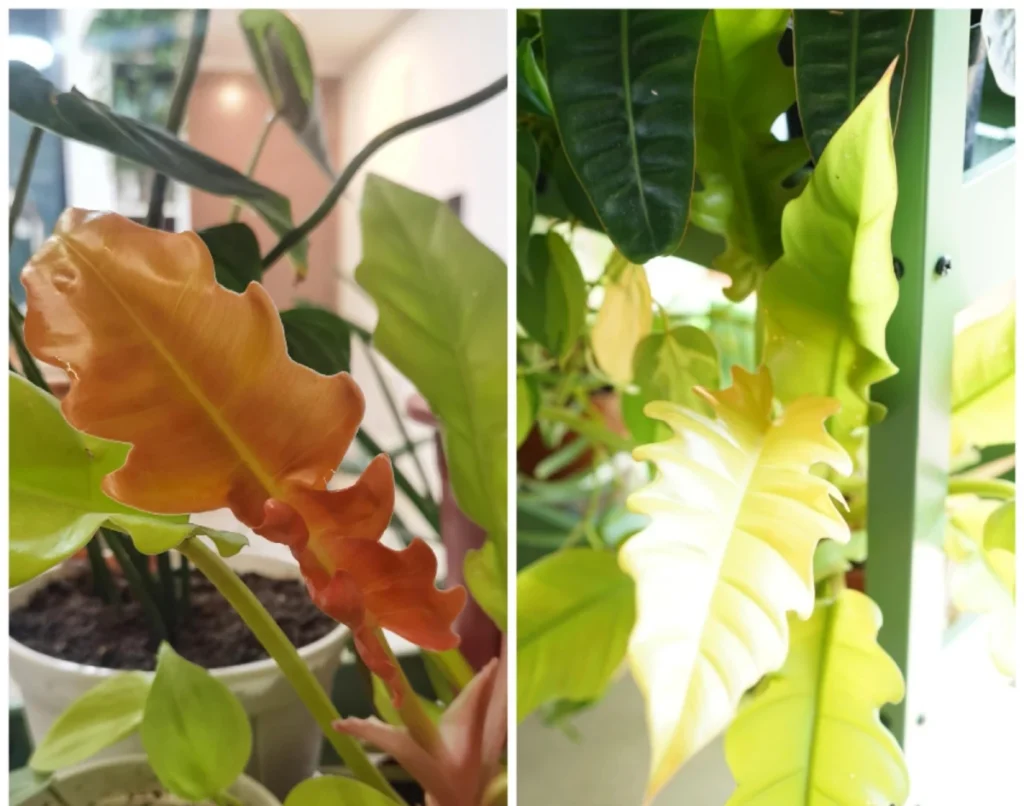
I would still be careful with direct sun. The pale parts of the leaves can burn more easily than the green tissue, especially if the plant has been growing in lower light for a long time. If I move a Ring of Fire brighter, I do it gradually instead of suddenly putting it into harsh afternoon sun.
If your plant keeps turning greener, I would first review how much light philodendrons actually need indoors. And if your room stays dark in winter or sits far from a good window, it may also help to think about whether a grow light is worth using in darker rooms.
Warmth Speeds It Up, But Heat Can Also Backfire
Warmth made a noticeable difference in how actively my Philodendron Ring of Fire grew. During summer, when my brighter growing area stayed roughly around 25–35°C, the plant pushed new growth more confidently and looked much more awake than it did in cooler, slower months.
But I would not simplify this into “the hotter, the better.”
Heat only helps when the plant has healthy roots, decent airflow, and a watering rhythm that matches the conditions. A warm room with fresh air and a breathable potting mix is very different from a hot corner where the soil stays wet and stagnant.
That is the situation I would watch carefully: heat, wet soil, and poor airflow together. In that setup, the roots can become stressed quickly, even if the plant looked strong before. I like warmth for Ring of Fire, but I do not use heat as an excuse to keep the pot constantly moist.
Water When the Pot Starts to Breathe Again
I water my Philodendron Ring of Fire when the top 2–3 cm of the mix feels dry. I do not wait until the whole pot turns completely dry, but I also do not water while the surface still feels damp and heavy.
When I do water, I water thoroughly until excess water runs out from the drainage holes. Then I let the pot drain properly. I do not want the bottom of the pot sitting in water, especially if the plant is indoors with less airflow.
During active growth, I can be a little more generous because the plant is using more water and the pot dries faster. In winter, I slow down. With weaker light and cooler indoor conditions, the same pot can stay wet much longer, and that is when “normal” watering can quietly become too much.
Ring of Fire likes steady moisture, but that does not mean it wants wet soil all the time. I think of watering as giving the roots moisture, then letting the pot breathe again before the next round.
If your watering routine feels hard to judge, I explain more about how I water philodendrons without keeping the pot wet all the time.
Pot, Roots, and Soil: Keep the Base Stable
Philodendron Ring of Fire is not a plant I would keep disturbing at the roots. Once it is settled and growing, I prefer to leave the root system alone unless there is a clear reason to repot.
I also would not move it into a much larger pot too early. A big pot can feel safer because the plant has more room, but indoors it often creates the opposite problem. More unused soil means the mix can stay wet for longer, especially if the plant is still small or not growing quickly. That slow-drying root zone is where trouble can start.
For this plant, I like a mix that is airy but still supportive. Ring of Fire can become a large, slightly top-heavy philodendron over time, so the mix needs to support the plant without becoming dense. A simple mix with bark, perlite or pumice, and peat or coco coir works well for me.
The exact recipe matters less than the way the pot behaves after watering. I want water to move through the mix, but I also want the roots to have some moisture without sitting in a heavy, stale pocket for days.
If you are adjusting the mix, start with a loose soil mix for philodendrons rather than a dense houseplant soil on its own. And if the plant starts yellowing, wobbling, or staying wet for too long after watering, it is worth checking for early signs of philodendron root rot.
Should You Prune It for Better Variegation?
Pruning can sometimes help a Philodendron Ring of Fire push new growth from a different point on the stem. When that happens, the new shoot may show a slightly different variegation pattern from the old growth.
But I would be careful about treating pruning as a guaranteed way to get bigger variegation. It can encourage a new growth point, but it cannot change the basic genetics of the plant. A stronger new shoot may look more colorful, or it may still come out mostly green.
I would only consider pruning when the plant is healthy, rooted, and actively growing. If the roots are weak, the plant has just been repotted, or it is sitting still in winter, cutting it back can create more stress than progress.
The cutting should also have a proper node if you want to propagate it. A leaf without a node will not grow into a new plant. For me, pruning Ring of Fire is not a first step. It is something I would only do after the plant is stable enough to recover and keep growing.
Give It Space Before It Starts Looking Awkward
A young Philodendron Ring of Fire can look easy to fit anywhere. Mine started as a small plant, and at that stage it did not seem like it would ever need much room.
That changes as it matures. The leaves become longer, the serrated edges look more dramatic, and the whole plant starts to take up more visual space. This is part of the appeal, but it also means Ring of Fire can look cramped if it stays squeezed between smaller plants on a narrow shelf.
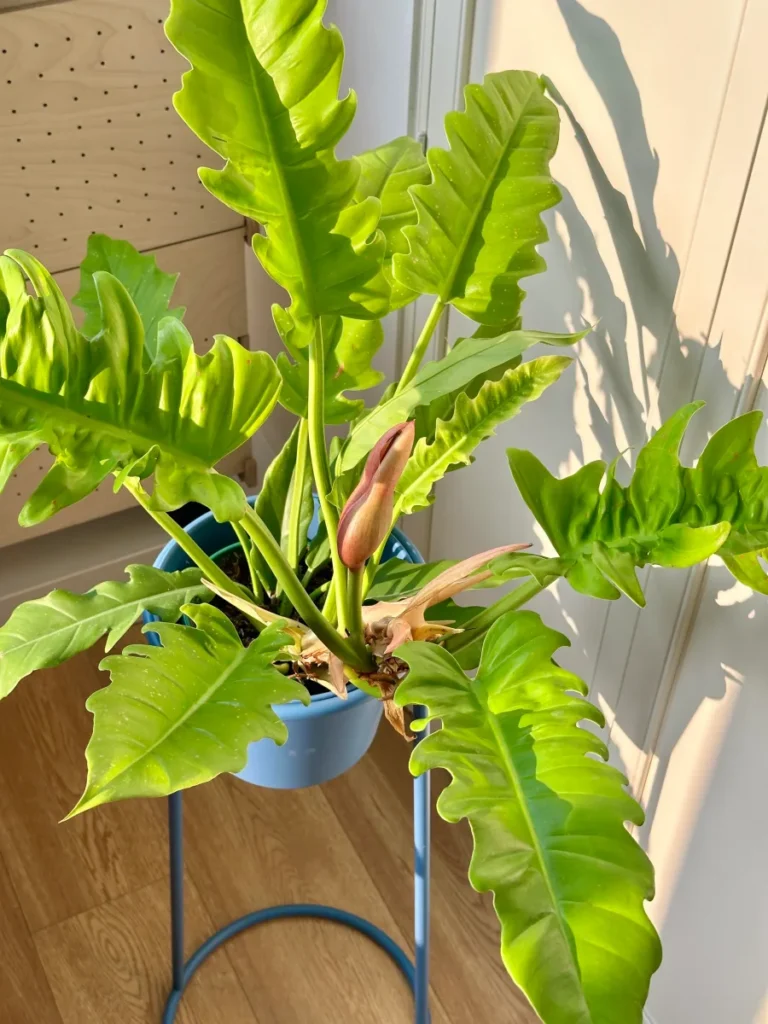
I think this plant looks best when the leaves have room to open and show their flame-like shape. If the new leaves are constantly pressing against a wall, a cabinet, or other plants, the shape gets lost.
If your space is limited, it is better to plan early. You may want to train it upward, prune it when it becomes too large, or keep the pot size modest so the plant does not outgrow its spot too quickly. Ring of Fire is not impossible to manage indoors, but it does ask for more space than it appears to need as a young plant. Once the stem starts leaning or the leaves begin crowding nearby plants, a small stake or moss pole can help keep the shape cleaner.
Quick Troubleshooting: What the Plant Is Usually Telling You
When Philodendron Ring of Fire looks off, I try to read the pattern before changing too many things at once. One strange leaf is not always a problem, but repeated changes usually point to something in the growing setup.
| What You See | Likely Cause | What I Would Check First |
|---|---|---|
| New leaves are mostly green | Light may be too weak, or the plant is still immature | Move it brighter gradually and watch the next few leaves |
| Pale parts turn crispy | Too much direct sun or very dry air | Reduce harsh sun and check the watering rhythm |
| Leaves yellow while soil stays wet | Root stress or overwatering | Check how fast the mix dries and whether the roots are healthy |
| Plant stops growing after repotting | Root disturbance or an oversized pot | Give it warmth and light, but avoid extra watering |
| Leaf tips dry out | Dry air, inconsistent moisture, or general stress | Check humidity and whether the pot is drying unevenly |
| Every leaf looks different | Normal for this cultivar | Judge several leaves over time, not one leaf |
For deeper symptom checks, I would compare the plant with yellow leaves on philodendrons, signs of an overwatered philodendron, and philodendron root rot. If the plant stays still for a long time even after light and watering look right, I would also compare it with the signs of a philodendron that has stopped growing.
Grow the Plant, Not Just the Variegation
Philodendron Ring of Fire is not a very difficult plant for me, but it is not a plant that gives a perfect show leaf every time either.
Some leaves may be bold and warm-toned. Some may be quieter. That is part of growing this cultivar. I would rather focus on giving it enough light, steady warmth, a breathable mix, and a stable root system than keep chasing one perfect variegated leaf.
The real pleasure of Ring of Fire is watching it slowly open up over time. A plain-looking young plant can still surprise you when it finally settles in and starts growing with more confidence.
So I would not give up on it too quickly. If the first few leaves look ordinary, grow the plant well first. The fire often comes later.
FAQ
Still exploring philodendron varieties?
If you like Ring of Fire for its changing color and unusual leaves, you may also enjoy Philodendron Florida Ghost for its pale new growth, Pink Princess Philodendron for pink variegation, and Philodendron Prince of Orange for warm-toned new leaves.
Go to Varieties Hub →