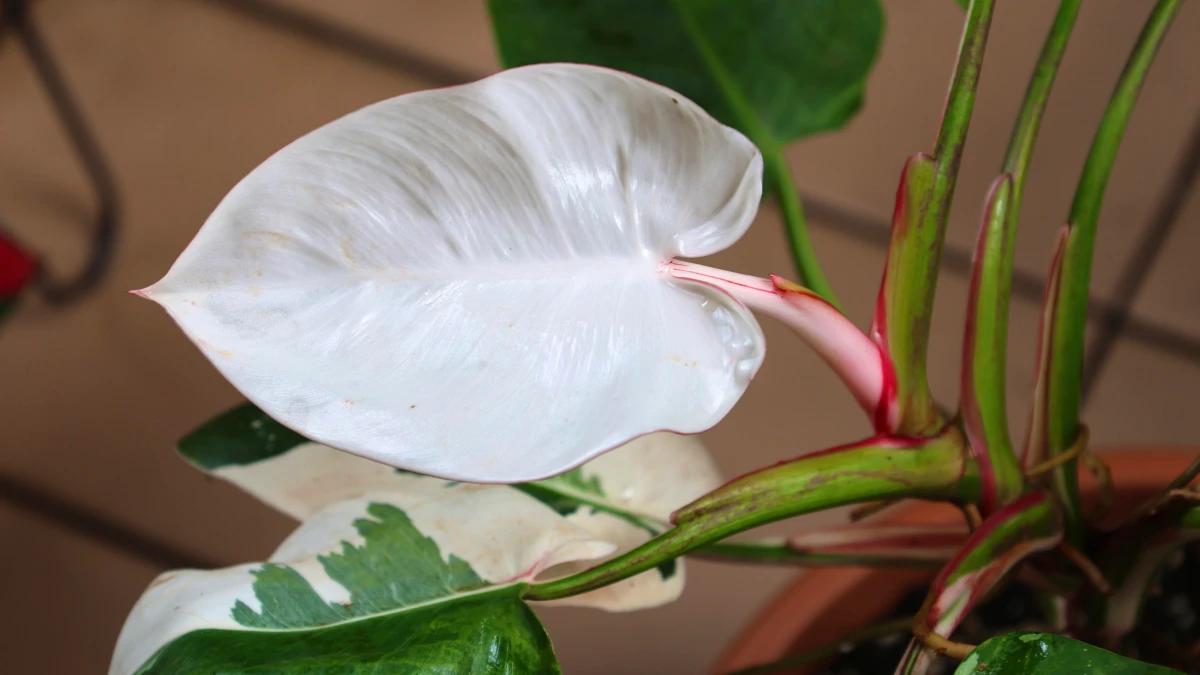
When I first started comparing Philodendron White Knight, White Princess, and White Wizard, I made the same mistake many people make: I looked at the white leaves first.
That sounds logical, because all three plants are grown for green-and-white variegation. A beautiful half-white leaf can immediately catch your eye. But after growing and comparing them more closely, I realized that the leaf alone can be misleading. A single white patch, a half-moon leaf, or a pale new leaf does not always tell me which plant I am looking at.
Now I use the stem as my first clue, then I look at the petiole, leaf shape, texture, and several leaves together.
This is not meant to be a strict botanical key. It is my practical home-grower method for telling these three plants apart when young plants, photos, or nursery labels make them confusing.
Quick Answer: The Stem Is the Fastest Clue
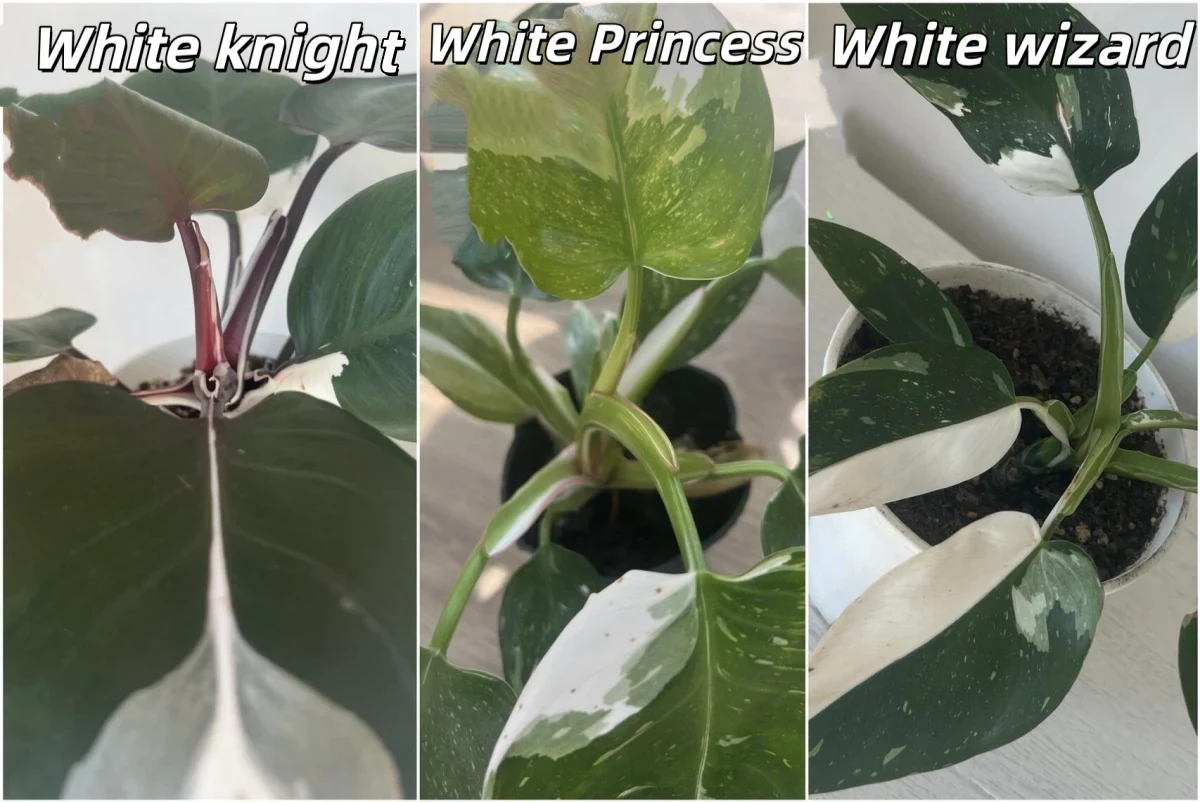
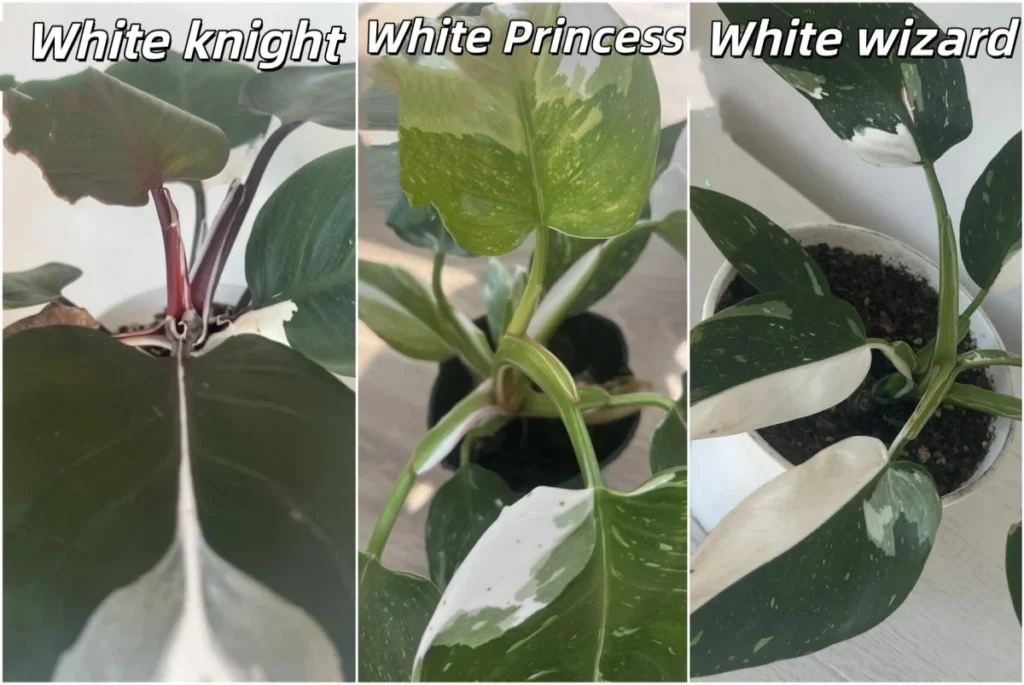
The easiest way I tell White Knight, White Princess, and White Wizard apart is by looking at the stem before I judge the white leaves. White Princess usually has green stems with pink or reddish lines. White Wizard usually has cleaner green-and-white stems. White Knight usually has darker burgundy or brownish-red stems with a thicker, more leathery leaf texture.
| Plant | Fastest Clue | What I Notice First |
|---|---|---|
| White Princess | Green stem with pink or reddish lines | Softer, narrower leaves; may show pink blush |
| White Wizard | Green-and-white stem | Cleaner blocky white variegation; rounder leaf shape |
| White Knight | Dark burgundy or brownish-red stem | Thicker, more leathery leaves; stronger stem contrast |
White Princess: Green Stems, Pink Lines, and Softer Leaves
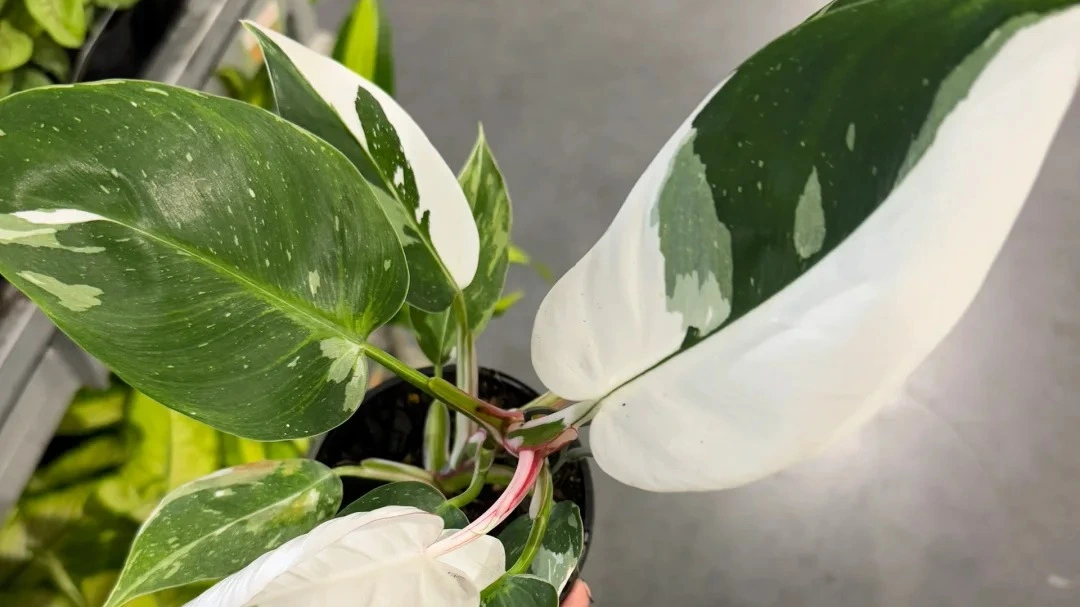
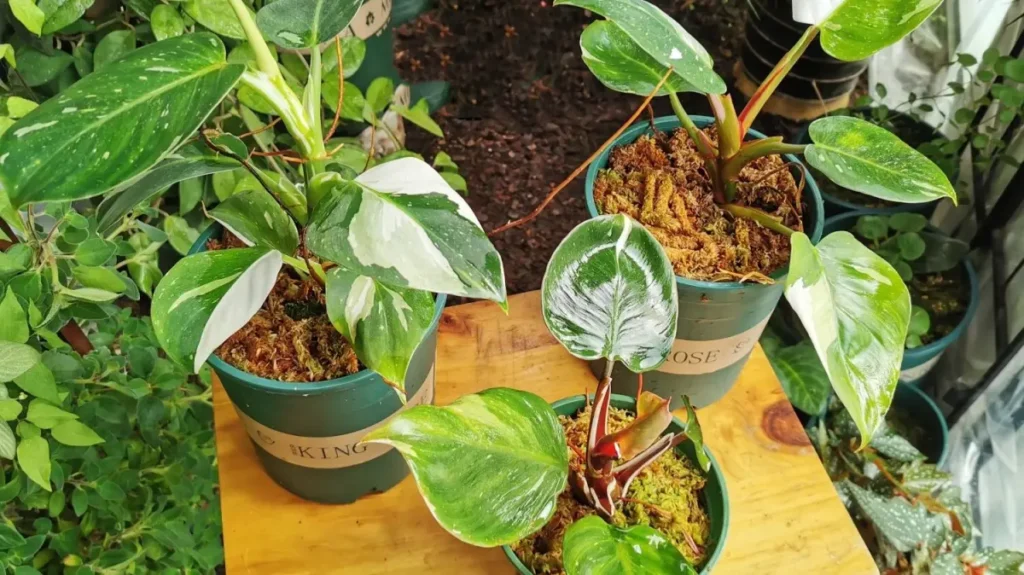
Philodendron White Princess is the one where I usually look for a green stem first, then check for pink or reddish striping along the petiole or stem. That pink line is one of the details that helps me separate it from White Wizard, especially when the leaves themselves look similar.
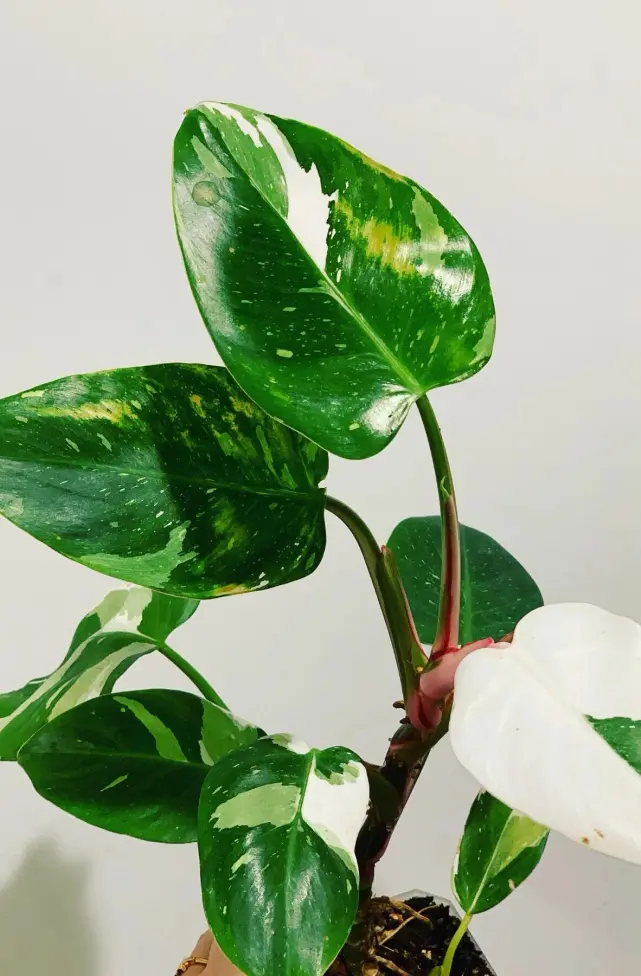
The leaves on White Princess often feel a little softer to me than White Knight. The shape can also look slightly narrower, with a gentler taper toward the tip. It does not have the same heavy, leathery feeling that I notice on White Knight.
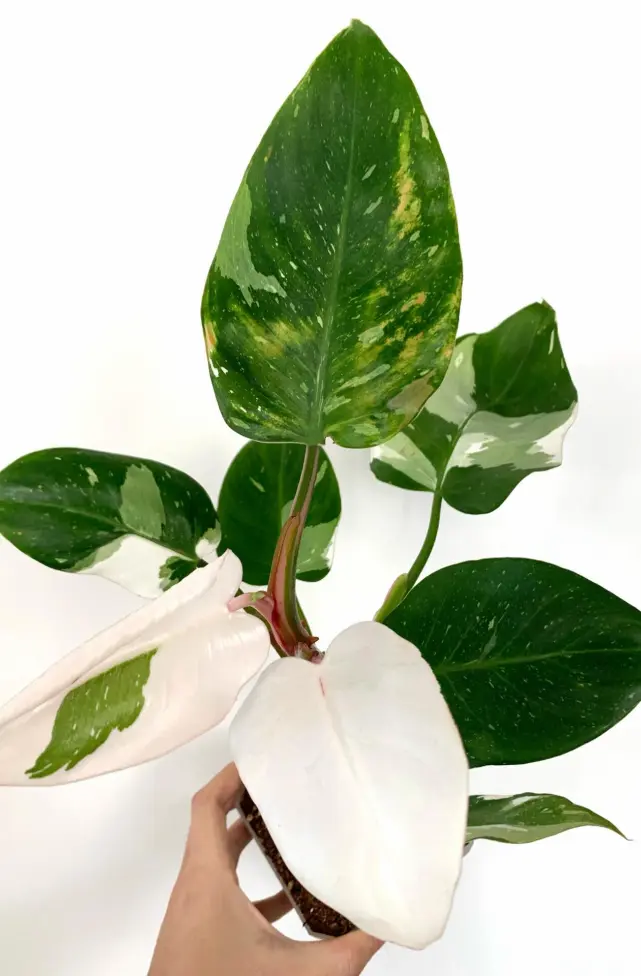
The white variegation is beautiful, but it can also be delicate. On my White Princess, clean white sections can brown or mark faster if the plant is stressed, too dry, exposed to harsh light, or dealing with pests. When a new leaf opens with good white and a little pink blush, I usually take photos quickly because the pale parts do not always stay perfect for long.
I would not identify White Princess only by seeing pink on a leaf, though. A faint blush can appear in more than one plant, especially on new growth. For me, the stronger clue is the combination: green stem, pink or reddish line, softer leaf texture, and white variegation that may sometimes carry a pink tint.
White Wizard: Cleaner Green-and-White Stems and Blocky Variegation
Philodendron White Wizard looks cleaner to me than White Princess. When I check a White Wizard, I usually look for a green-and-white stem without the same obvious pink or reddish striping I expect on White Princess.
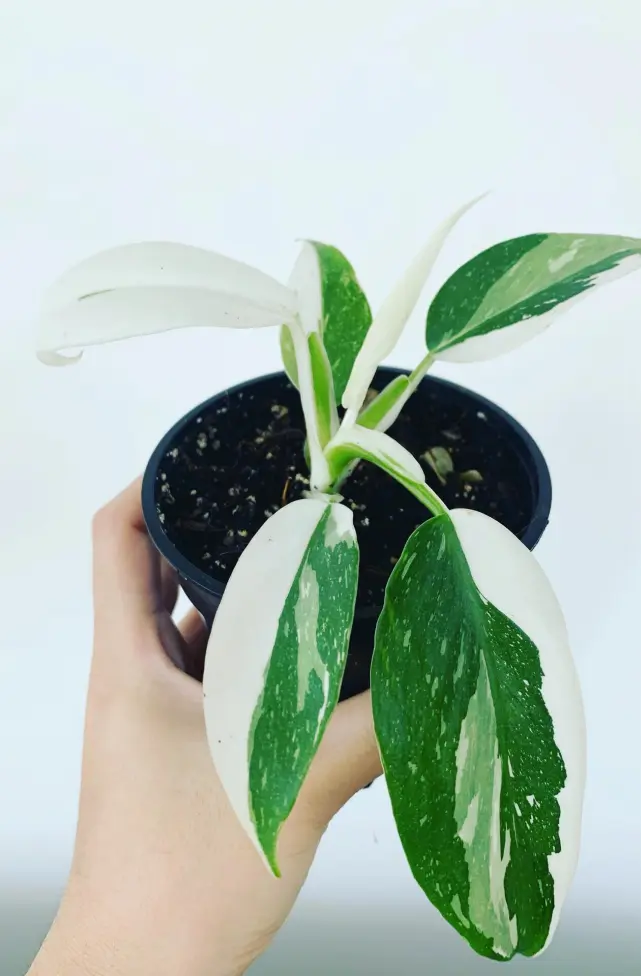
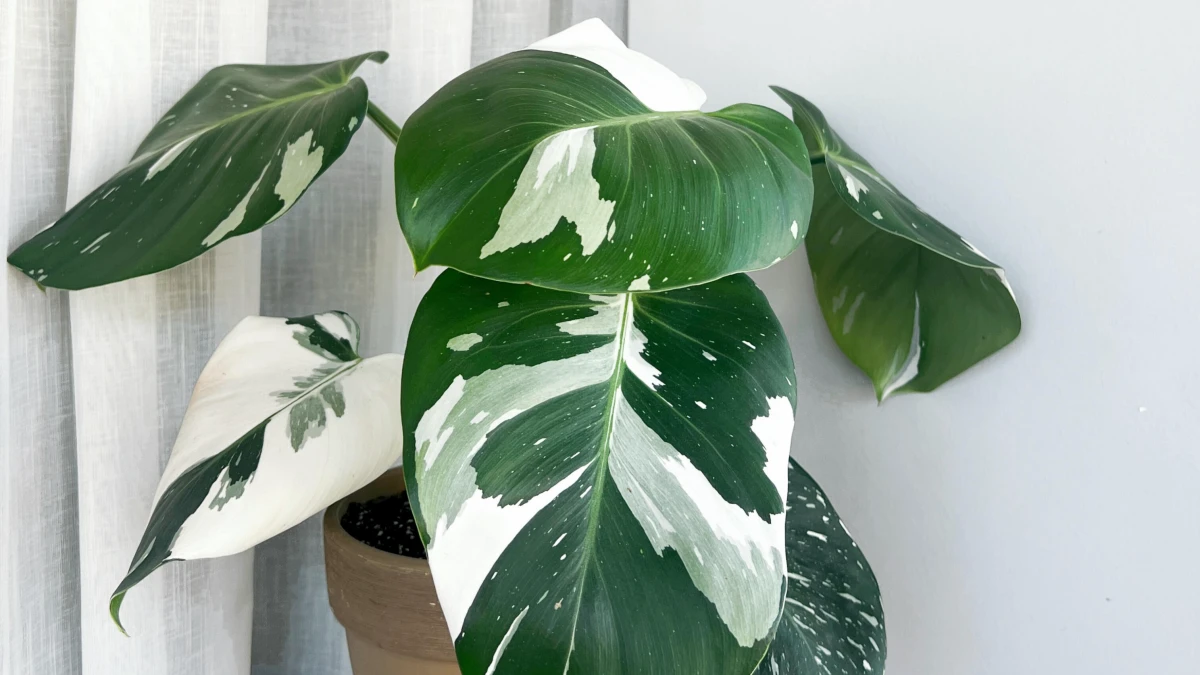
The leaves also tend to look a little rounder and broader. The overall impression is less “pink-lined” and more clearly green-and-white. When the variegation is good, it often appears in larger white blocks or patches rather than fine streaks running through the plant.
That said, I would still be careful about using one leaf as the only clue. A young White Wizard can produce leaves with very little white, and a highly variegated leaf can make the plant look more dramatic than usual. I have also seen pale new growth with a faint pink blush, but I would not call that stable pink variegation. For me, White Wizard is still mainly a clean green-and-white philodendron.
So when the stem stays mostly green and white, the leaves look rounder, and the variegation appears in cleaner blocks, I start thinking White Wizard before White Princess.
White Knight: Dark Stems and Thicker, More Leathery Leaves
Philodendron White Knight is the one that feels most different to me, even before I look closely at the variegation.
The first thing I check is the stem. White Knight usually has a much darker stem than White Princess or White Wizard — often burgundy, dark reddish-brown, or deep brown with white variegated markings. That darker stem contrast is the fastest clue for me. If the stem is clearly green, I would hesitate before calling it White Knight.
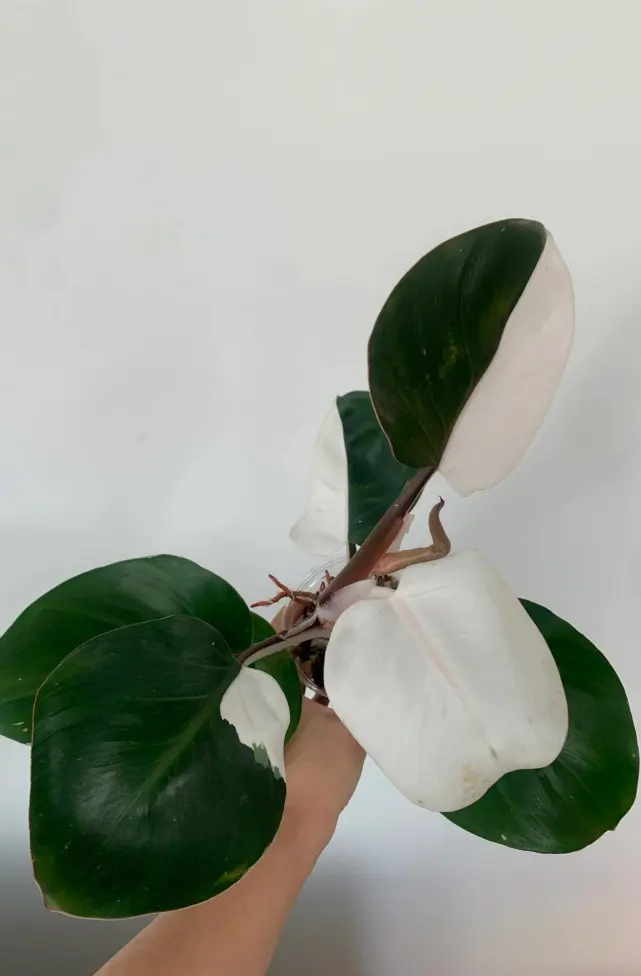
The leaves also feel different. Compared with White Princess and White Wizard, White Knight leaves often feel thicker and more leathery to me. They have a firmer structure, and the leaf shape can look longer with a sharper finish toward the tip. It does not have the same soft, clean green-and-white look that I associate with White Wizard.
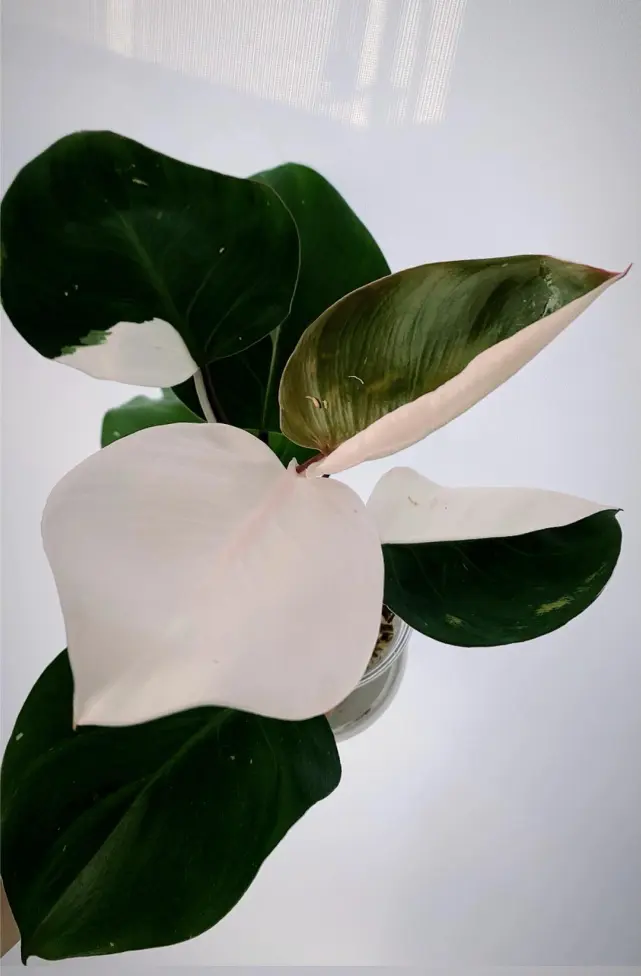
The variegation is usually white against a darker-stemmed plant, which gives White Knight a stronger, more dramatic contrast. Sometimes new growth can show reddish or warm tones, but I would not treat that as stable pink variegation. For me, the red or burgundy feeling on White Knight comes more from the stem and new growth color than from true pink variegation like people expect from Pink Princess or sometimes White Princess.
So if I see dark burgundy stems, firmer leaves, sharper leaf shape, and white variegation together, I start thinking White Knight. It has a heavier, moodier look than the other two.
Why Leaf Variegation Alone Can Mislead You
Leaf variegation is the easiest thing to notice, but it is not always the most reliable way to identify White Knight, White Princess, or White Wizard.
All three can produce green-and-white leaves. All three can give you a dramatic white patch on a good leaf. A young plant may also look very different from a mature one, and one beautiful half-moon leaf can make the whole plant look more special than it really is.
A White Princess leaf can look mostly white without showing much pink. A White Wizard leaf can occasionally have a faint blush on new pale tissue. A White Knight leaf can show strong white variegation, but the real clue may still be the dark stem behind it. If I only look at the prettiest leaf, I can easily miss the better evidence.
Light, age, stress, and the plant’s current growth stage can also change how the leaves look. A newly shipped plant may produce smaller or less stable leaves. A young plant may not show its mature shape yet. A very white leaf may look impressive but may not represent the whole plant.
So I use leaf variegation as supporting evidence, not the final answer. I look at several leaves, then check the stem color, petiole, leaf shape, and overall texture. The leaf may catch my attention first, but the stem usually gives me the more honest clue.
Pink, Red, and Blush: Do Not Use Color Alone
Pink, red, and blush tones are where these three plants become easy to misread.
When I see pink or reddish color on a plant, I do not use that single detail to identify it. I first ask where the color is showing. Is it a pink line on a green stem? Is it a soft blush on a new pale leaf? Is it a dark burgundy stem? Those are not the same thing.
For White Princess, I pay attention to pink or reddish striping on the green stem or petiole. That is one of the reasons White Princess can look softer and more colorful than White Wizard. It can also show pinkish variegation on the leaf, but I still treat that as a bonus, not something every leaf must have.
For White Wizard, I expect a cleaner green-and-white look. Sometimes pale new growth may show a faint pink blush, especially when the tissue is very light, but I would not identify a plant as White Princess just because one White Wizard leaf has a little warmth in it.
White Knight is different again. The red feeling usually comes from the darker stem — burgundy, reddish-brown, or deep brown — rather than from soft pink variegation on the leaf. That dark stem is much more useful for identification than a temporary reddish tone on a new leaf.
So my rule is simple: pink on a leaf is not enough, red on a new shoot is not enough, and one blush-toned patch is not enough. I use those colors together with stem color, leaf shape, texture, and the pattern across several leaves. If pink is the main feature of the whole plant, I would also compare it with Pink Princess Philodendron instead of forcing it into these three white-variegated names.
The Stem Tells Me More Than the Name Tag
After comparing White Knight, White Princess, and White Wizard, I no longer trust the name tag first.
The leaves are too easy to misread. A single white patch can look dramatic, a young plant can look different from a mature one, and a temporary blush on new growth can make people guess the wrong name.
That does not mean every plant will look perfectly textbook. Variegated philodendrons are not always that neat. But when I check the stem, petiole, leaf shape, texture, and several leaves together, I feel much more confident than when I judge by one beautiful white leaf.
So if I had to give one simple rule, it would be this: look at the stem before falling in love with the leaf.
FAQ
Still exploring philodendron varieties?
If you want to go deeper after comparing the names, read my individual guides for Philodendron White Princess, Philodendron White Wizard, and Philodendron White Knight. You can also return to my main philodendron varieties page to compare more philodendron types.
Go to Varieties Hub →