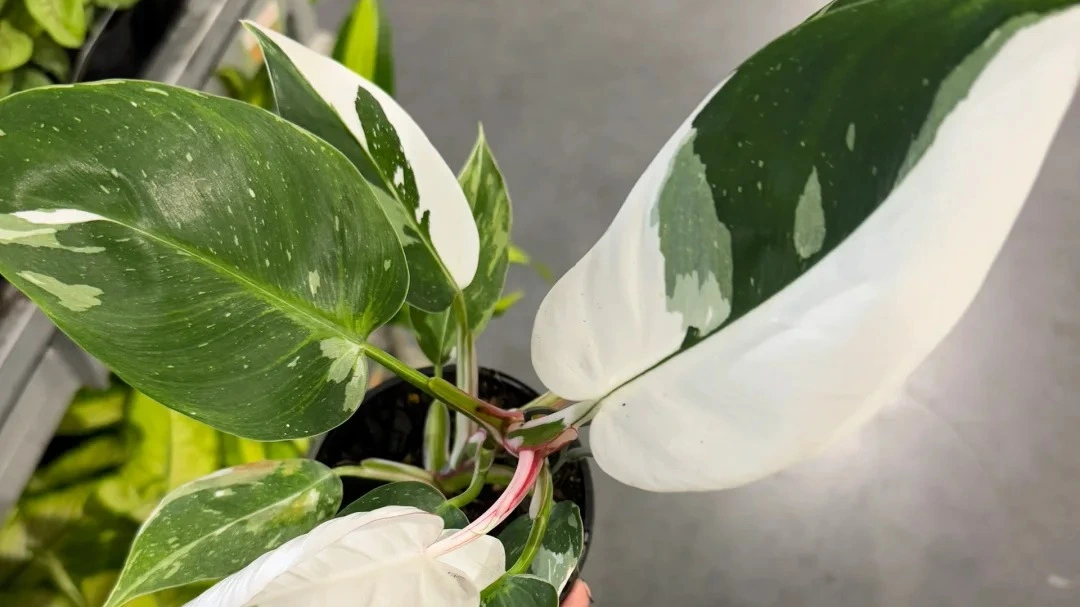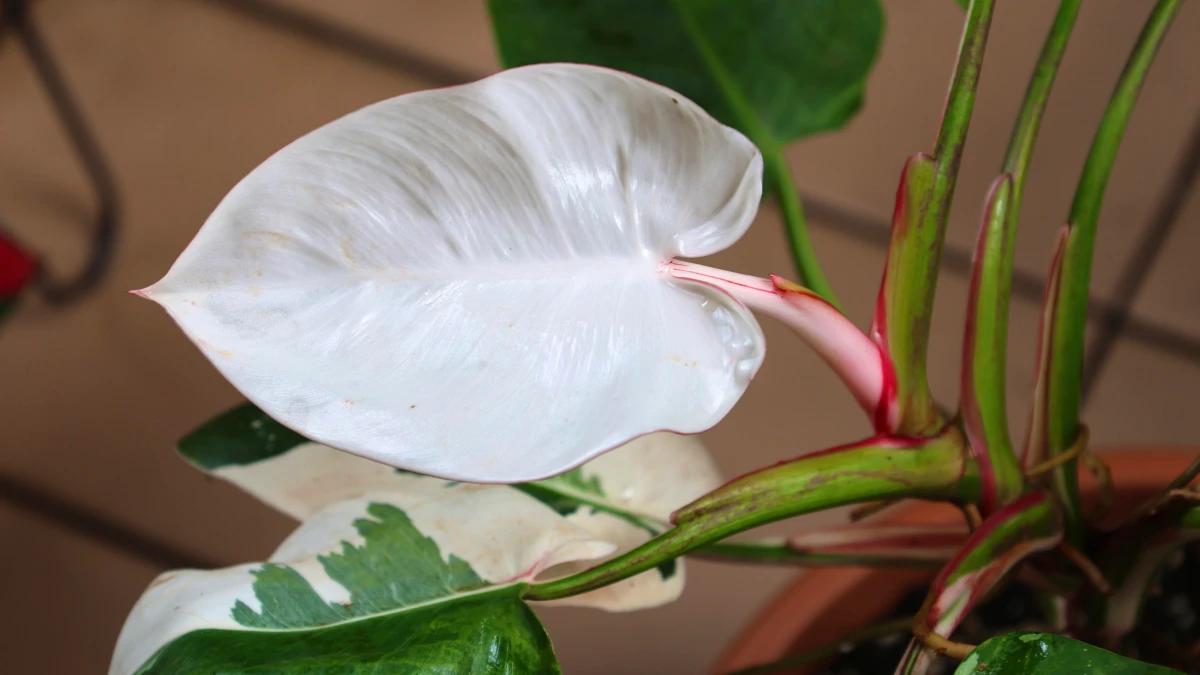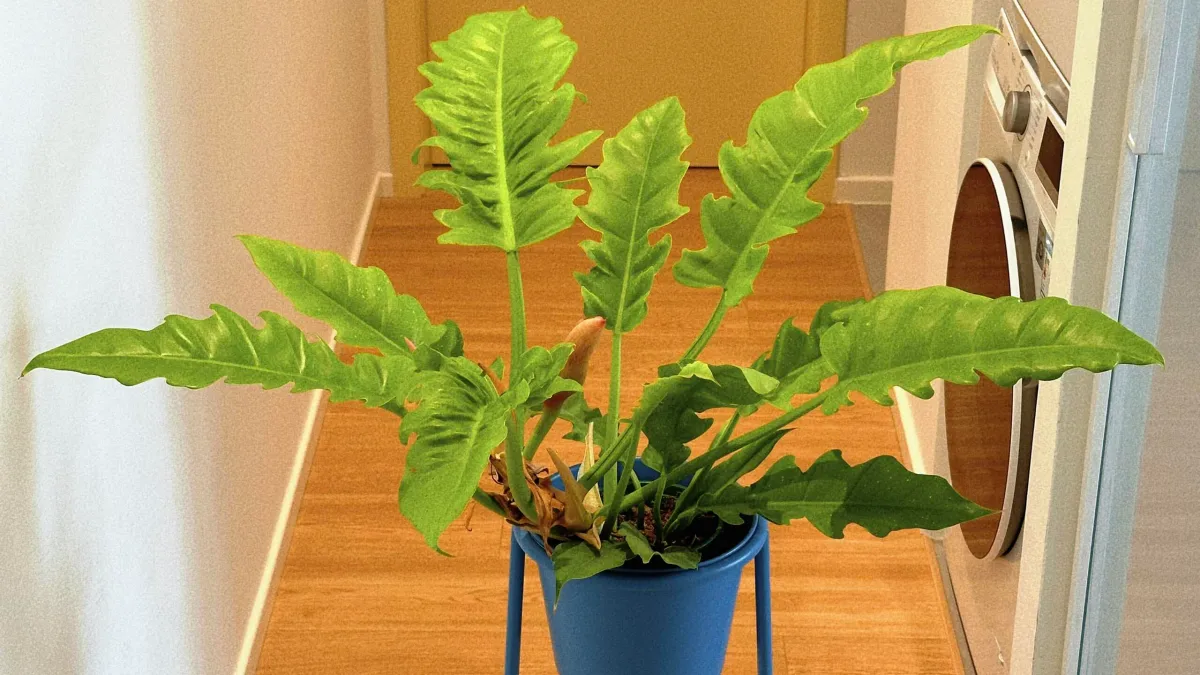
A lot of people assume that a yellow leaf or a drooping philodendron automatically means overwatering, but I don’t think it’s that simple. I’ve seen philodendrons droop from thirst, from root stress, from cold conditions, and sometimes just from the shock of a recent repot. That is also why I do not treat drooping alone as a diagnosis, especially when a philodendron can droop for several very different reasons. A single symptom on its own usually doesn’t tell the whole story.
When I’m trying to decide whether a philodendron is actually overwatered, I pay much more attention to the overall pattern. I look at how the leaves feel, whether the pot is staying wet longer than it should, and whether the plant still seems to be making normal progress. For me, watering is less about following a fixed schedule and more about reading how fast the mix is actually drying. For me, overwatering usually looks less like a plant that is simply thirsty, and more like one that has turned soft, heavy, and strangely stalled.
That’s why I no longer judge overwatering by yellow leaves alone. What matters more is whether the plant looks off while the soil is still staying wet, and whether growth has started to slow down in a way that doesn’t feel normal. When those signs start showing up together, that’s when I begin to take overwatering seriously.
What an Overwatered Philodendron Really Looks Like
1. Soft, Heavy Droop
One of the first things I notice in an overwatered philodendron is that the drooping looks soft and heavy, not dry and papery. The leaves often lose that normal, lightly springy feel and start looking weighed down instead. The whole plant can seem as if it is holding too much water in the wrong way while still not functioning well.
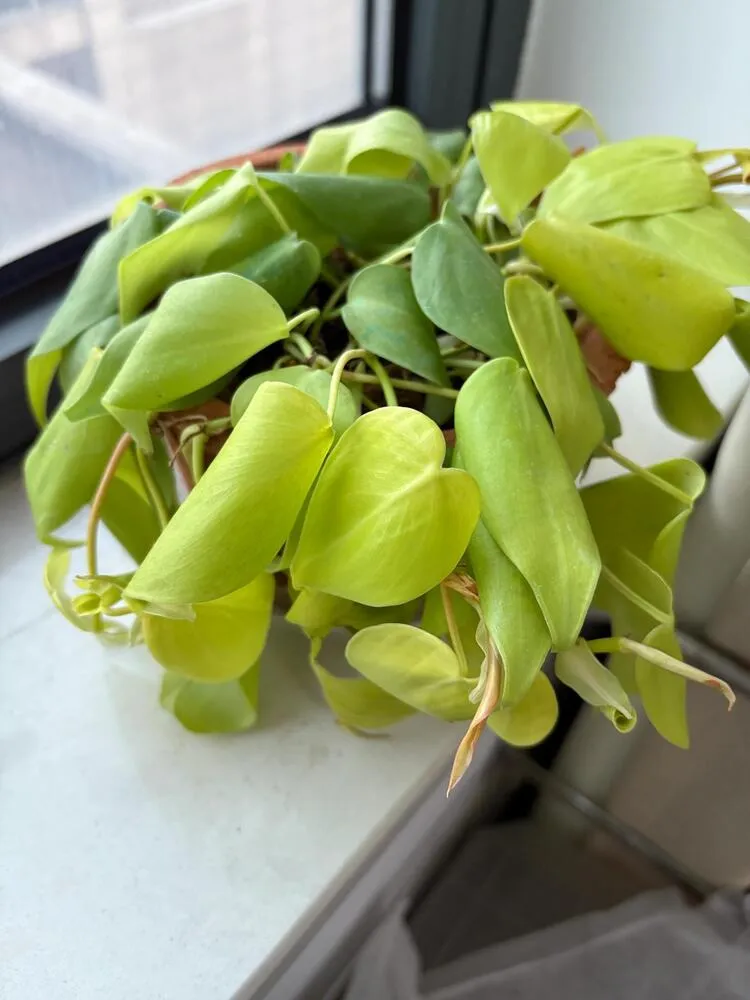
That kind of droop feels different from underwatering to me. A thirsty philodendron usually looks lighter, thinner, and more obviously depleted. An overwatered one often looks dull, limp, and slightly swollen at the same time, which is why I pay attention to the texture of the leaves, not just the fact that they are hanging lower.
2. Yellowing With Wet Soil
Yellow leaves by themselves do not prove much. A philodendron can start yellowing for more than one reason, which is why I care much more about the pattern than the color alone. What makes me take them more seriously is when the plant starts yellowing while the pot is still staying noticeably wet. That combination matters more than the color change alone.
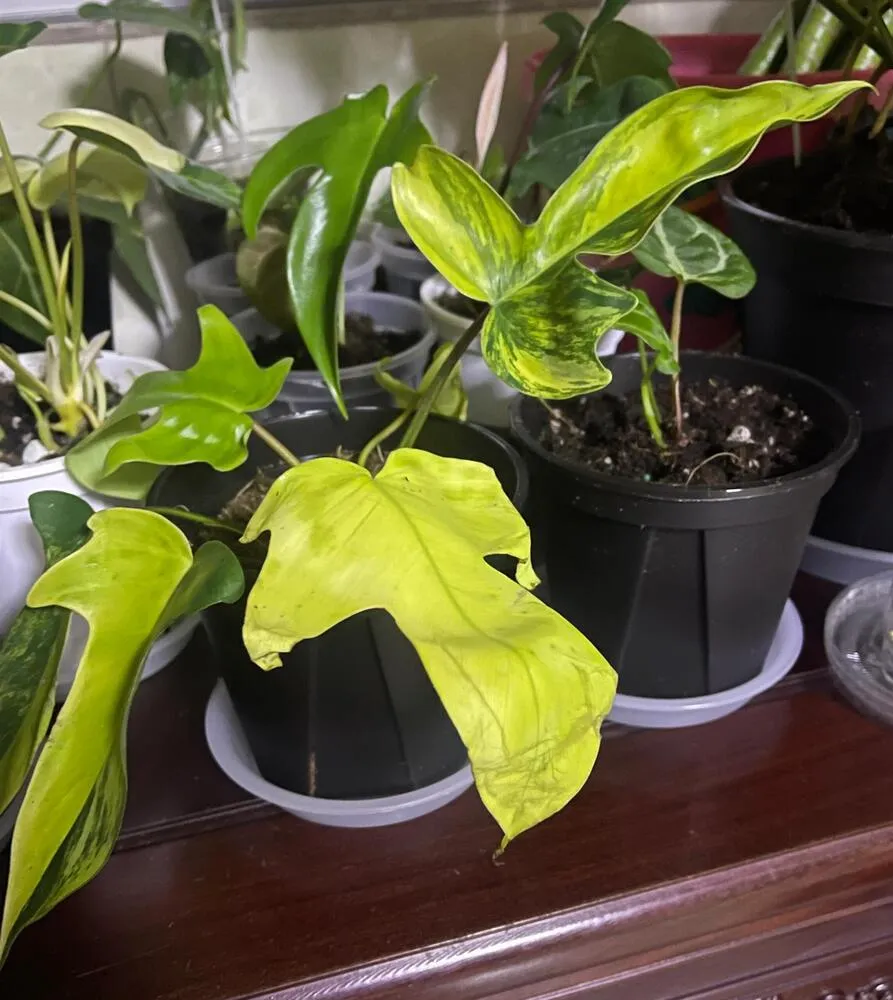
In many cases, the older leaves go first. One leaf yellows, then another follows, even though the plant has not actually been drying out properly between waterings. When I see yellowing paired with soil that still feels damp day after day, I start thinking less about thirst and more about roots sitting in conditions they are not coping with well.
3. Leaves May Start Dropping One After Another
Another sign I take seriously is when a philodendron starts losing multiple leaves over time while the pot is still staying wet. A single older leaf dropping now and then is not unusual, especially during normal growth or adjustment. What feels different is when the plant starts shedding leaves in a way that looks more like decline than routine turnover. Not every dropped leaf points to overwatering on its own. What changes the way I read it is when the plant is also staying wet, slowing down, and losing leaves in a pattern that feels ongoing rather than occasional.
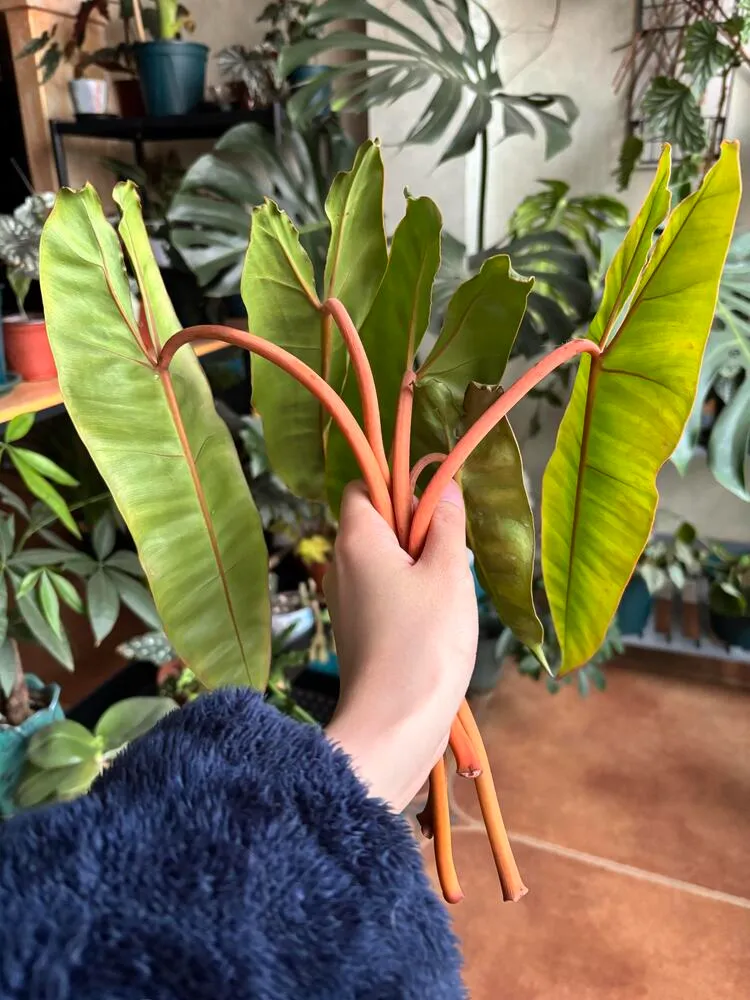
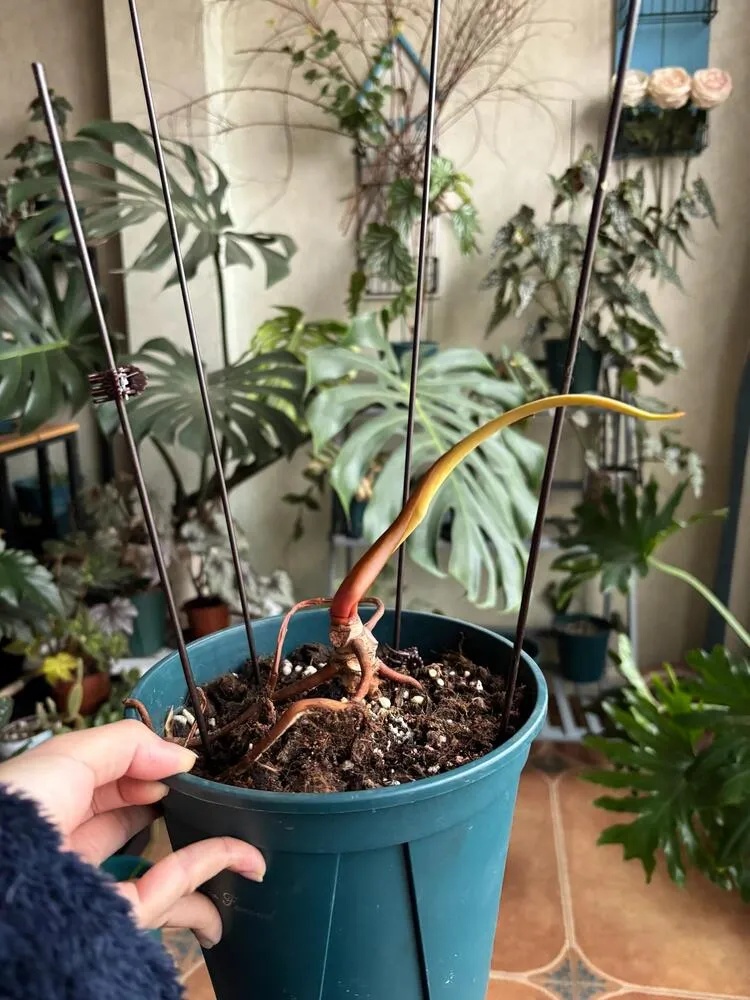
In an overwatered plant, that kind of leaf drop often comes together with yellowing, soft foliage, and stalled growth. The plant is not just maturing past one old leaf — it is starting to lose the ability to support its foliage well. When I see leaves dropping one after another while the soil still feels too wet, I start thinking much more seriously about root stress than about normal aging.
4. Stalled Growth
Another common pattern is that the plant stops moving the way a healthy philodendron normally does. A new leaf may sit half-formed for too long, a growth point may stop pushing forward, or the whole plant may look as if it has entered a kind of pause that does not match the season or the light. When that happens, I start reading it as a growth problem, not just a cosmetic leaf issue.
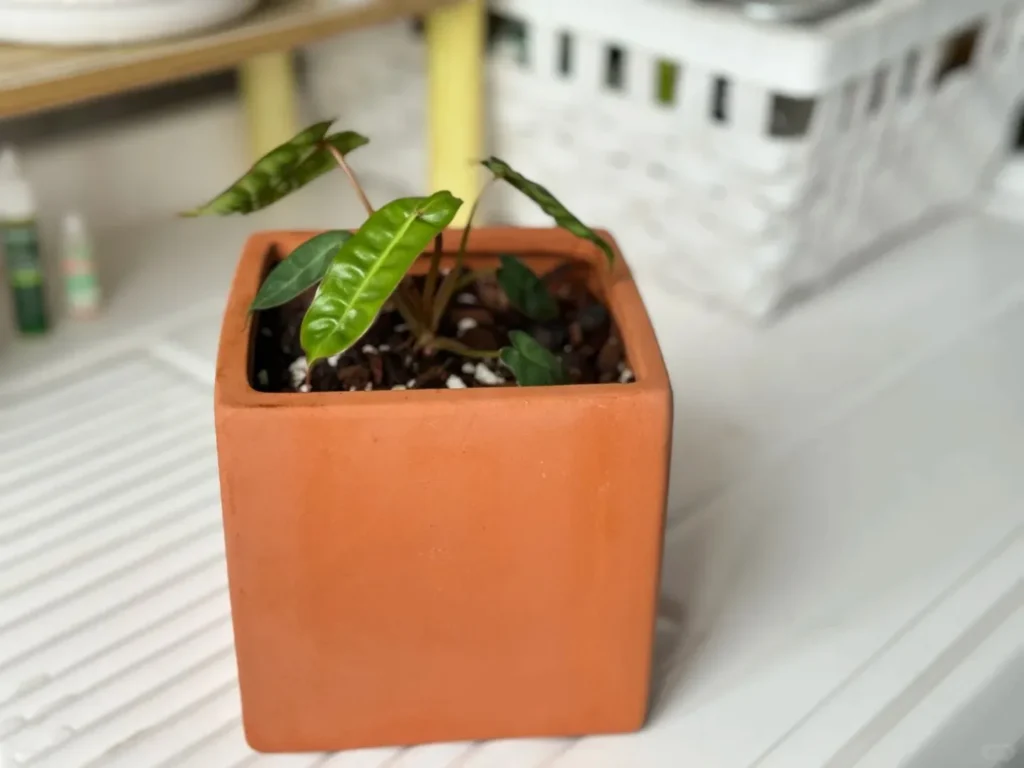
This part matters because overwatering is not only about what the leaves look like now. It is also about whether the plant still has enough root function to support normal growth. When a philodendron stays wet and also seems stuck, slow, or hesitant, that combination usually tells me more than a single yellow leaf ever could.
5. A Pot That Stays Wet Too Long
Sometimes the pot tells the story before the foliage does. If a philodendron used to dry at a reasonable pace and now the mix stays wet much longer than before, I pay attention to that immediately. For me, this is one of the most useful warning signs.
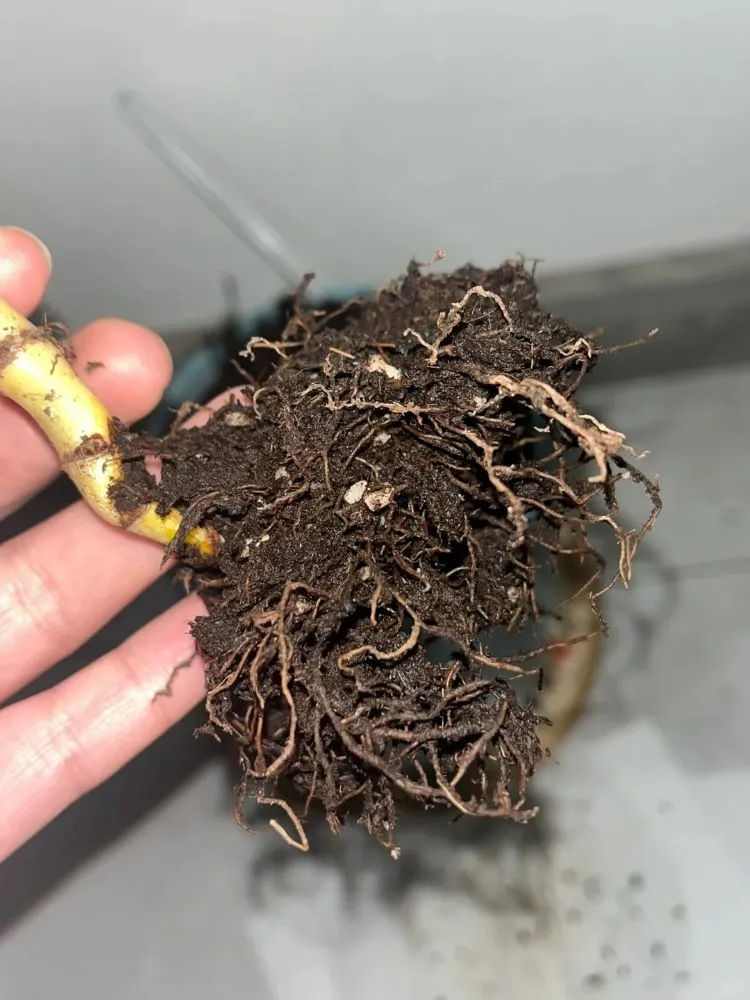
A pot that stays wet too long often means the root system is no longer using water normally, or the growing conditions have shifted enough that the soil is not drying as it should. In my experience, this is often tied not just to watering frequency but also to a potting mix that is holding more moisture than the plant can handle. Either way, I take it seriously. Even before the plant looks dramatic, a slow dry-down can be the first sign that something underground is starting to go wrong.
6. Soft Base or an Off Smell in Worse Cases
In more serious cases, the problem starts moving closer to the base of the plant. The lower stem may feel softer than it should, or the potting mix may start giving off a stale, sour, or slightly rotten smell. Not every overwatered philodendron reaches this stage, but when it does, I stop treating it as a mild watering mistake.
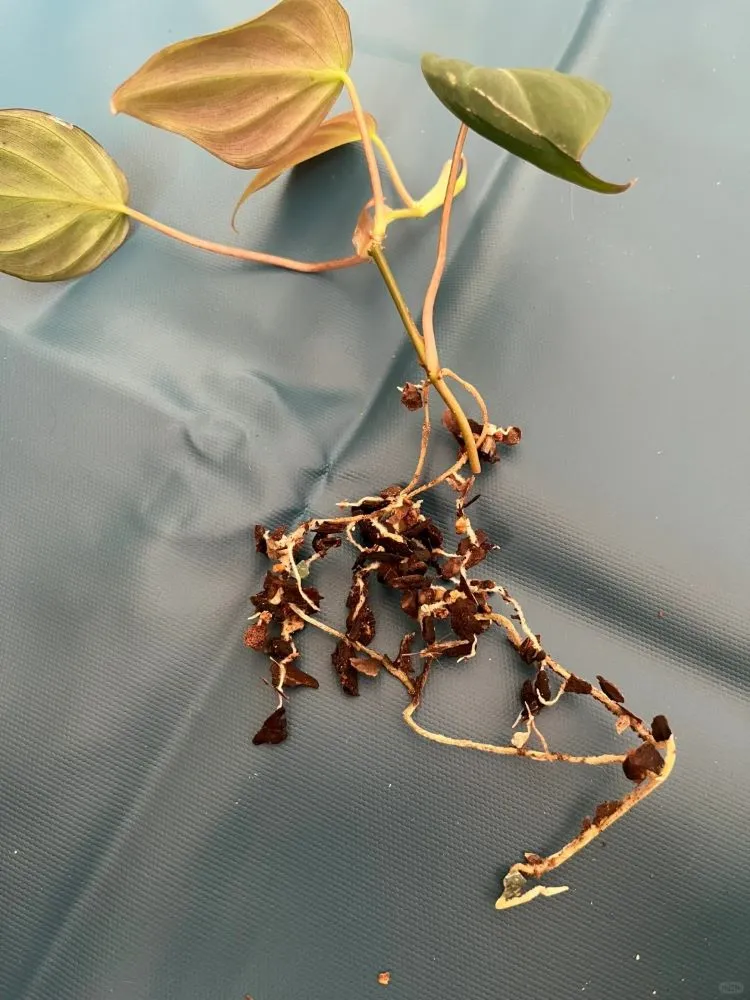
That kind of softness or smell usually tells me the issue is no longer just excess moisture at the surface. At that point, I start thinking about root decline, stem stress, or rot becoming much more likely. When I notice that shift, I know it is time to look much more closely at what is happening below the soil line.
7. Heavy Guttation Can Be a Clue, but Not Proof
One thing I also pay attention to is unusually heavy guttation — when the plant starts pushing out a lot of water from the leaves, sometimes enough to notice droplets on both sides of the leaf. On its own, that does not automatically mean the philodendron is overwatered. Some healthy plants do this after a thorough watering, especially when root pressure is high and the air is humid or cool.
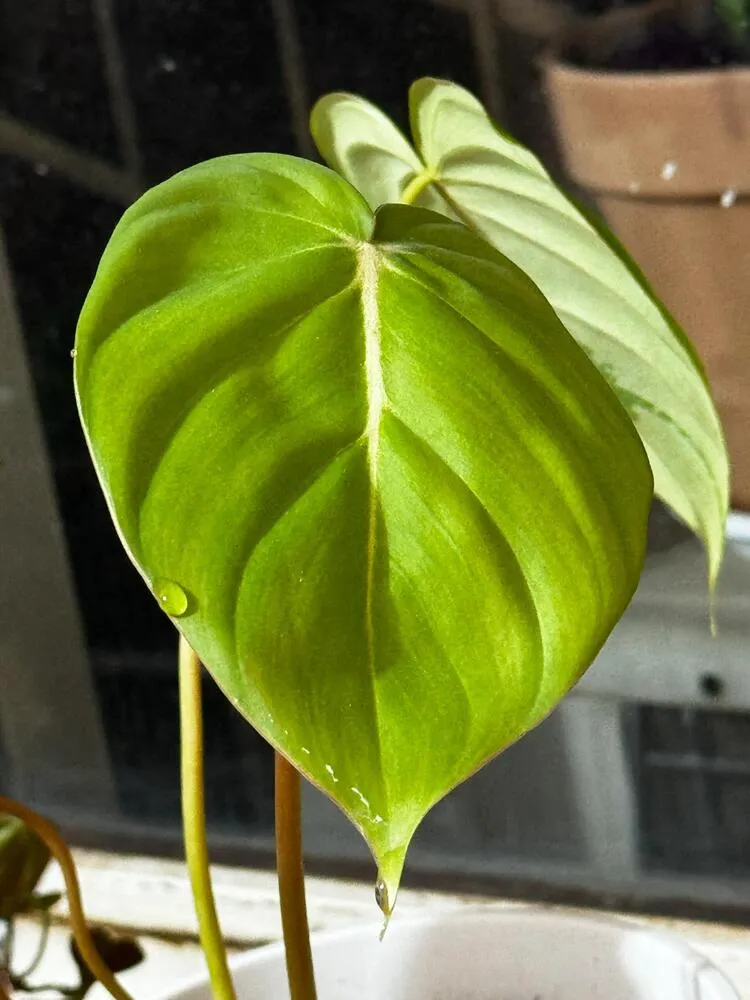
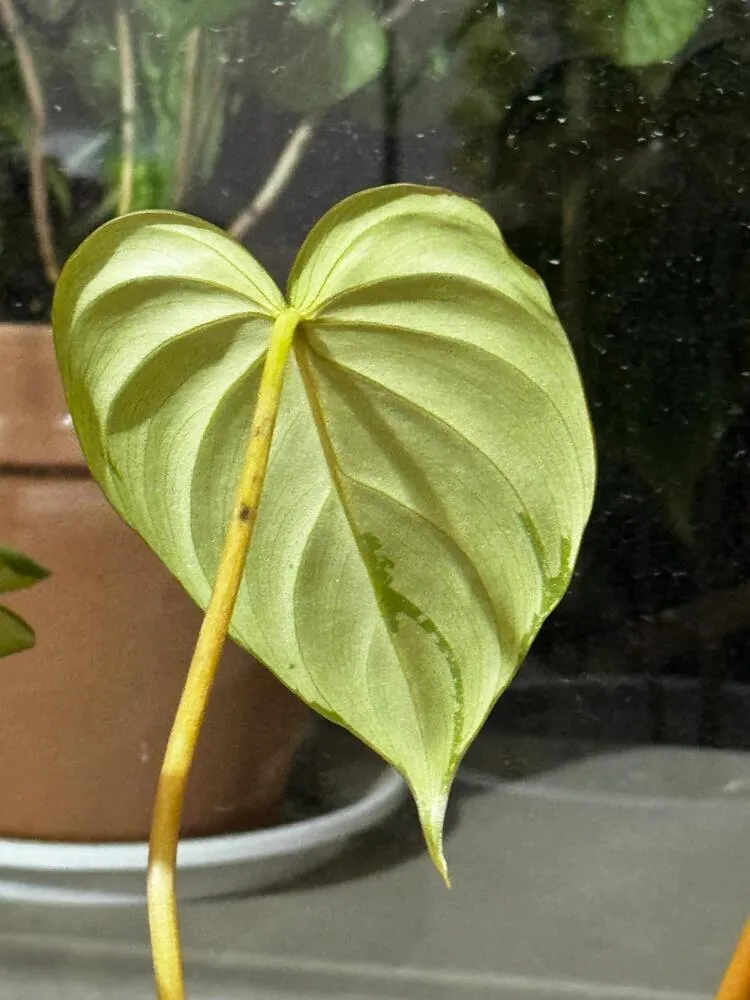
What makes me pay more attention is when that kind of guttation shows up together with other warning signs: soil that stays wet for too long, soft drooping leaves, yellowing, or stalled growth. In that context, heavy guttation can be part of the same overall pattern — a plant sitting in more moisture than it is really handling well.
What People Often Mistake for Overwatering
Some of the most common overwatering mistakes happen because people react to a single sign too quickly. These are the ones I try not to diagnose in isolation.
One Yellow Leaf
One yellow leaf on its own usually does not tell me very much. Philodendrons naturally shed older leaves from time to time, especially when the plant is adjusting to a new environment, recovering from stress, or putting energy into new growth. If the rest of the plant still looks stable, I do not jump straight to overwatering.
What matters more is the pattern around that yellow leaf. If it is just one older leaf and the pot is drying normally, I usually see it as ordinary turnover. I start taking it more seriously when yellowing happens while the soil is still staying wet and the rest of the plant is also starting to look soft, slow, or stalled.
Any Drooping
Drooping is another sign people often read too quickly. A philodendron can droop because it is thirsty, because the roots were disturbed, because the room turned cold, or because the plant is still settling after repotting. So when I see drooping alone, I do not treat it as proof of overwatering.
What I pay attention to instead is what kind of droop it is and what the pot feels like at the same time. A thirsty plant usually looks lighter and drier, while an overwatered one often looks softer, heavier, and more sluggish. The shape may look similar at first glance, but the overall feel is often very different.
Freshly Watered Soil
Wet soil right after watering is completely normal. That by itself is not a warning sign. A lot of people panic as soon as the pot feels damp, but the real question is not whether the soil is wet today — it is how long it stays wet and whether the plant is declining while that wetness continues.
For me, overwatering is much more about a plant staying too wet for too long than about one recent watering. If the mix is still heavy and damp several days later, and the plant also looks soft, yellowing, or stalled, then I start connecting those dots. But freshly watered soil by itself is just part of a normal watering cycle.
What I Do Next When I Suspect Overwatering
I Stop Following the Old Watering Rhythm
The first thing I do is stop watering on the same schedule that got the plant into trouble in the first place. If a philodendron already looks soft, slow, and overly wet, repeating the old routine usually makes the situation worse. At that point, I stop thinking in terms of “it’s been a week” or “I usually water on this day” and start paying attention to what the pot and plant are actually doing now.
I Watch How Fast the Pot Really Dries
After that, I watch the dry-down time much more closely. I want to know whether the mix is starting to move back toward a normal rhythm or whether it is still staying heavy and damp for too long. For me, this is one of the most useful clues because it tells me whether the roots are still functioning reasonably well or whether something deeper may be going wrong below the surface.
I Wait if the Plant Still Looks Mildly Stable
If the plant looks mildly stressed but not rapidly declining, I usually wait before doing anything drastic. I do not like to unpot a philodendron too quickly if it still has a decent stem, stable leaves, and no obvious smell or mushiness. Sometimes the best next step is simply giving the plant more air, more light, and more time to dry properly instead of piling on more stress through unnecessary repotting.
I Check the Roots if the Decline Continues
If the soil keeps staying wet and the plant continues getting worse, that is when I check the roots. Repeated yellowing, ongoing leaf drop, stalled growth, a softening base, or a pot that barely dries at all are the signs that push me in that direction. At that point, I no longer treat it as a small watering mistake. I start treating it as a root problem until proven otherwise.
That is probably the biggest thing I have learned about overwatering: I try not to react to one symptom in isolation, but I also do not ignore a pattern once it is clearly forming. For me, an overwatered philodendron is not just a plant that got too much water once. It is a plant that has stayed wet long enough to stop behaving normally. Once I started thinking about it that way, my decisions got much clearer — and my recoveries got better too.
FAQ
Still not sure what your philodendron is telling you?
If your philodendron still seems off, this may be only one part of the picture. I’ve collected the most common indoor philodendron problems — along with the patterns I watch for and the changes that have helped my plants recover.
Go to Problems Hub →