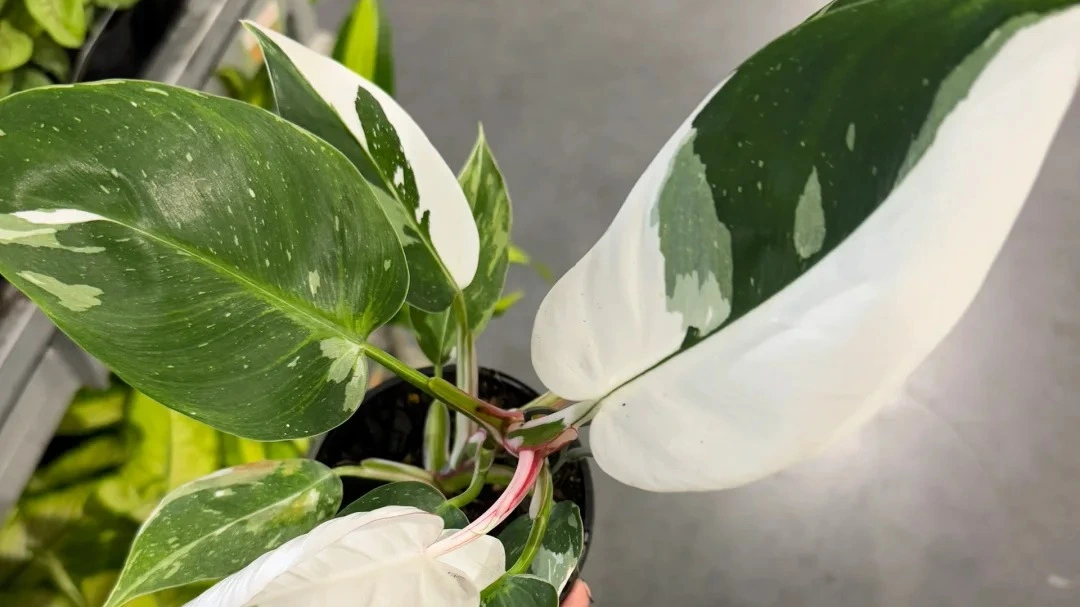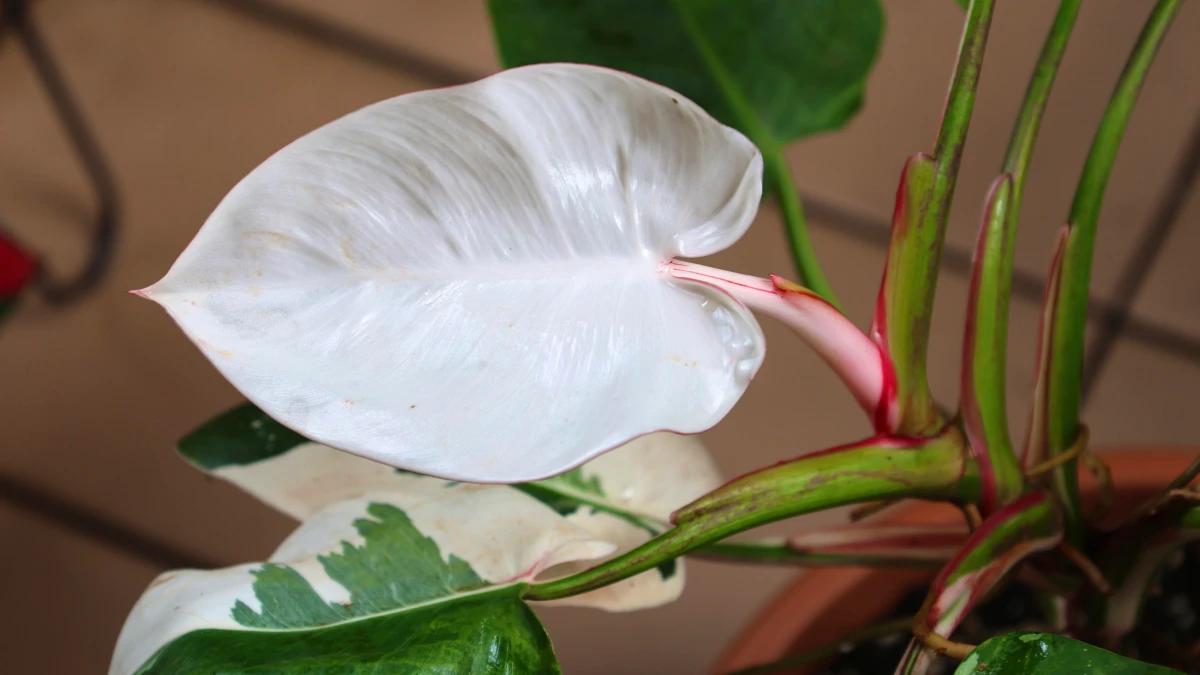
The first time I saw a Pink Princess Philodendron at a flower market, I was immediately drawn to it. The deep, dark leaves splashed with bright pink looked almost unreal, and it was one of those plants that made me stop walking and stare for a while. At the time, I didn’t know much about caring for it — I just knew I had to bring it home.
What makes Pink Princess so addictive, at least for me, is that no two leaves ever feel exactly the same. Every new leaf is a surprise. Some come out with bold pink sections, while others only show a soft blush. That unpredictability is part of the charm, and it’s probably one of the reasons this plant became such a favorite among indoor plant collectors.
But after growing mine for about six months, I realized that Pink Princess is not the kind of plant that stays beautiful no matter what. It can look stunning, but keeping it that way takes a bit more attention than I expected. The amount of pink, the condition of the leaves, and the overall growth all seem to respond to light, watering, and feeding more than I first thought. Mine definitely hasn’t been perfect, but after making a few mistakes, I’ve started to understand what this plant really seems to like — and what I would avoid next time.
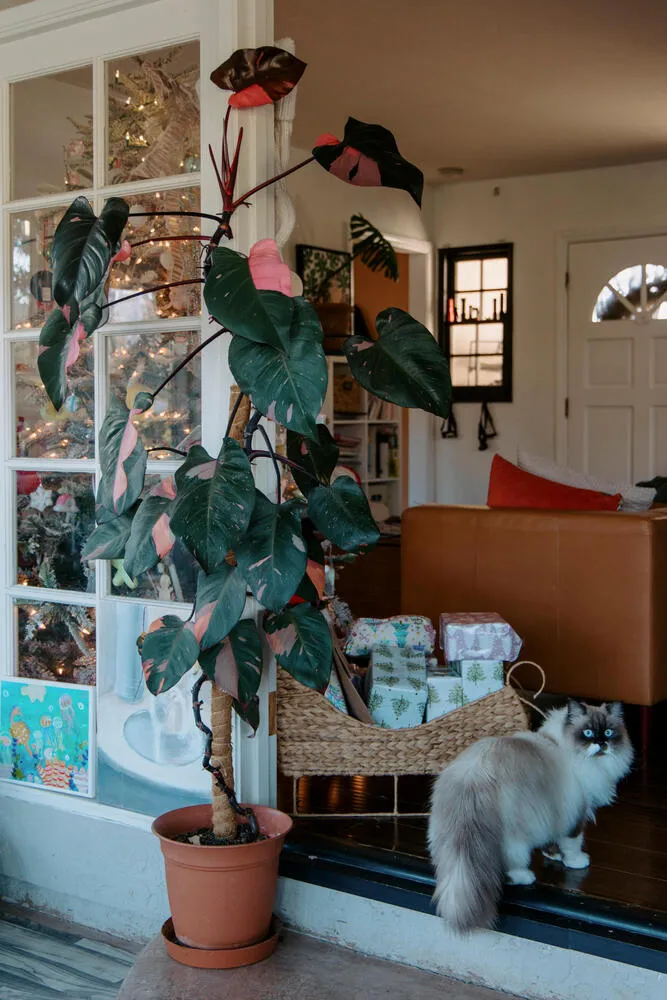
Why Pink Princess Became So Popular
Part of the appeal of Pink Princess Philodendron is that it feels both familiar and unusual at the same time. It is widely associated with the Philodendron erubescens line, which helps explain its dark foliage and blush-toned variegation, but its exact breeding history is still a bit murky. Different sources describe it in slightly different ways, and there does not seem to be one fully settled public origin story that everyone agrees on.
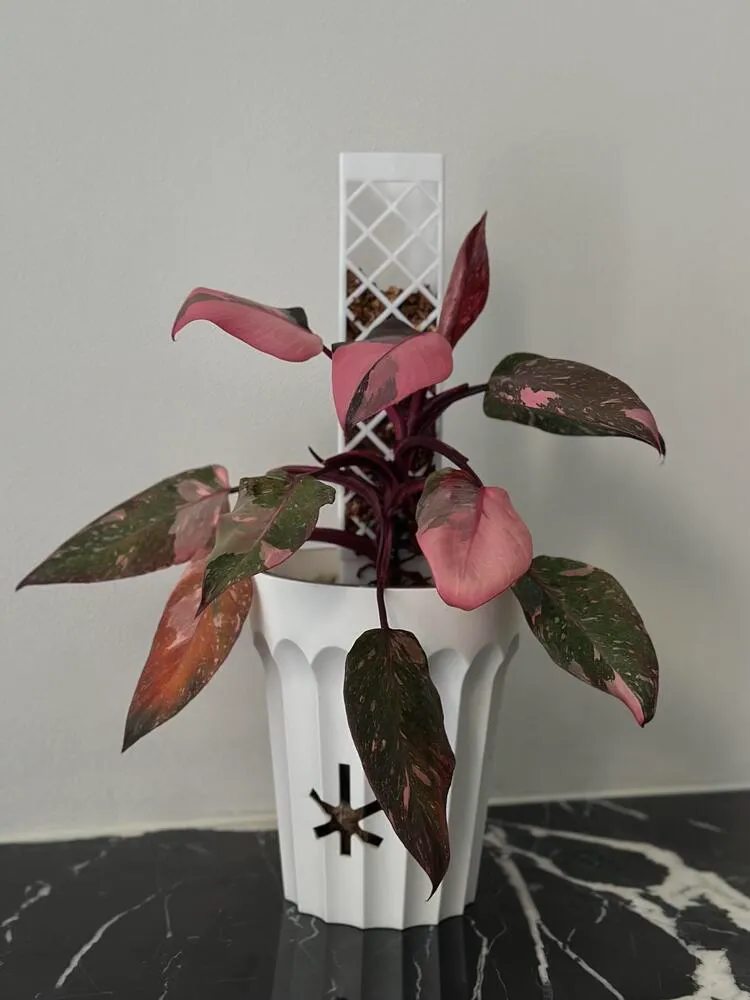
That uncertainty has only added to its mystique. For years, Pink Princess was treated more like a collector’s plant than a typical houseplant. It was not something most people casually picked up at a big-box store, and part of its reputation came from being hard to find, expensive, and visually different from the usual green philodendrons people were used to seeing.
Its real breakout moment came during the houseplant boom of the late 2010s. As plant collecting exploded online, Pink Princess quickly became one of the most recognizable “wishlist” plants on social media. By 2018 through 2020, it had become a full-blown phenomenon, helped along by Instagram, unboxing videos, rare plant groups, and the general surge of interest in dramatic foliage plants.
What changed later was availability. As tissue culture production expanded, Pink Princess gradually became easier to find and less exclusive than it had been during the peak of the craze. That did not make it less desirable, but it did shift it from a rare collector’s trophy into a much more accessible houseplant for ordinary growers.
Even now, I think part of its popularity comes from that mix of history, hype, and unpredictability. It still carries the aura of a once-rare plant, but it is also one that many people can actually grow at home now—and every new leaf still feels a little bit special.
Why Every New Leaf Doesn’t Look the Same
One thing I noticed after bringing my Pink Princess home is that its new leaves can vary a lot from one growth cycle to the next. Some open with strong pink patches, while others come out darker and much less dramatic. That variation is part of the plant’s appeal, but it also means the version you see online is not always the version you get every time at home.
In my experience, the amount of pink does not feel completely random. Light seems to make a real difference, and the overall condition of the plant matters too. When mine was kept in a spot without enough direct indoor light, the newer leaves gradually showed less pink and looked less exciting overall. After I moved it back closer to the window, the newer growth started looking better again. That was also when I started paying much more attention to philodendron light needs indoors instead of just assuming “bright room” was enough.
That was probably the biggest adjustment for me: realizing that Pink Princess is not a plant that automatically stays “Instagram perfect.” A beautiful leaf can absolutely happen, but keeping that look over time depends a lot on how the plant is grown.
What I Learned After Six Months With My Pink Princess
After growing my Pink Princess Philodendron for about six months, I realized that this is not a plant that rewards overdoing things. It looks dramatic, but in my experience, the care itself works better when it stays simple and controlled. Most of the trouble I ran into came from doing something too aggressively—too much fertilizer, too little light, or soil that stayed damp for too long.
Don’t use strong fertilizer, especially on the leaves
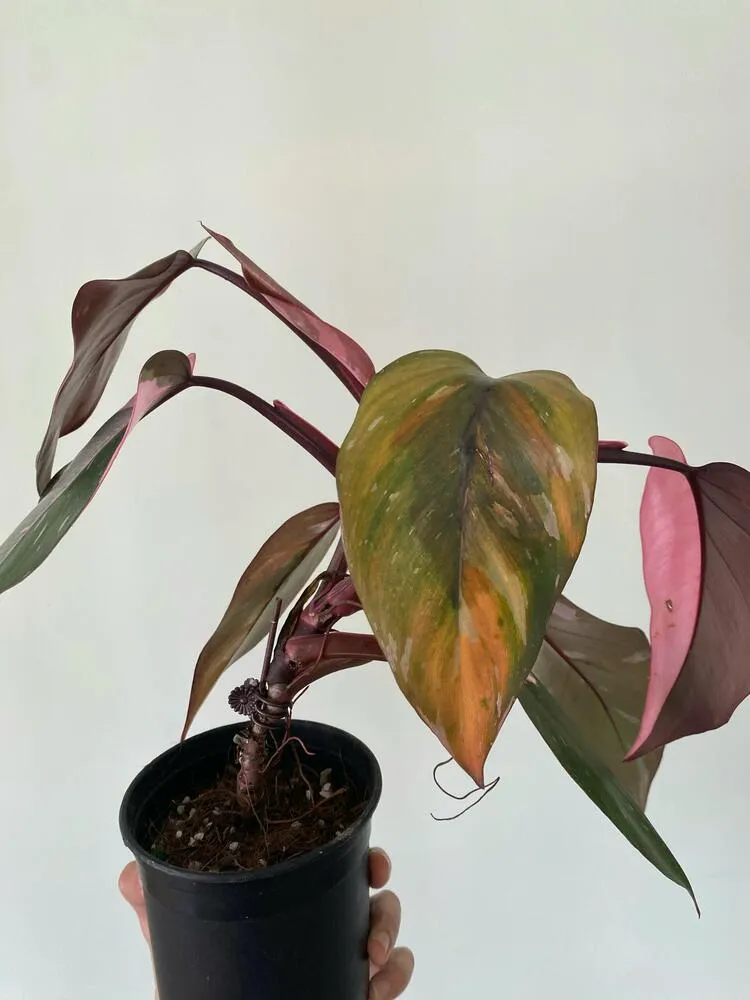
One of my earliest mistakes was using a spray-type fertilizer directly on the leaves because I assumed it would be a quick way to help the plant. Instead, two days later, one of the leaves turned yellow and started to rot. That experience made me much more cautious with feeding, especially on a variegated plant like this one, because not every case of philodendron yellowing starts in the roots.
Since then, I’ve come to think that Pink Princess responds better to weak fertilizer applied gently and regularly, rather than anything strong or direct. I would definitely avoid spraying fertilizer onto the foliage again, especially on the pink areas, which already seem more delicate than the darker parts of the leaf.
Bright indoor light makes a huge difference
Another thing I learned very clearly is that light affects not just growth, but also how attractive the plant looks. I once kept mine in a spot indoors where it wasn’t getting any real direct light, and after a while the new leaves started coming out with less pink. The plant was still alive, but it lost some of the look that made me want it in the first place.
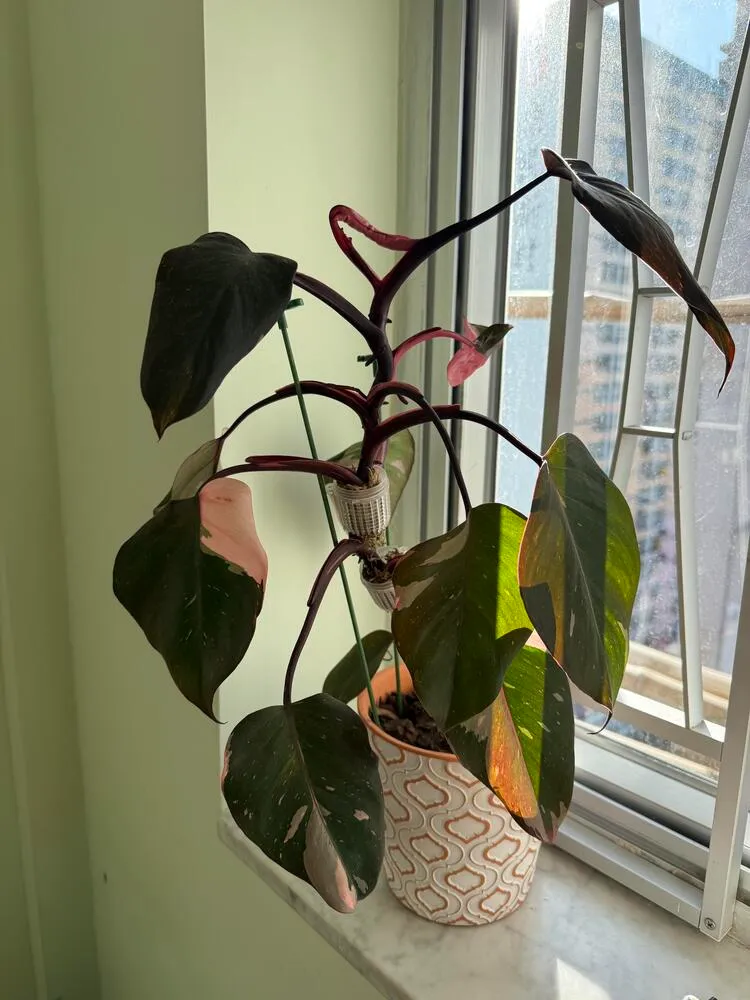
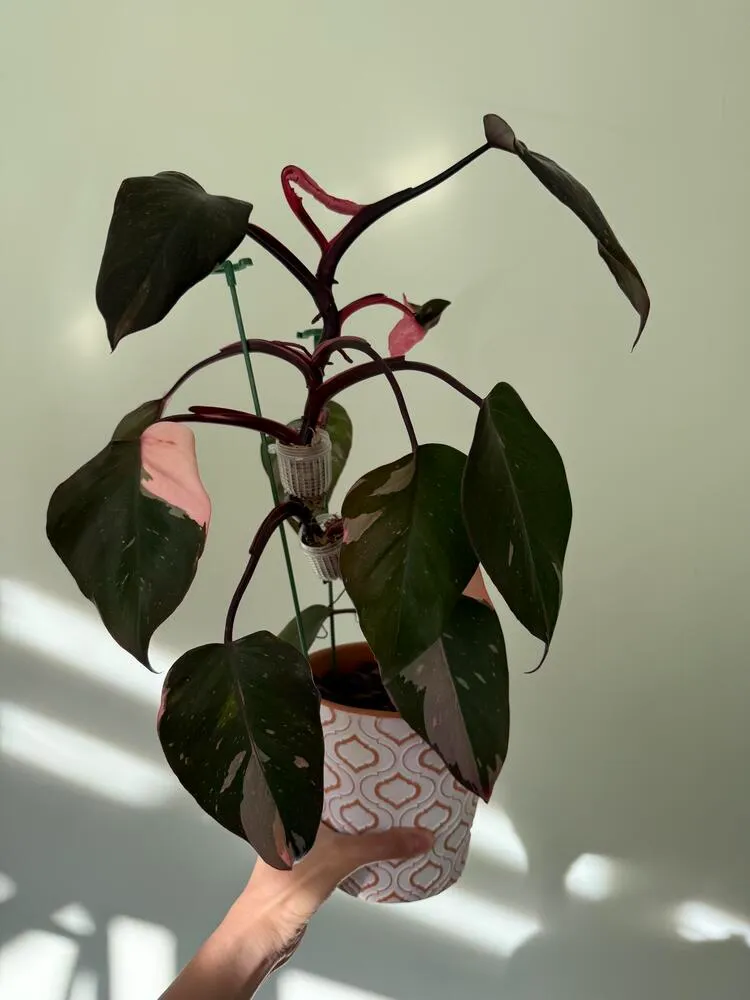
After I moved it back to a brighter place near the window, the newer leaves started showing better color again. That was when I really felt that Pink Princess is not a plant you can hide in a dark corner and still expect beautiful variegation from. For me, strong indoor brightness has made a noticeable difference.
Keeping the roots airy matters more than watering often
If I had to choose one general care rule for Pink Princess, it would probably be this: it is safer to let it dry a bit than to keep it constantly damp. Mine seems much more tolerant of slight dryness than of heavy, soggy soil. What worries me more now is not underwatering, but the risk of stale, compact, overly wet potting mix causing root problems. That is also why I think the right philodendron soil mix matters more here than people sometimes expect.
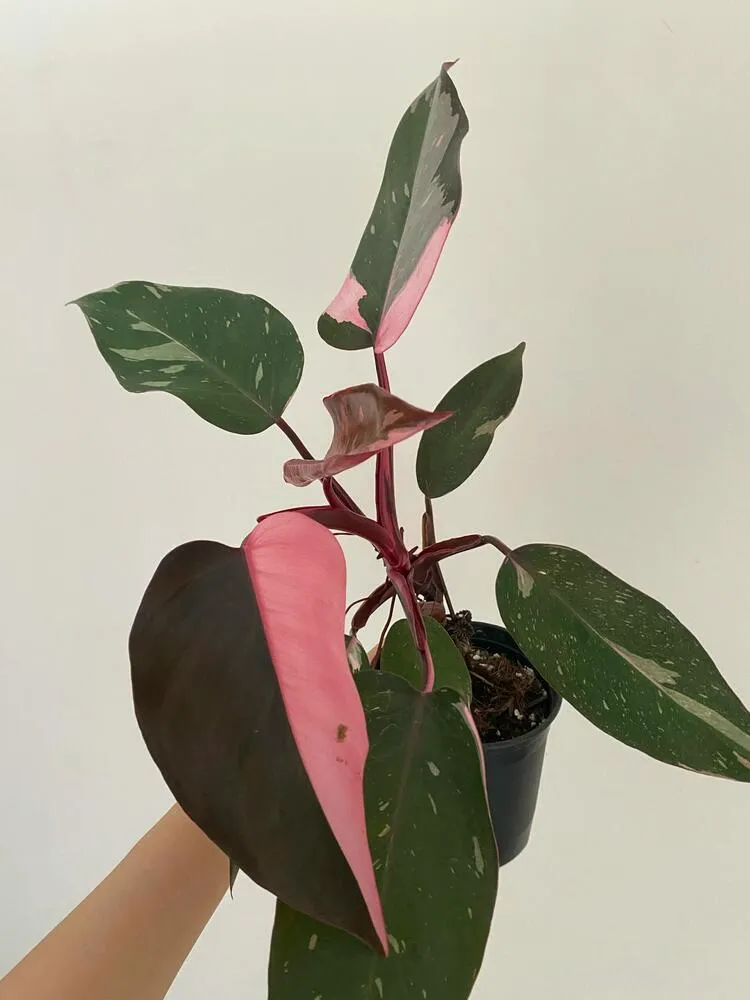
Because of that, I prefer using a breathable terracotta pot and waiting until the soil feels dry a little below the surface before watering again. I usually check about 2 cm down with my finger. If it still feels damp there, I leave it alone. When I do water, I water thoroughly instead of giving small frequent sips. In Hong Kong’s humid weather, that has usually meant watering about once every seven days for me, sometimes even less often when the air feels especially damp. For me, this is exactly why watering philodendrons works better by reading the pot than by following a fixed schedule.
Pink Princess Is Beautiful, but Not Effortless
After living with my Pink Princess Philodendron for the past six months, I would not call it the hardest philodendron to grow—but I also would not call it effortless. It is not the kind of plant that stays beautiful no matter where you put it or how casually you care for it. It can absolutely do well indoors, but in my experience, it needs the right balance of light, watering, and restraint.
What feels challenging about Pink Princess is not simply keeping it alive. The harder part is keeping it attractive over time. A healthy plant is one thing, but a plant that keeps producing strong, colorful, well-shaped leaves is another. That is where the small details start to matter more: enough light, airy roots, and not pushing it too hard with fertilizer.
Even so, I still understand why this plant became so popular. For me, the appeal has not really worn off. Every new leaf still feels a little unpredictable, and that is part of what keeps it interesting. It may not be the easiest plant in my collection, but it is definitely one of the most exciting to watch grow.
FAQ
Still exploring philodendron varieties?
If you’re comparing leaf shapes, colors, or growth habits, my main philodendron varieties page is the best place to keep exploring and find similar types side by side.
Go to Varieties Hub →