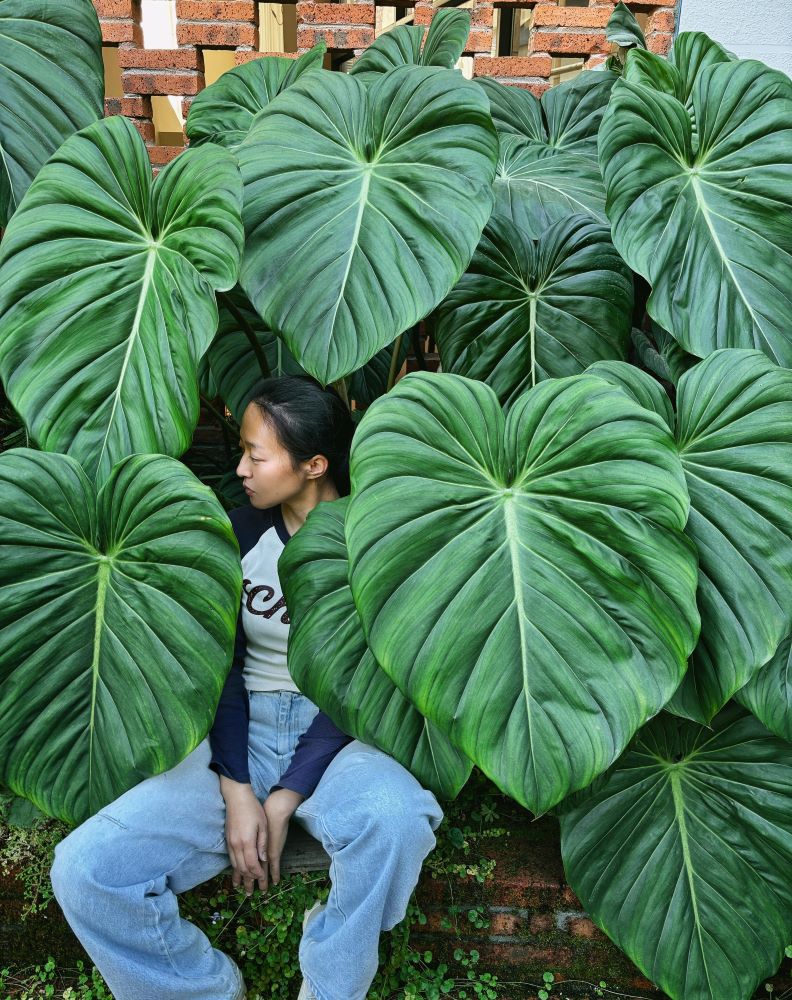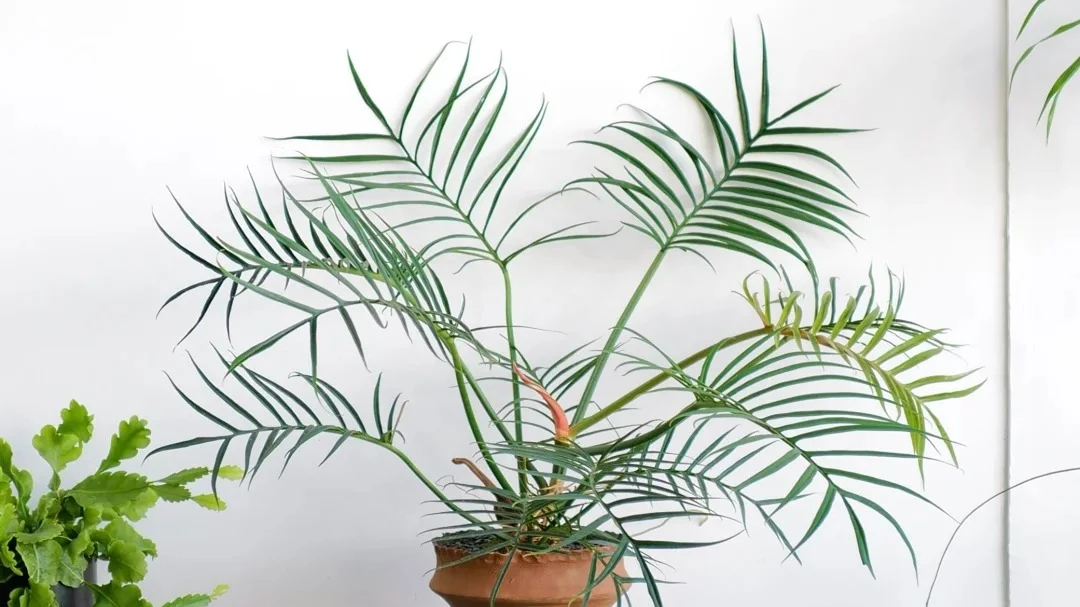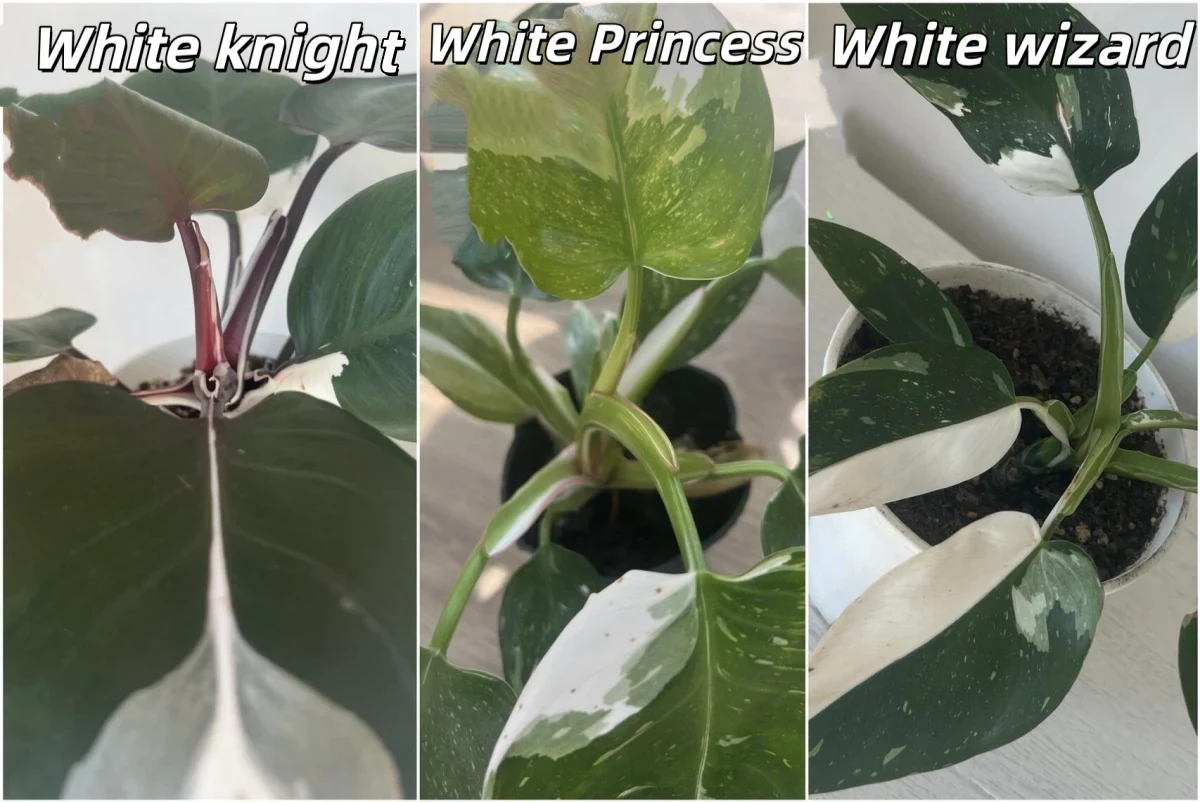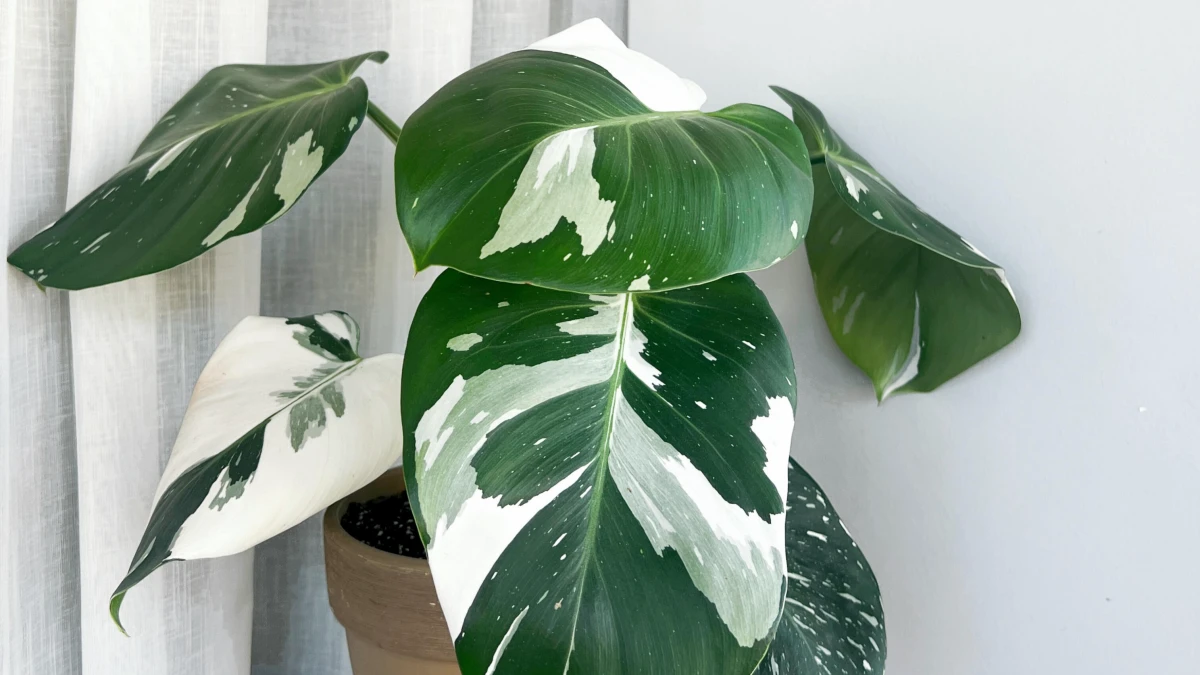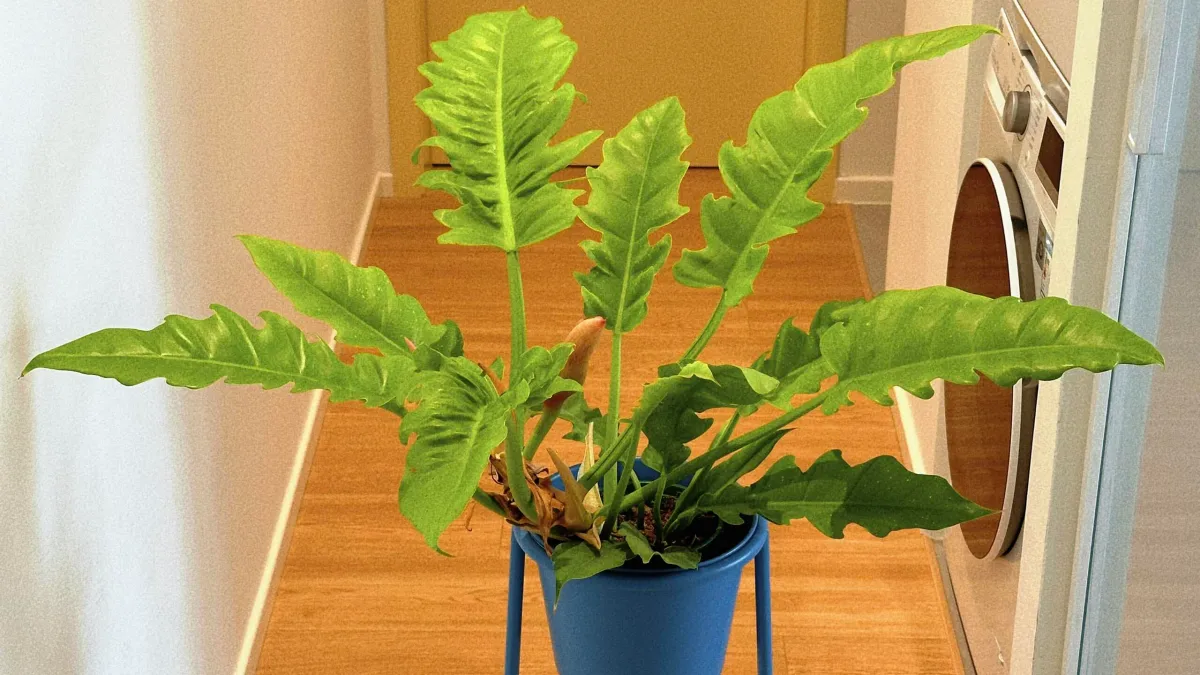
Out of all the philodendrons I’ve grown, Billietiae has been one of the easiest to keep happy over time. It is not the kind of plant that constantly gives me new problems to solve. I haven’t had to deal with brown crispy edges, root rot, or recurring pest issues with this one, which is a big part of why I rate it so highly.
What I like even more is that it does not just stay alive — it actually grows in a very satisfying way. When it is young, it already looks elegant, but once it settles in, the size change can be surprisingly fast. Looking back at my photos from last March, I still feel a little shocked by how much bigger it became within a year.
So for me, the biggest issue with Billietiae has never been whether it is hard to grow. The real issue is whether you have enough room for it once it starts taking off. If you want a philodendron that looks distinctive, grows with real presence, and does not feel overly fragile, I think this is one of the most rewarding ones to keep — especially if you can already give it the kind of bright indoor conditions I described in my guide on how much light philodendrons need.
My Real Growing Experience Over One Year
When It Was Still Small
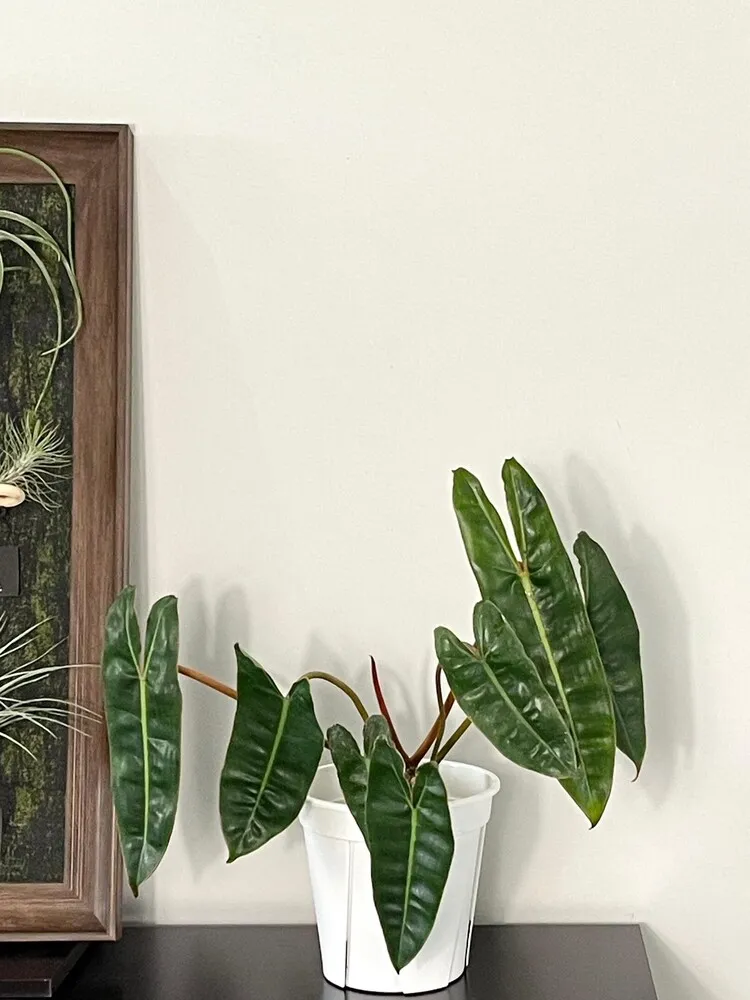
Most of my photos of this plant as a small starter were taken around early March last year. At that stage, it was still easy to manage and did not take up much room, but the shape was already very promising. I kept it under grow lights for a long time when it was young, and I think that made a big difference early on.
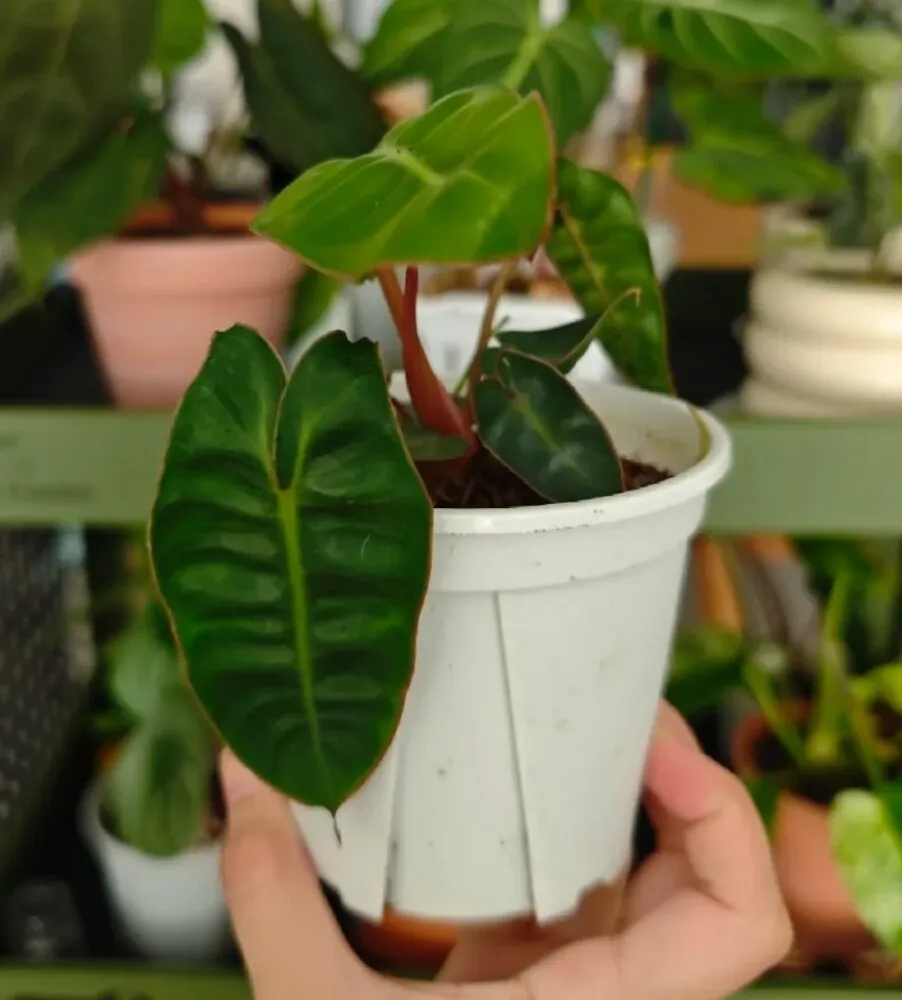
Because the light was strong enough, it never became stretched or weak. The growth stayed fairly controlled, and the plant held its shape well instead of leaning all over the place. When Billietiae is still small, this is also the easiest stage to guide it a little. With a thin support and stable light from one direction, I found it much easier to keep the leaves and stem growing in a cleaner, more upright way.
After It Got Bigger
Once it started getting larger, the biggest problem was simply space. I could no longer keep it in the same brighter setup, so I moved it to a spot about one meter away from the window and just let it grow more freely there. The light was weaker than before, but to my surprise it still did not become obviously leggy. The overall form stayed acceptable, just less crisp than it was earlier on.
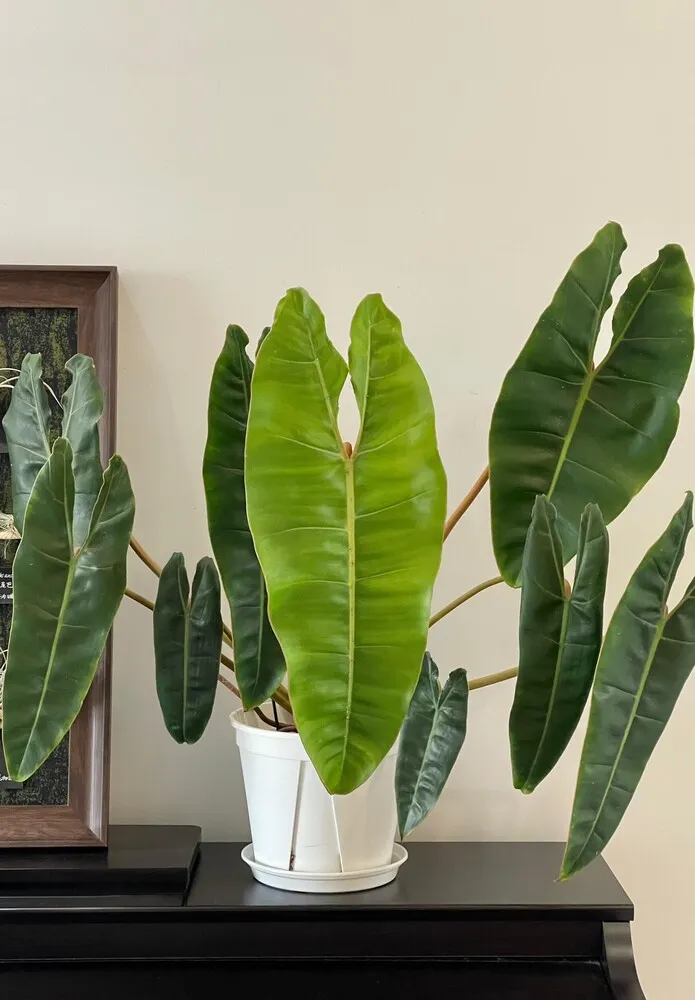
The main difference I noticed was in the color. The petioles were no longer as orange as they had been before, which made sense once the light became less intense. Later on, I also realized I had left it in the same pot for too long, and feeding had not really kept up with the size of the plant. It did not suddenly decline, but the growth clearly slowed down and lost that strong leaf-to-leaf momentum it had earlier.
Recently I finally moved it into a larger pot and added both slow-release fertilizer and some organic fertilizer. Now I’m mostly waiting to see how much larger it will get from here. Honestly, after seeing how much it changed in just one year, I would not be surprised if it becomes difficult to place again in a few more months.
What Billietiae Looks Like as It Matures
One thing I did not fully appreciate at first is how different Philodendron Billietiae looks once it starts maturing. As a young plant, it feels fairly manageable. The leaves are still modest in size, the shape looks light and elegant, and it does not yet give the full impression of how dramatic it can become later.
That changes once the roots are established and the plant gets into a stronger growing rhythm. The leaves begin to stretch longer, the plant starts to carry much more visual weight, and it gradually shifts from looking like a promising young philodendron to looking like a real specimen plant.
I also noticed that the petioles look more orange under stronger, steadier light. In weaker light, the plant can still stay healthy and grow reasonably well, but the color is usually less vivid. So if that orange contrast is part of what attracts you to Billietiae, light makes a noticeable difference.
What makes this plant interesting is that it does not always react dramatically when conditions are less ideal. If the pot is a little too small, or feeding is not quite keeping up, it may not look unhealthy right away. More often, it simply loses momentum. New leaves come less often, the growth feels less energetic, and the plant stops pushing forward in the same impressive way.
So the biggest change with maturity is not just size. It is that Billietiae starts asking for a more supportive setup if you want it to keep looking vigorous and impressive.
Is Billietiae Easy or Difficult?
I still consider Philodendron Billietiae an easy plant overall. In my experience, it has a fairly stable root system, it does not react dramatically to every small environmental shift, and it is much less prone to random decline than many fussier philodendrons. With decent light, airy roots, and basic care, it tends to stay on track without creating constant problems.
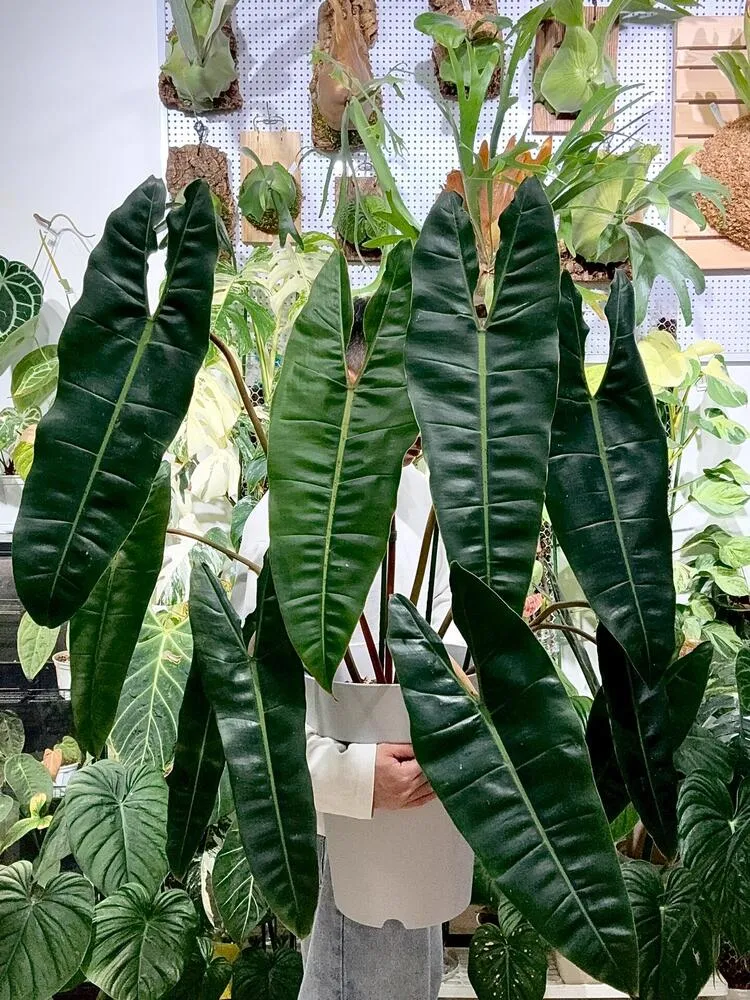
Where Billietiae becomes more demanding is not in basic survival, but in how well you want it to perform as it gets bigger. A mature plant needs more room, more consistent feeding, and enough light to keep its color and growth momentum. So my honest view is this: Billietiae is easy to keep healthy, but it becomes less effortless once you want it to grow into a large, striking specimen. In most homes, the real challenge is not fragility. It is whether you can keep up with its size.
How I Care for Philodendron Billietiae
Light
For me, light has been one of the biggest factors in how good Billietiae looks. When the plant was young, strong grow light helped keep the shape tighter and prevented weak, stretched growth early on. I think that early structure matters, because a plant that starts off well usually continues to look better as it matures.
In a northern indoor setup, a bright south-facing window behind glass can work very well. Stronger light tends to bring out better petiole color, and the whole plant usually grows with more energy. In weaker light, Billietiae may still stay healthy, but the color is often duller and the growth feels less impressive.
Mine later spent time about one meter away from the window and still held a decent form instead of stretching badly. So I do think this plant is tolerant. But if you want the best orange color and stronger overall performance, it is worth giving it the brightest stable indoor light you can.
Watering
My watering routine for Billietiae is simple: I let it get about half dry, then water thoroughly, which is very close to the general approach I use in my full guide on how to water philodendron. This works well for me because I grow it in a breathable pot, usually a very airy orchid-style plastic pot. With that kind of setup, it is much easier to judge when the root zone is actually drying out.
One reason I like breathable pots is that I can lift the plant and roughly judge the moisture level by weight. That feels much more reliable than checking only the surface. But I would not use this exact same rhythm in a dense, less breathable pot, because the mix would stay wet for much longer. So for me, this watering approach only works when the pot and soil are drying at a reasonable speed.
But I would not use this exact same rhythm in a dense, less breathable pot, because the mix would stay wet for much longer. That is also why I care a lot about using a more open mix instead of heavy soil that holds moisture for too long.
Shaping and Support
This is one part of Billietiae care that I think people often overlook, especially because not every philodendron needs the same kind of support. In my experience, the best time to shape it is while it is still small. Once the plant gets larger, it becomes much harder to guide neatly.
What worked best for me was a thin support stake combined with strong, steady light from one direction. If you prefer training your plants more vertically, that same early-stage timing is also when support systems are easiest to add. Early on, I lightly guided the leaves and petioles so the plant developed in a cleaner, more upright way instead of growing unevenly.
I also found that frequent rotation works against that process. If the plant keeps receiving light from one side, it is much easier to build a more intentional shape over time. Billietiae can look messy later if it is allowed to grow in every direction from the start, so a little early guidance makes a noticeable difference.
Feeding and Pot Size
One thing this plant taught me is that Billietiae can stay healthy for quite a while even when the setup is no longer ideal. That sounds positive, but it can also be misleading. In my case, I left mine in the same pot for too long and did not keep up well enough with feeding. The plant did not crash, but it clearly slowed down and stopped pushing out new leaves as actively, which is the kind of situation I often think of when people say their philodendron is “not growing” even though it still looks healthy.
So while Billietiae is not especially fragile, it still responds when it becomes underpotted or underfed. If you want it to keep sizing up well, the roots need more room and the plant needs a steady nutrient supply. Moving mine into a larger pot and adding slow-release fertilizer plus some organic fertilizer felt like an important reset.
The main thing I would avoid is overcorrecting with a heavy, dense potting setup. For a larger Billietiae, I care more about root room and steady feeding than about pushing it with overly rich, compact soil. Bigger growth usually comes from better support, not from making the root zone heavier.
What Actually Affects Leaf Color and Growth Speed
Why the Petioles Look Less Orange
One thing I noticed quite clearly with my Billietiae is that petiole color changes with light. When the plant was getting stronger and more consistent light, the orange tone was much more obvious. After I moved it farther from the window, the plant still looked healthy overall, but the petioles were no longer as vivid.
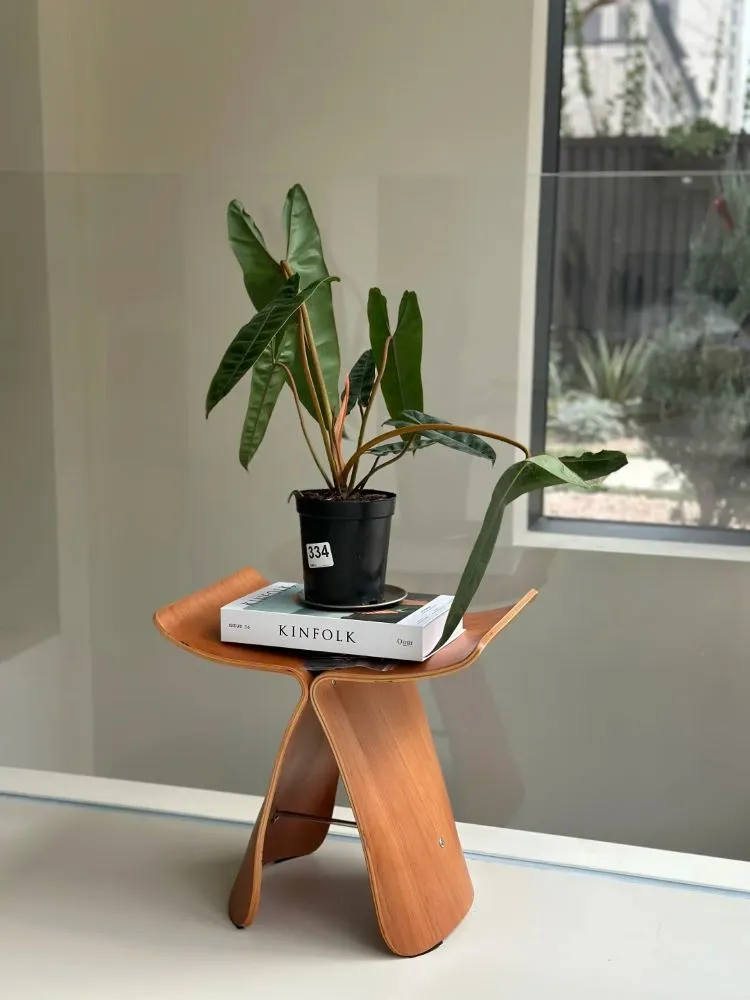
I do not see this as a sign that something is seriously wrong. In most cases, it is more of a performance difference than a health problem. The plant may still grow reasonably well, just without showing the same level of color intensity. So if someone is expecting that bright orange look all the time, light is usually the first thing I would look at.
For me, the simplest takeaway is this: if you want stronger orange petioles, give the plant stronger and more stable light. That does not mean harsh stress, but it does mean not keeping it too far away from its best light source for long periods.
Why Growth Slows Down
Slower growth does not always mean Billietiae is struggling in a dramatic way. Sometimes it just means the plant has reached a point where its size is no longer well matched to its setup. That was exactly what happened with mine.
The first issue was pot size. I kept it in the same pot for too long, and although the plant stayed healthy, it clearly stopped moving forward as actively as before. The second issue was feeding. As the plant got larger, I did not keep up enough with fertilizer, so it was no longer getting the same level of support for new growth.
That is something I think happens easily with larger philodendrons. A small or medium plant can coast for quite a while without obvious problems, but once it becomes a bigger specimen, its demand for root space, nutrients, and overall support naturally increases. If those things do not keep up, the plant may not decline outright — it just starts growing more slowly, producing fewer leaves, and losing that strong upward momentum.
So in my experience, when a mature Billietiae slows down, the issue is often not that the plant is “failing.” It is simply that the setup has not kept up with the size of the plant anymore.
The Biggest Problem With Billietiae Is Space
If I had to name the biggest drawback of Philodendron Billietiae, it would not be that the plant is difficult. It would be that it grows into a much larger presence than many people expect.
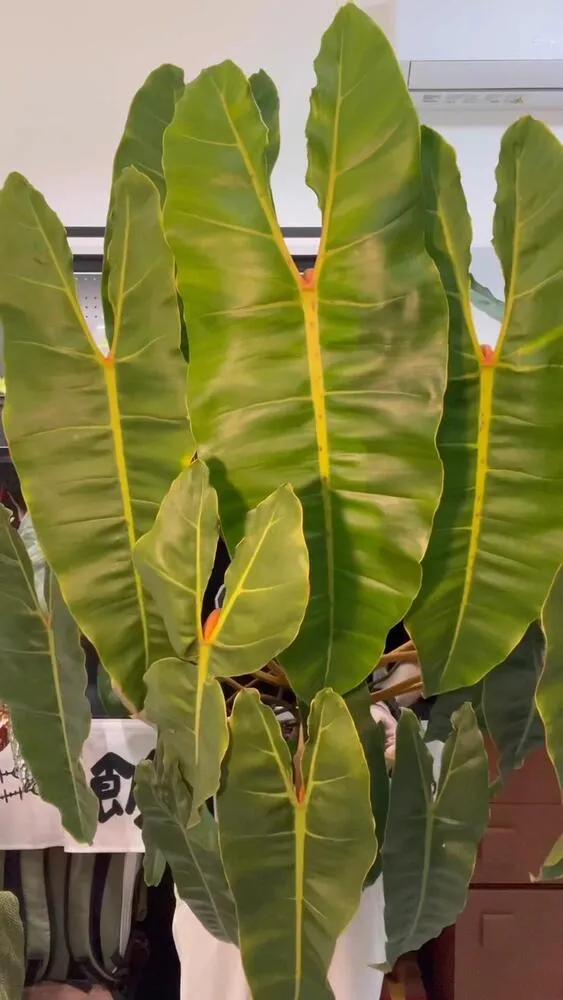
When it is young, Billietiae can look elegant, narrow, and surprisingly manageable. That early stage makes it easy to underestimate how much room it may need later. But once it settles in and starts growing well, it does not stay like that for long. In my case, the change over one year was already big enough to make space the real issue, not care difficulty.
This matters even more indoors, where every large plant eventually competes with furniture, walkways, shelves, window space, and other plants. Billietiae is not just a plant that gets taller. Its leaves get longer, the petioles extend further, and the whole plant begins to occupy space in a wider, more dramatic way. That is the part I think people should plan for early.
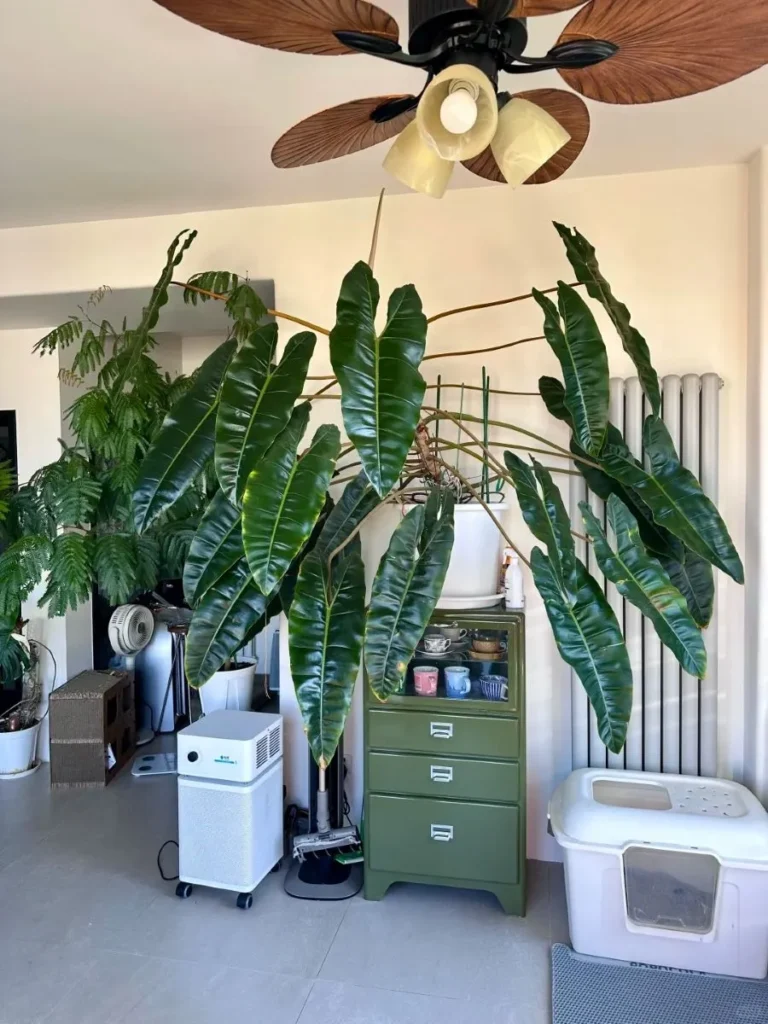
So if your home really only has room for small to medium foliage plants, this is something to think about before buying one. Not because Billietiae is a bad choice, but because it may eventually outgrow the kind of space that felt perfectly fine in the beginning.
At the same time, that is also part of what makes it so rewarding. If you enjoy large tropical plants and you want something that can develop real presence without being overly fussy, Billietiae is incredibly satisfying to grow. The same trait that makes it inconvenient in a small space is exactly what makes it impressive in a bigger one.
My Take: Who Billietiae Is Best For
Billietiae is a great fit if you want a large, distinctive philodendron that is not overly fussy. It suits growers who have strong indoor light, use grow lights, or can give the plant a bright south-facing window. It also makes sense for people who do not mind staking it a little and giving it more room as it matures.
I would be less likely to recommend it if your space is very limited, your light is consistently weak, or you mainly prefer plants that stay more manageable for longer. In that case, I would usually point people toward smaller-growing philodendrons instead. Billietiae is not especially difficult, but it is much more rewarding when you are willing to grow it as a large plant rather than trying to keep it small forever.
FAQ
Still exploring philodendron varieties?
If you’re comparing leaf shapes, colors, or growth habits, my main philodendron varieties page is the best place to keep exploring and find similar types side by side.
Go to Varieties Hub →