Philodendron Micans has been one of the easiest trailing philodendrons in my home. I’ve had this plant for about three years, and over time it has become one of those plants I simply live with rather than constantly manage.
It isn’t the fastest grower in my collection, and it doesn’t always look as perfect as it does in glossy plant shop photos. But in normal indoor conditions, it has proven to be much more forgiving than many people expect. That’s also why I think Micans is such a good plant to talk about from real experience rather than just care-sheet advice.
What Philodendron Micans Has Been Like in My Home After 3 Years
I’ve had this Philodendron Micans for about three years now, and what stands out most is how steadily it has grown without needing much intervention. In that time, I’ve mostly just let it grow, cut it back when the vines got too long, and watched how it responded to normal indoor conditions.
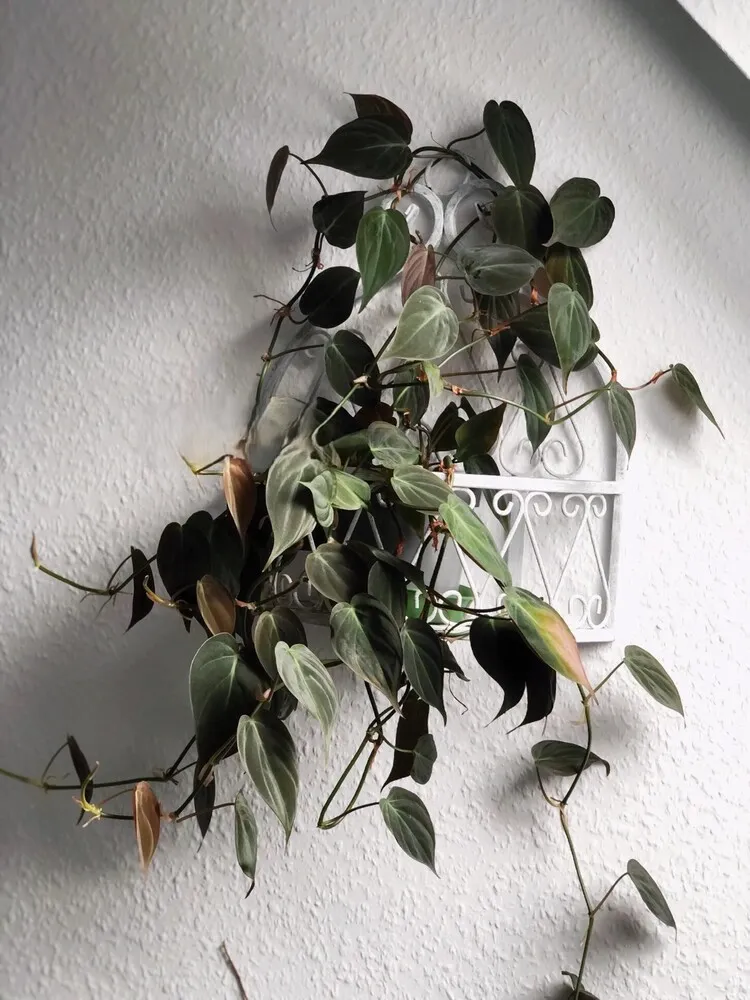
What stands out to me most is that it has stayed reasonably stable without a lot of intervention. I haven’t been repotting it often, I haven’t been especially diligent with fertilizer, and I definitely haven’t treated it like a fragile collector plant. Even so, it has continued to grow well enough over time and has remained one of the easier trailing philodendrons to keep around.
That doesn’t mean it looks the same under all conditions. When the light is good, the leaves grow larger, thicker, and noticeably more velvety. The plant also looks fuller and healthier overall. But when the light drops, the change is easy to see. The vines start to stretch, the spacing between leaves gets longer, and the new leaves come in smaller. It’s not a dramatic collapse, but it does lose some of the lush look that makes Micans so appealing in the first place.
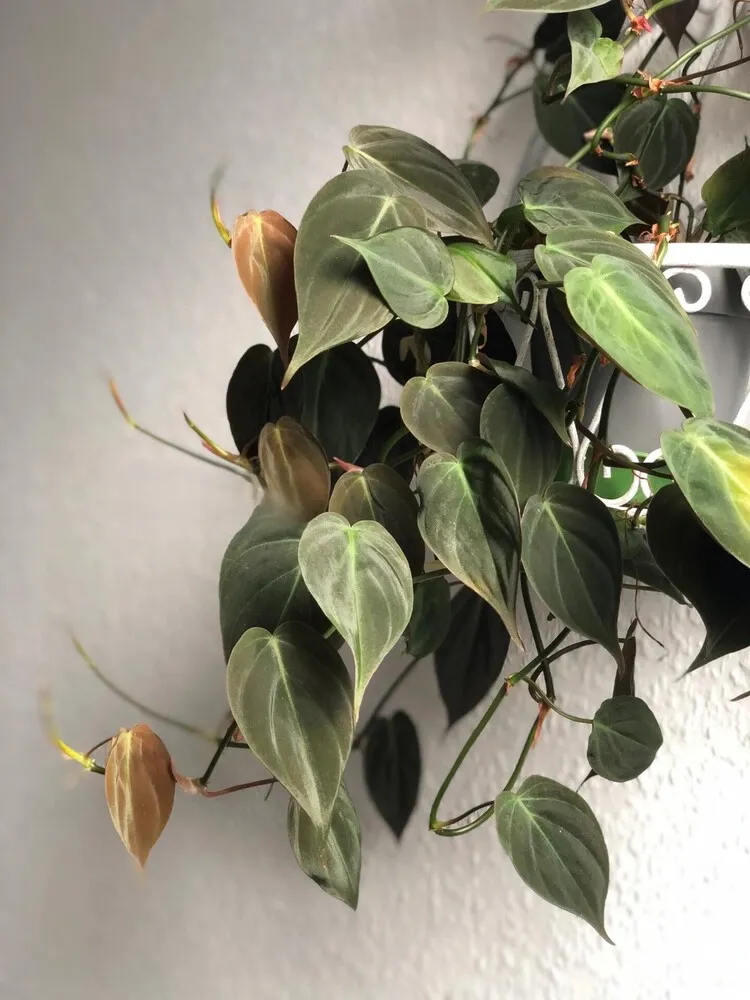
Overall, I’ve found Micans forgiving but not completely effortless. It responds clearly to better care, but it also doesn’t collapse every time conditions are less than ideal. For me, its biggest strength is not speed or drama, but the fact that it stays worth keeping year after year.
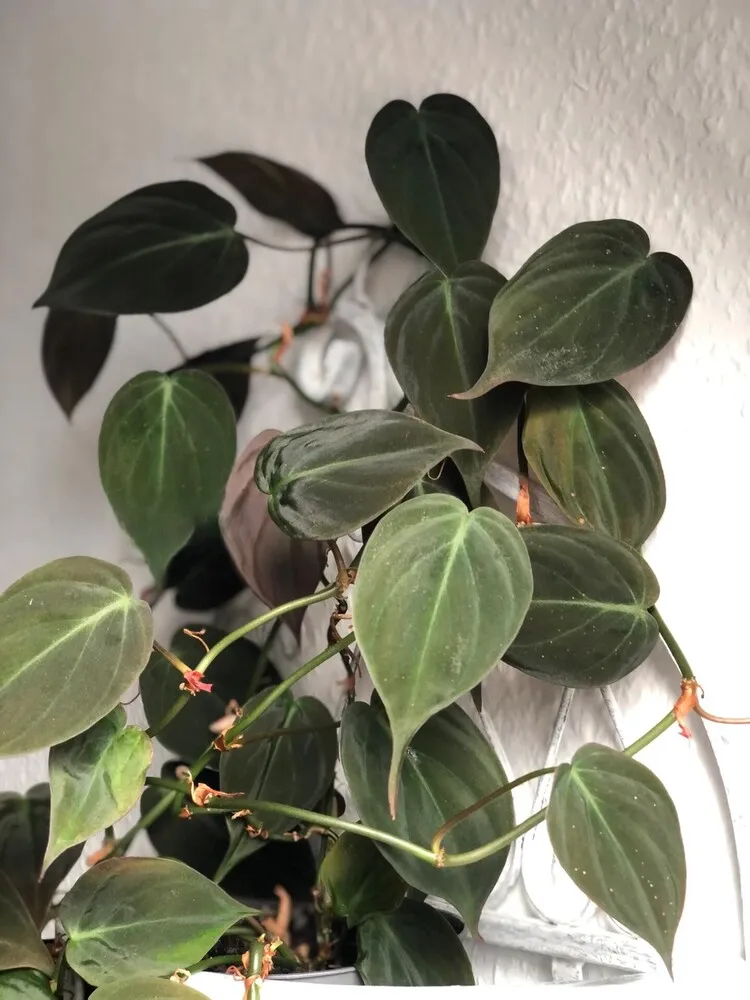
That long-term steadiness is really why I think Micans is such a good plant for real-world indoor growing. It responds clearly to its conditions, but it also gives you room to make mistakes and adjust as you go.
How I Care for Micans Without Overdoing It
Light
I keep my Micans in bright indirect light and try not to move it around too much. That has given me the most consistent growth. I avoid direct sun, because once the light becomes too harsh, the leaves can scorch and lose the soft look that makes this plant appealing.
Watering
My usual routine is simple: I let the soil dry out well, then water thoroughly. Micans can handle a bit of dryness better than many beginners expect. Letting it stay dry for a few extra days is usually less risky than watering too often. What causes more problems is soil that stays wet for too long. Once the roots sit in constantly damp mix, the plant declines much faster. With Micans, watering less is usually safer than watering too much.
Pot Size and Soil: Why I’ve Kept Mine in a Small Pot
This plant has stayed in the same small pot since I brought it home, and after three years, I still don’t think that was a mistake. Over the past three years, the vines have grown long, I’ve cut it back many times, and it has continued growing anyway. That experience made me much less eager to repot trailing houseplants just because they look bigger above the soil line.
A lot of beginners assume that once a plant starts growing well, it should immediately go into a larger pot. Indoors, though, that often creates a different problem. A bigger pot holds more wet soil, which means it dries more slowly. If the light, airflow, and temperature are not strong enough to match that extra moisture, the roots can sit in damp soil for too long and start struggling. For a plant like Micans, which is already fairly easygoing, a smaller pot actually makes watering easier to control. If I were to refresh the soil, I would keep the mix simple and airy — something like regular potting soil with added perlite would be enough.
Feeding, Temperature, and Humidity
In theory, Micans grows best with light feeding during the active season, but mine has done fine even when I’ve been lazy about fertilizer. The main difference is not survival, but appearance. With more consistent feeding, the plant would probably look fuller and more polished. In my home, it has mostly grown in temperatures around 15–25°C, and that range has worked well for it. As for humidity, I haven’t given it any special treatment. At least in my experience, Micans is not one of those plants that needs high humidity just to stay alive in a normal indoor space.
What Happened When My Micans Leaves Turned Red
The strangest problem I’ve had with this plant happened during its second winter in my home. I was away a lot at the time, and most of my plants were left in a more enclosed winter setup with much less attention than usual. When I finally had time to clean up and prune everything, I noticed that the leaves on my Micans had turned an unusual red, almost as if someone had splashed red ink across them.
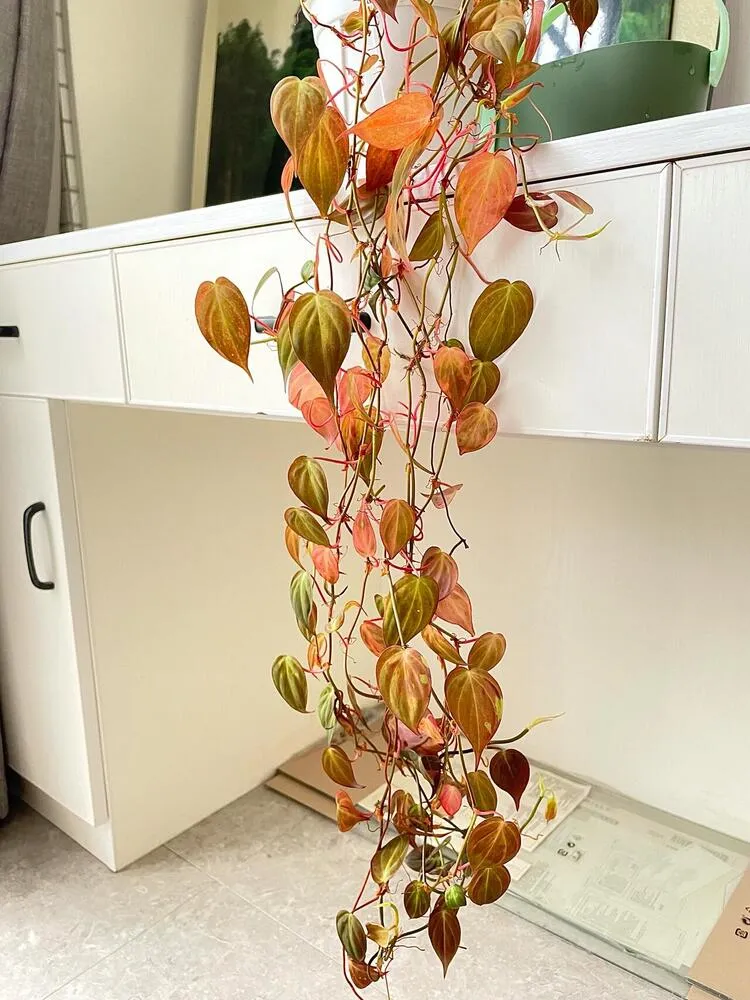
It did not look like normal yellowing or dry leaf damage. Some of the leaves even had red liquid gathering at the tips, which made the whole plant look far more alarming than a typical watering issue. My first instinct was that this was not simple thirst, but some kind of cold stress or winter damage that had already pushed the plant well past a normal recovery stage.
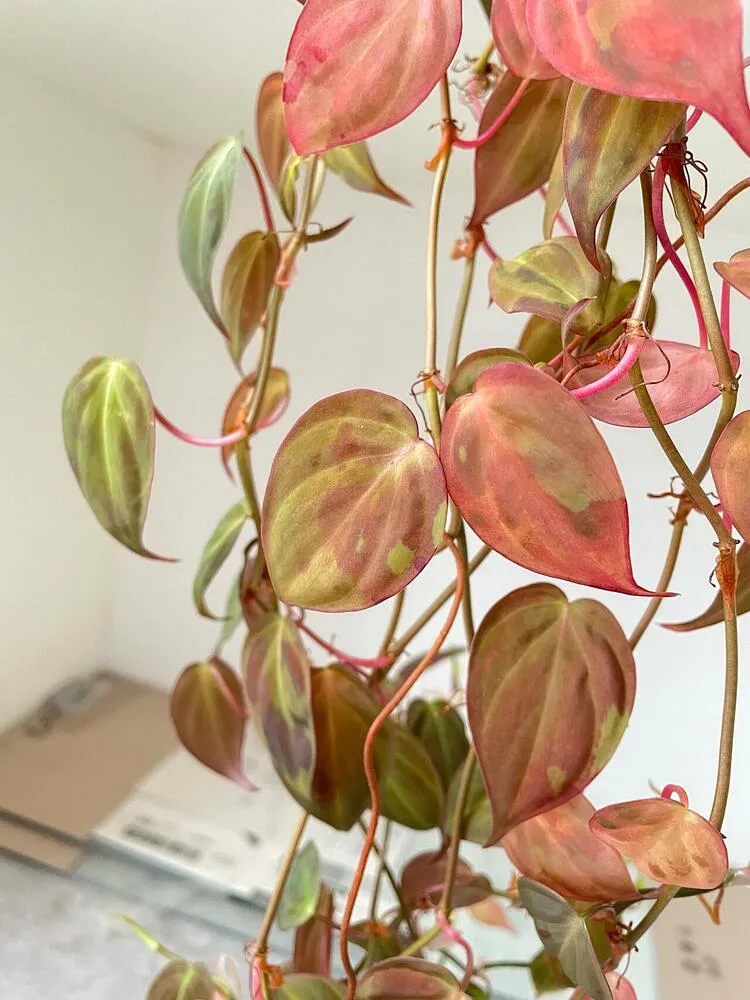
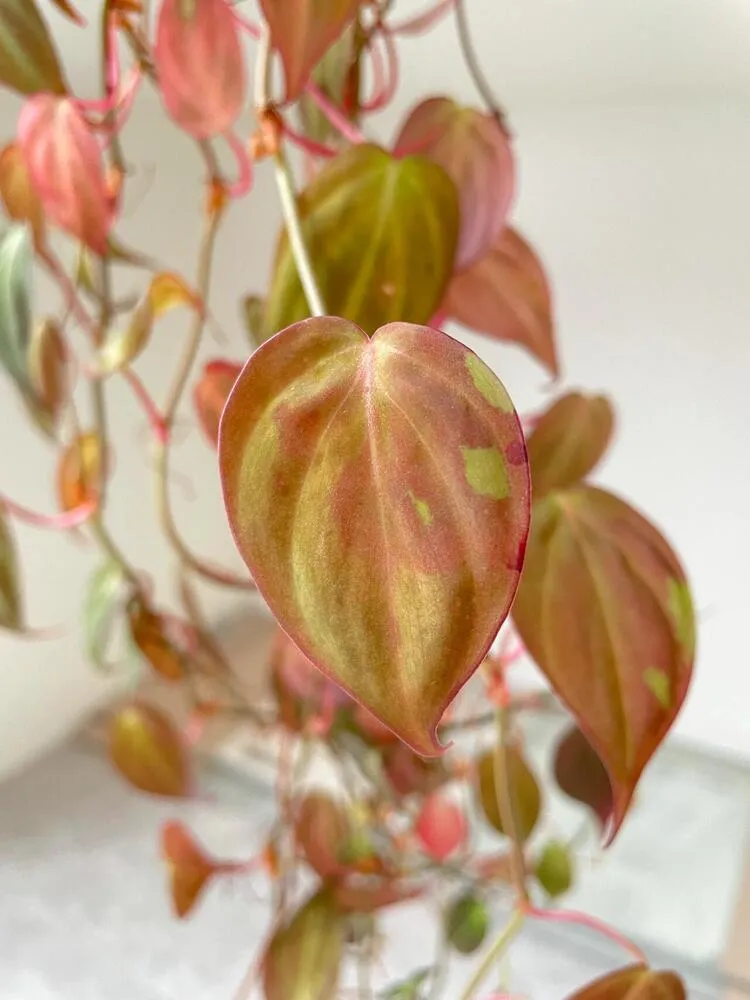
Because the growth looked so odd and the foliage no longer seemed worth saving, I ended up cutting the plant all the way back. At the time, it felt drastic, but it turned out to be the right decision. Once spring arrived and conditions improved, the plant pushed out fresh new growth and gradually became healthy again.
That experience changed how I read winter damage. When a plant starts showing unusual color changes in the colder months, I no longer look at the leaves alone. I pay much more attention to the surrounding conditions, especially temperature, because that is often where the real problem begins.
How I Propagate Philodendron Micans at Home
I’ve propagated this plant many times over the years. Most of the new plants came from routine trimming rather than planned propagation, and Micans has been one of the easiest philodendrons to restart from cuttings. I’ve rooted enough pieces from this one plant to keep some and give plenty away to friends, so this is a method I trust because I’ve repeated it many times.
Step 1: Cutting Back the Vine
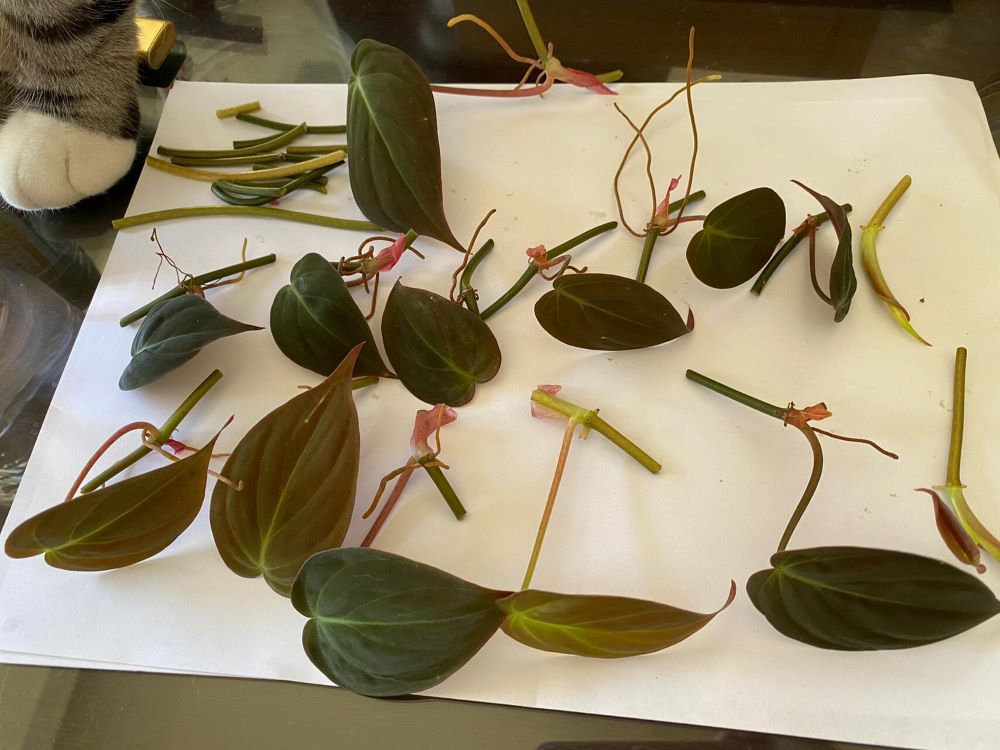
I usually start by choosing a healthy section of vine and cutting it back where the shape of the plant needs tidying. The most important thing is keeping at least one node on each usable cutting, because that is where both new roots and new growth will emerge. If part of the vine is too long and stretched out between leaves, I usually discard it instead of trying to save every section. In my experience, shorter and cleaner cuttings are simply easier to work with.
Step 2: Rooting the Cuttings in Water
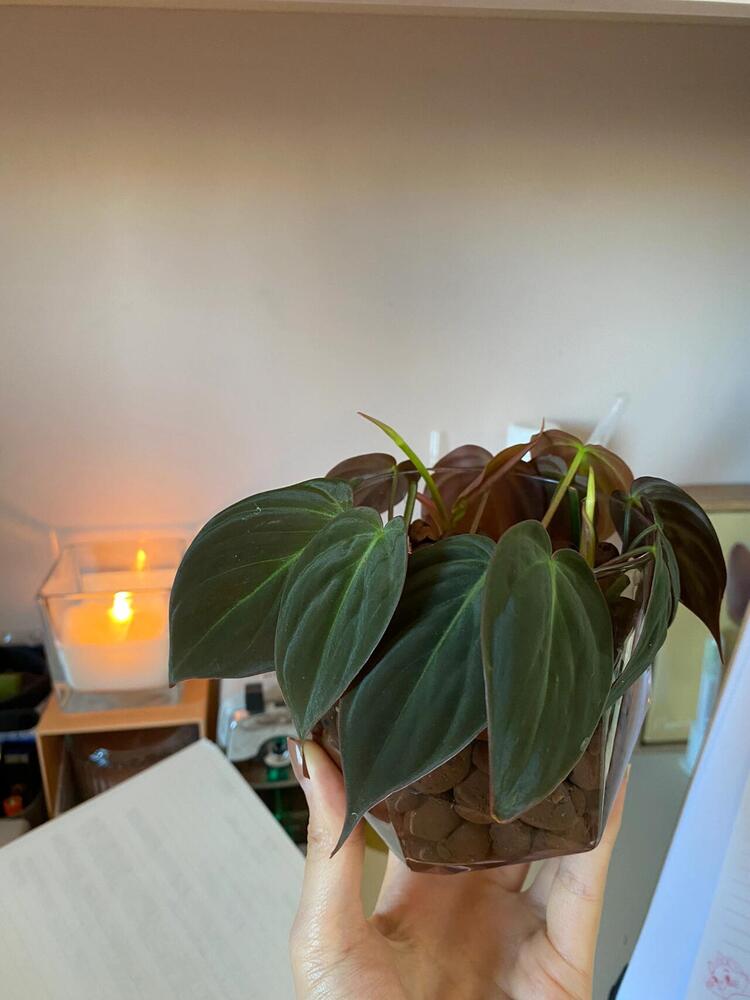
Once I’ve made the cuttings, I place them in water and let the rooting happen there. I usually submerge the node while keeping the leaves above the waterline. Micans roots very easily this way, so I don’t do anything complicated. No special setup has been necessary for me. This is the same method I’ve used over and over again with this plant, and it has been consistently reliable.
Step 3: Moving It from Water to Soil
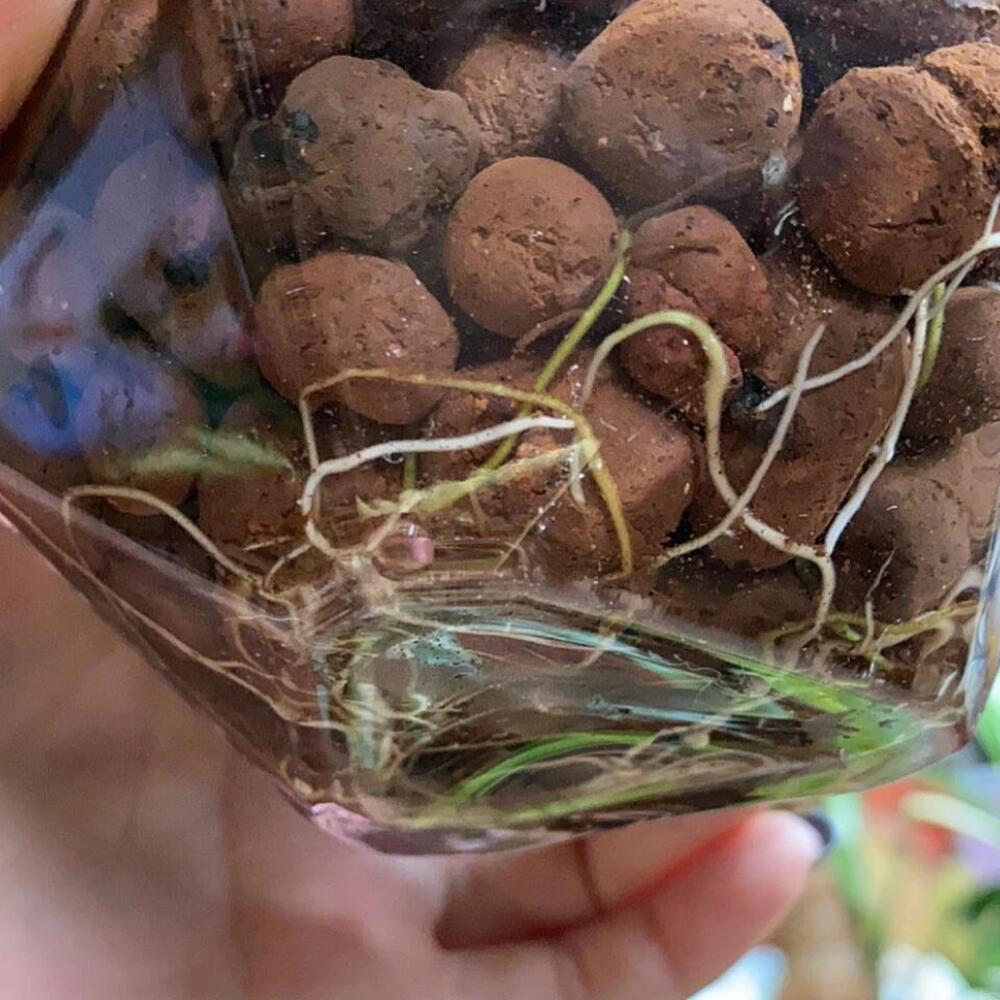
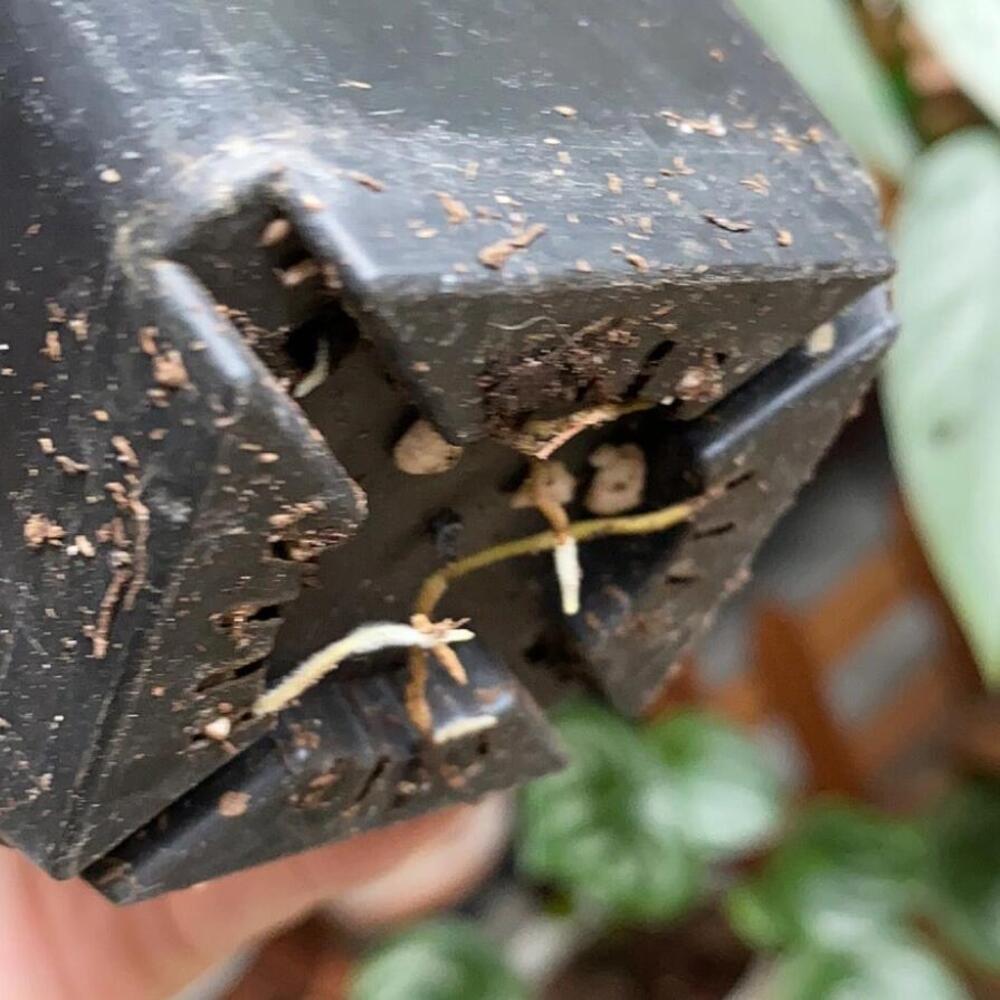
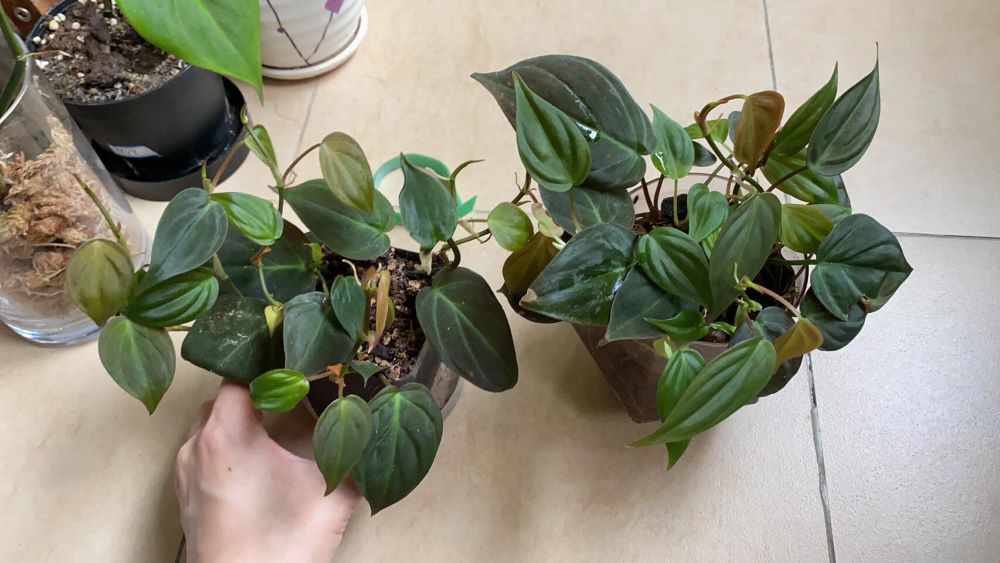
When the new white roots are around 3–5 cm long, I move the cutting into soil. I’ve found that timing matters. If I transfer it at that stage, the plant usually settles in well and starts growing more strongly. When I leave cuttings in water for too long, they may keep surviving, but they usually do not grow as fast or as sturdily afterward. So for me, water propagation is mainly a rooting step, not the final growing method. If I want the new plant to establish well and put out stronger growth, I prefer to move it into soil fairly early.
Why I’ve Kept This Plant for So Long
After growing Philodendron Micans for about three years, the biggest lesson for me is that it responds better to consistency than to constant intervention. What has worked best in my home is not doing more, but doing the right few things steadily: bright indirect light, a proper dry pause between waterings, and no rush to move it into a larger pot just because the vines are longer.
Another reason I still like growing Micans is that it bounces back well. It roots easily, handles pruning well, and usually gives you another chance even after a rough season or a poor decision. That makes it a very forgiving plant to learn from.
For me, Philodendron Micans is not the most dramatic plant in the room, but it is one of the easiest to keep with me for years.
FAQ
Still exploring philodendron varieties?
If you’re comparing leaf shapes, colors, or growth habits, my main philodendron varieties page is the best place to keep exploring and find similar types side by side.
Go to Varieties Hub →