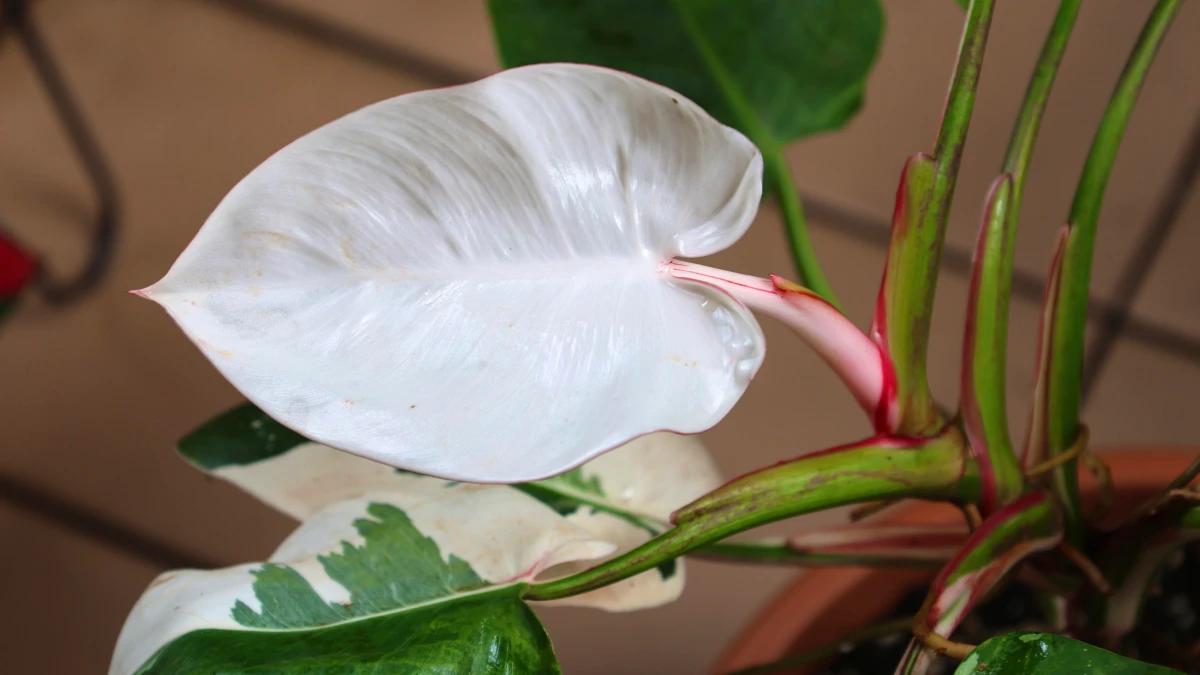
Philodendron White Knight Care: What Changed After I Cut Mine Back

May 8, 2026

I bought my Philodendron White Knight because of one half-moon leaf.

It was winter, the choices at the plant shop were limited, and none of the plants looked perfect. But that one leaf made me take it home anyway. For a short while, I thought I had made a good choice.

Then the plant started growing worse. The new leaves looked less exciting, one came out mostly green, and another looked damaged enough that I started questioning the whole plant. In frustration, I cut it back.

What surprised me was what happened later. After the plant had time to recover, the first new leaf came out half-moon again. The next one showed even more mixed variegation, with a warm reddish blush on the new tissue.

So this is not a guide about cutting every White Knight that grows an ugly leaf. It is about what I learned from one plant that looked disappointing at first — and how I now decide when to wait, when to adjust care, and when cutting back might actually be worth the risk.

What I Do Differently With White Knight Now

After growing this plant through an ugly phase and a cut-back recovery, I treat White Knight more carefully than a plain green philodendron. I give it bright indirect light, avoid harsh direct sun on the white parts, let the pot begin to dry before watering again, and keep the soil airy enough that the roots do not sit wet for too long.

The main thing I do not do now is react to every strange leaf. With this plant, stable roots and steady conditions matter more than constant changes.

The Part I Misjudged at First

At first, I thought the plant itself was the problem.

When a White Knight starts giving you plain or damaged leaves, it is very easy to blame the genetics right away. I looked at the new growth and thought, maybe this plant just does not have the kind of variegation I hoped for.

Looking back, I think I judged it too quickly.

A newly brought-home plant can behave strangely for a while, especially if it was bought in winter. The roots may not be fully active yet, the plant may still be adjusting to different light and humidity, and the active growth point may not show its best pattern right away.

That is the tricky thing about Philodendron White Knight. One leaf can make you feel like you found a gem, and the next leaf can make you doubt the whole plant. I would not judge it by whether the newest leaf is beautiful or disappointing. I would rather watch the direction of the plant over several leaves, after it has had time to settle.

What the Bad Leaves Were Telling Me

The ugly leaves were frustrating at the time, but they were not all saying the same thing. That was the part I missed at first. I treated every disappointing leaf as proof that the plant was going downhill, when some of those signs were probably just part of the adjustment period.

What I SawWhat I Think Now
One mostly green leafNot enough to prove the whole plant had lost its variegation
A damaged leafCould have come from adjustment stress, humidity change, mechanical damage, or root disturbance
Weak-looking new growthThe plant may not have fully settled into my home yet
Older half-moon leaf still presentThe plant still had variegation potential, even if the newest leaf looked disappointing

This is why I try not to judge a White Knight too quickly now. A single bad leaf can be useful information, but it is not the whole story. I pay more attention to repeated patterns: several plain leaves in a row, smaller and weaker new growth, or a plant that keeps declining even after the basic conditions are stable.
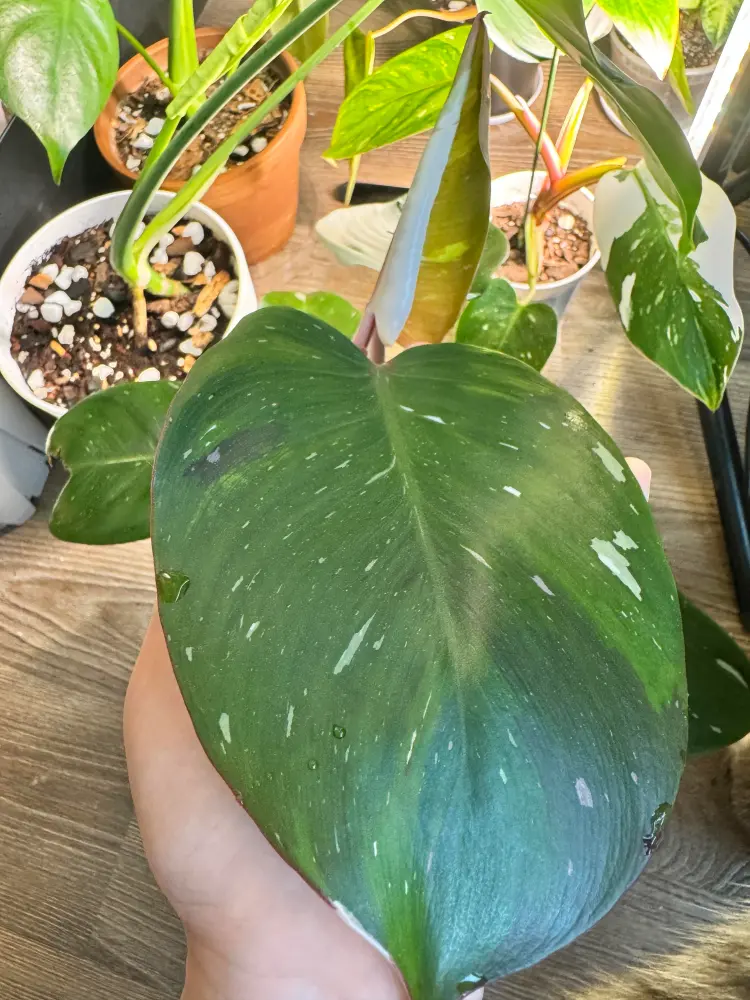
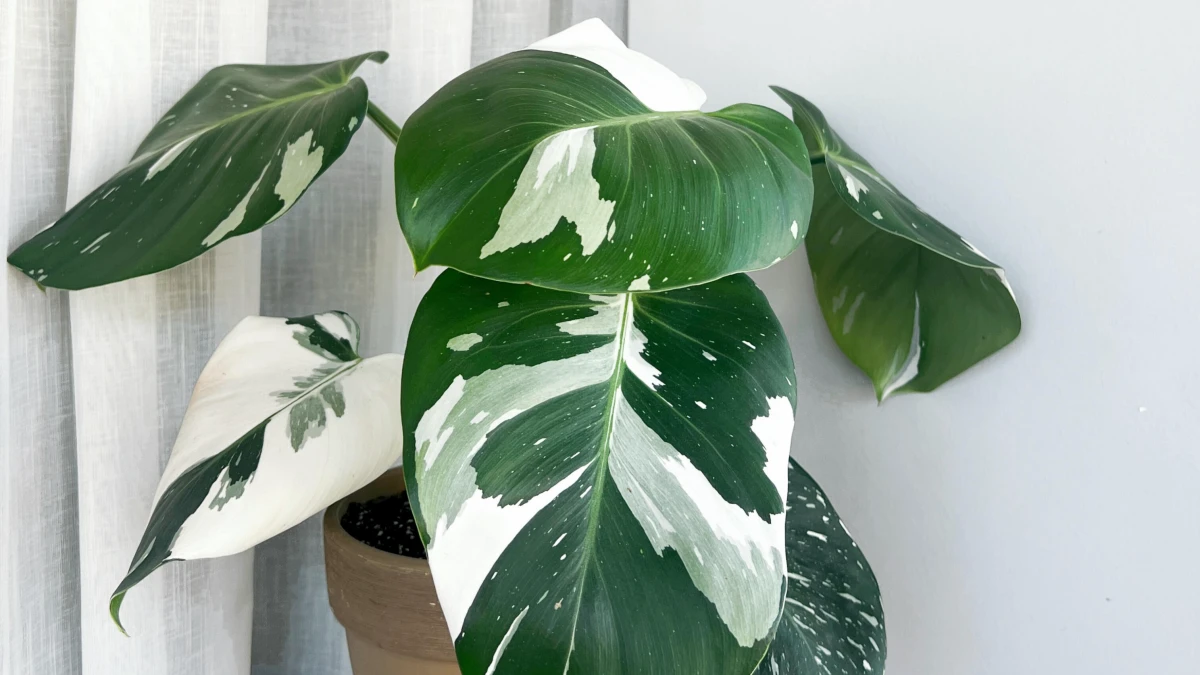
Philodendron White Knight leaf that is mostly green with small white variegation marks after recovery
Not every new White Knight leaf looks dramatic. I watch the pattern over several leaves instead of judging the whole plant by one mostly green leaf.

Why I Cut It Back — and Why That Was Still a Risk

I cut my White Knight back because the plant kept moving in a direction I did not like. It was not just one plain leaf. The new growth looked weaker, the variegation was disappointing, and the plant no longer felt like the half-moon White Knight I had chosen in the shop.

But I do not see cutting as a normal care step for every White Knight.

When you cut back a philodendron, you are asking the plant to activate a new growth point. Sometimes that new growth can show a better pattern than the old one. That is what happened with mine. But the plant still needs energy to recover, and that energy comes from a healthy root system and an active growing setup.

If the roots are weak, the plant is newly repotted, or the room is cold and dim, cutting can make things worse. Instead of getting a stronger new shoot, you may end up with a stalled philodendron that has fewer leaves and less energy.

So yes, cutting worked for my White Knight. But I would not treat it as a shortcut to better variegation. It was a risk that only made sense because the plant had shown good variegation before and still had enough strength to come back.

The New Growth After Cutting Was the Real Test

The cut itself was not the part that made me feel confident. The real test was what the plant did after it had time to recover.

Once the roots seemed stronger and the plant started growing again, the first new leaf came out half-moon. That already made me feel like the plant still had the variegation I had hoped for. Then the second new leaf looked even more interesting, with a more mixed pattern instead of a simple green-and-white split.
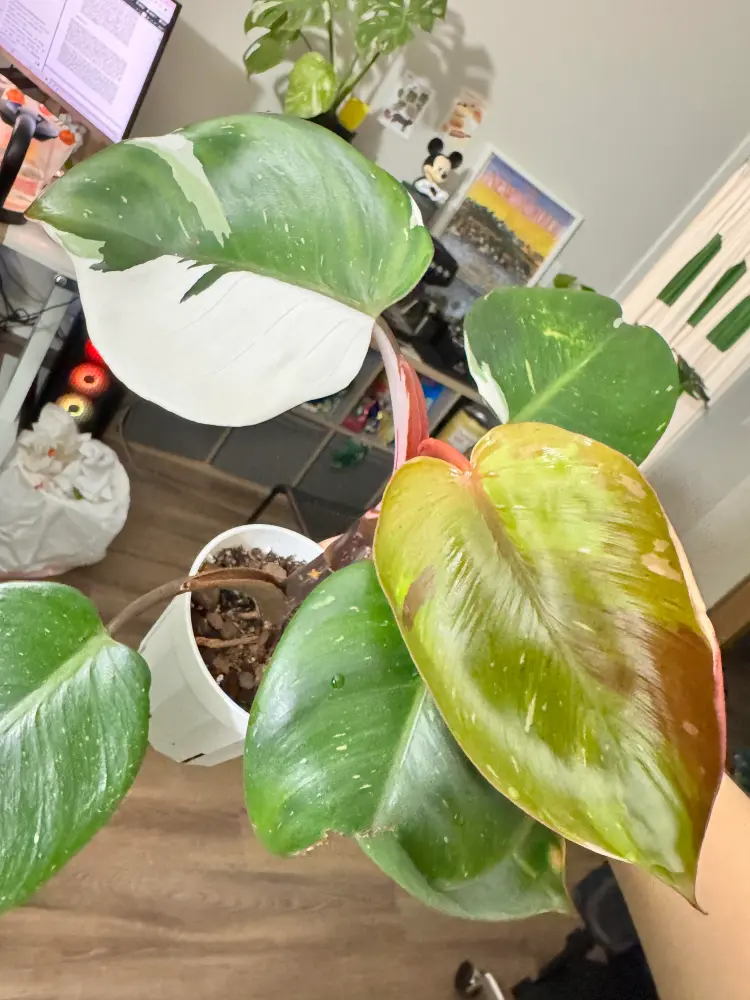
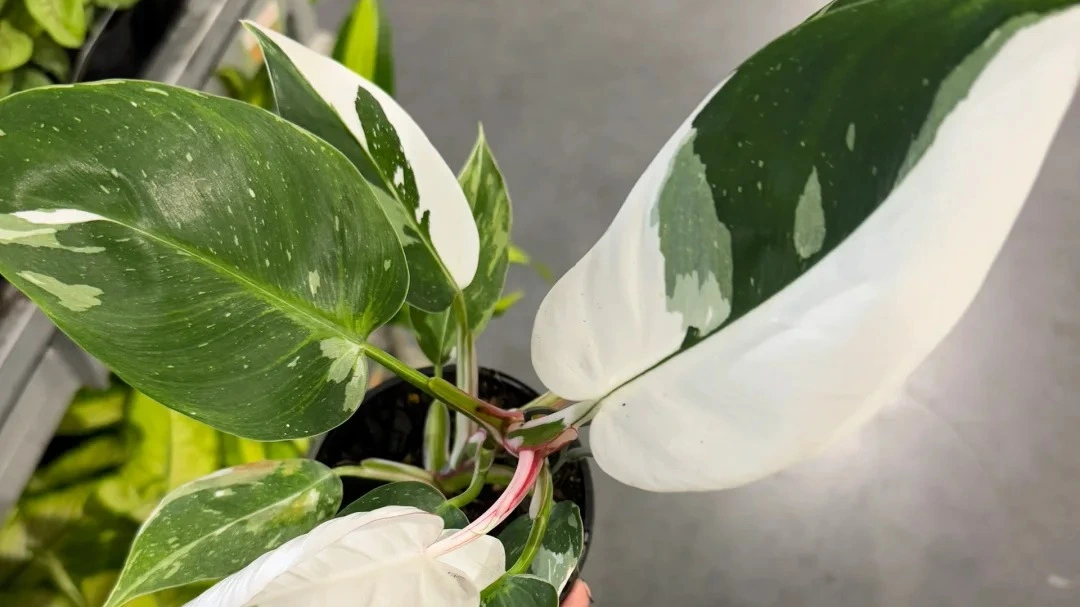
Philodendron White Knight after cutting back with a half-moon variegated leaf and warm reddish new growth
After cutting back my White Knight, the new growth came back with a half-moon leaf and a warm reddish blush on the next leaf.

There was also a warm reddish blush on the new tissue. I would not call that stable pink variegation, because White Knight is not the same as White Princess. But on fresh new growth, that reddish tone made the leaf look even more alive before it started maturing.

After that, my mindset changed. I no longer wanted to keep testing the plant or cutting it again just to chase the next dramatic leaf. Once the new growth looked strong and the leaves started sizing up, my job became much simpler: protect the plant, keep the roots steady, and stop interfering too much.

My Rule Before Cutting a White Knight Now

After this plant, I became much slower to cut a White Knight back. Pruning can help in the right situation, but it is not something I would do just because one leaf looks disappointing.

I would only consider cutting if:

  • the plant has shown good variegation before
  • the root system looks healthy
  • the plant is actively growing
  • more than one new leaf has been disappointing
  • I am prepared to wait for recovery instead of expecting an instant result

I would not cut if:

  • the plant just came home
  • it is winter and the light is weak
  • the roots are weak or unknown
  • it was just repotted
  • the plant only has a few leaves left
  • I am reacting to one plain leaf out of frustration

For me, the biggest difference is whether the plant has enough strength to come back. Cutting a strong White Knight may wake up a better growth point. Cutting a weak one can simply remove the leaves it still needs. So before I reach for scissors now, I look at the whole plant, not just the newest leaf.

How I Keep the New Growth Worth Protecting

Once the new growth started looking good, I changed my focus. I was no longer trying to force the plant to prove itself. I wanted to keep the next leaves as clean and healthy as possible.

For me, that starts with bright indirect light. White Knight needs enough brightness for the white variegation to show well, but I do not put the white parts under harsh direct sun. Those pale sections are beautiful, but they are also the easiest parts to burn. If the room is dark, I would first think about how much light philodendrons actually need indoors before blaming the plant.

I also try to protect the roots. I water only when the pot has started to dry, instead of keeping the mix constantly wet. A good new leaf depends on a steady root system, and soggy soil can set the whole plant back quickly. My general approach is similar to how I water philodendrons without keeping the pot wet all the time.

The soil needs to stay airy enough that the roots can breathe. I would rather use a loose soil mix for philodendrons than a dense mix that stays wet around the roots for too long. If a White Knight starts declining while the pot stays wet, I would rather check for philodendron root rot early than keep adjusting the top growth.

After cutting, I also avoid unnecessary changes. I do not repot it again unless there is a real reason. I do not keep moving it from one spot to another. Warmth helps recovery, but stability matters just as much. And in my house, protecting the new growth also means keeping it away from curious cats, because one good new leaf can be ruined very quickly.

As the stem starts to lengthen, I would also rather support it early than let the plant lean awkwardly; a simple stake or moss pole is enough for a young White Knight.
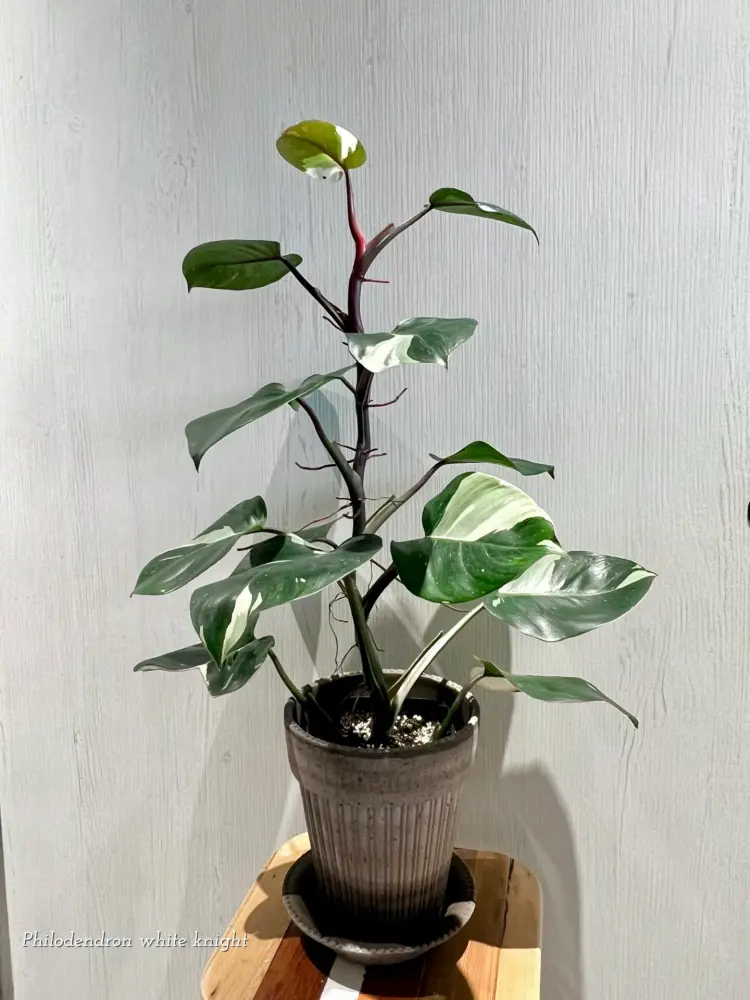
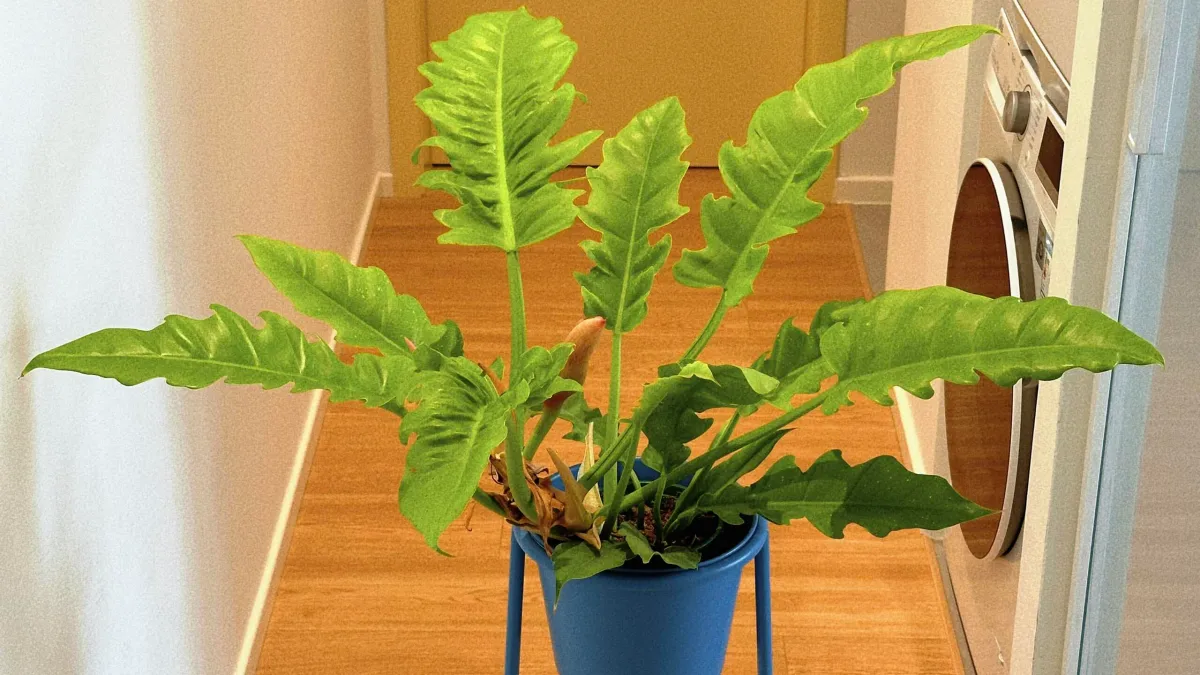
Philodendron White Knight reference plant with climbing stems and green leaves with white variegation
This reference plant shows how White Knight can start to stretch upward as it matures, which is why early support can keep the shape cleaner.

The White Parts Are the Weakest Part of the Plant

The white parts are the reason many of us buy Philodendron White Knight, but they are also the parts I treat most carefully.

White variegation looks beautiful because those areas have much less green tissue. That also means they are not as strong as the darker parts of the leaf. If the light is too harsh, the white sections usually show damage first. They can turn brown, thin, or crispy before the rest of the leaf looks bothered.

Dry air can make the edges look rough too, especially on a new leaf that is still opening. But when a new leaf comes out damaged or incomplete, I do not blame humidity alone. I also think about the roots. A White Knight under root stress often cannot push clean, strong new growth, even if the top of the plant still looks decent.

That is why I do not chase “more white” at any cost. A highly white leaf is exciting, but it is not useful if the plant is too stressed to keep growing well. For me, the goal is not the whitest leaf possible. It is a healthy plant that can keep producing good leaves over time.

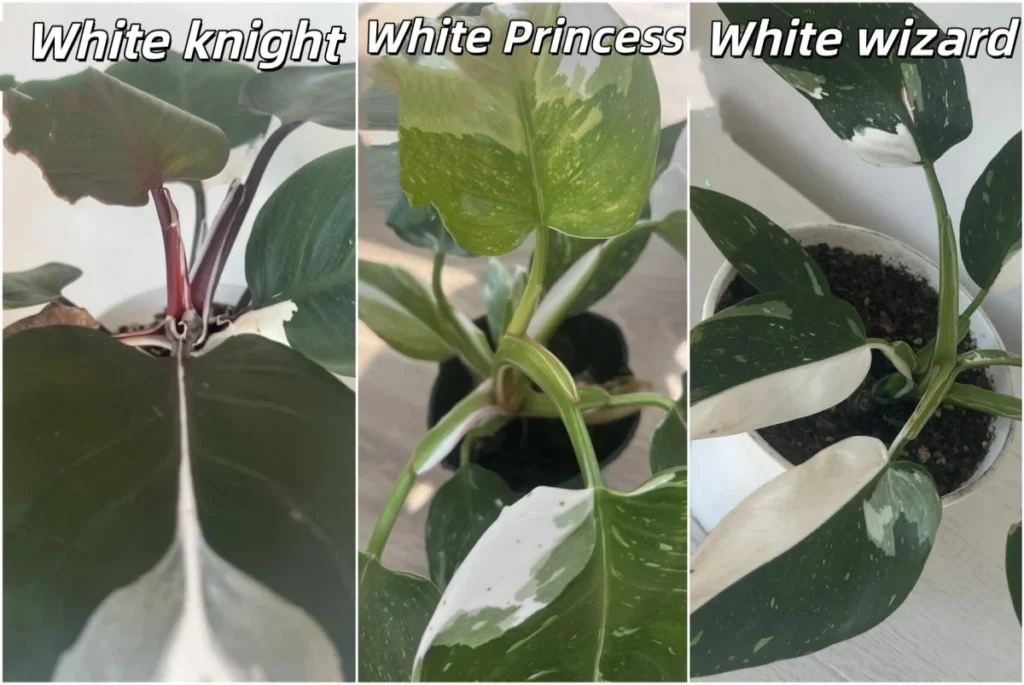
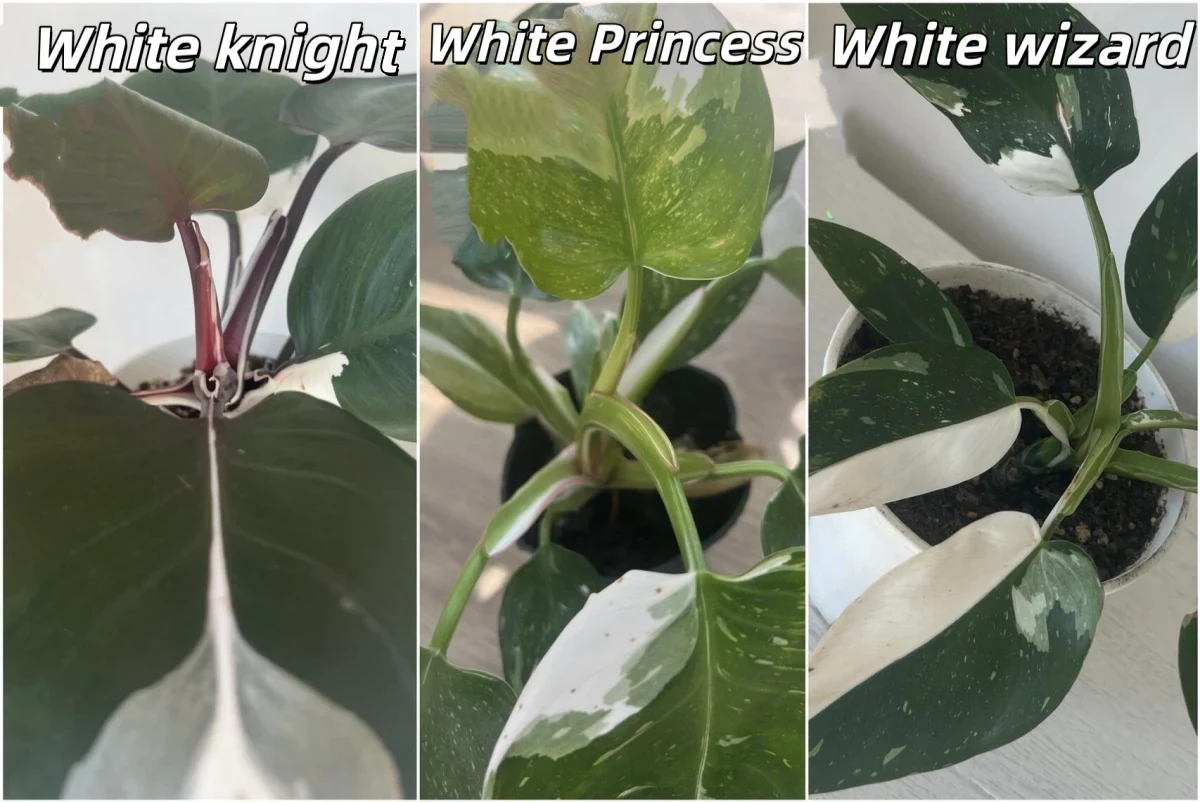
White Knight, White Princess, and White Wizard: The Names Matter

White Knight is easy to mix up with White Princess and White Wizard, especially when the plant is young or when the newest leaf has unusual color. I do not want to overcomplicate the names here, but I do think the difference matters.

PlantWhat I Look For
White KnightDarker stems, white variegation, and sometimes reddish or burgundy tones on new growth or stems
White PrincessWhite variegation with possible pink tones
White WizardGreener stems and a cleaner white-and-green look
粘贴的文本 (1).txt
文档
https://philodendronhub.com/varieties/philodendron-florida-ghost/
5	2026-04-11 02:17 +00:00
https://philodendronhub.com/varieties/philodendron-prince-of-orange/
8	2026-04-03 02:11 +00:00
https://philodendronhub.com/varieties/philodendron-moonlight-care/
8	2026-04-09 02:10 +00:00
https://philodendronhub.com/care/do-philodendrons-need-a-grow-light-indoors/
6	2026-04-07 02:01 +00:00
https://philodendronhub.com/care/philodendron-root-rot/
10	2026-04-05 01:56 +00:00
https://philodendronhub.com/problems/why-philodendron-growing-small-leaves/
6	2026-04-03 01:47 +00:00
https://philodendronhub.com/varieties/philodendron-billietiae-care/
8	2026-03-30 14:02 +00:00
https://philodendronhub.com/care/how-to-put-a-philodendron-on-a-moss-pole/
15	2026-03-17 08:28 +00:00
https://philodendronhub.com/care/best-soil-for-philodendron/
9	2026-03-17 08:25 +00:00
https://philodendronhub.com/care/how-to-water-philodendron/
6	2026-03-17 08:22 +00:00
https://philodendronhub.com/care/how-much-light-do-philodendrons-need/
14	2026-03-17 08:18 +00:00
https://philodendronhub.com/problems/are-philodendrons-toxic-to-dogs/
4	2026-03-17 08:13 +00:00
https://philodendronhub.com/problems/is-philodendron-toxic-to-cats/
4	2026-03-17 08:08 +00:00
https://philodendronhub.com/problems/are-philodendrons-toxic-to-pets/
3	2026-03-17 08:06 +00:00
https://philodendronhub.com/varieties/philodendron-micans/
13	2026-03-17 07:55 +00:00
https://philodendronhub.com/varieties/philodendron-brasil/
6	2026-03-17 07:52 +00:00
https://philodendronhub.com/varieties/philodendron-birkin-losing-stripes/
9	2026-03-17 07:40 +00:00
https://philodendronhub.com/varieties/pink-princess-philodendron/
7	2026-03-17 07:18 +00:00
https://philodendronhub.com/problems/why-is-my-philodendron-drooping/
7	2026-03-17 07:15 +00:00
https://philodendronhub.com/problems/philodendron-not-growing/
7	2026-03-17 07:05 +00:00
https://philodendronhub.com/problems/philodendron-leaves-curling/
8	2026-03-17 07:00 +00:00
https://philodendronhub.com/varieties/lemon-lime-philodendron/
6	2026-03-17 06:46 +00:00
https://philodendronhub.com/problems/philodendron-leaves-turning-yellow/
10	2026-03-17 06:39 +00:00
https://philodendronhub.com/care/do-all-philodendrons-need-a-moss-pole/
8	2026-03-17 06:33 +00:00
https://philodendronhub.com/problems/philodendron-brown-spots/
9	2026-03-17 03:30 +00:00
https://philodendronhub.com/problems/overwatered-philodendron/
10	2026-03-17 03:25 +00:00
https://philodendronhub.com/
16	2026-04-17 10:12 +00:00
https://philodendronhub.com/problems/
11	2026-04-17 10:11 +00:00
https://philodendronhub.com/care/
9	2026-04-17 10:11 +00:00
https://philodendronhub.com/varieties/
34	2026-04-17 10:10 +00:00
https://philodendronhub.com/about/
0	2026-03-17 09:03 +00:00
https://philodendronhub.com/philodendron-plant-guide-for-beginners/
15	2026-03-17 03:05 +00:00
https://philodendronhub.com/contact/
1	2026-03-15 09:04 +00:00
https://philodendronhub.com/about/clara-green/
14	2026-03-15 08:16 +00:00
https://philodendronhub.com/terms-of-service/
0	2026-03-09 03:21 +00:00
https://philodendronhub.com/privacy-policy/
0	2026-03-09 03:07 +00:00结合这些关键词和我已经写的文章和页面 接下来我还可以写哪些文章
How to Repot a Philodendron
Philodendron Fertilizer Guide
How to Prune Philodendron
Do Philodendrons Like to Be Root Bound?
Philodendron Leaves Turning Transparent
Philodendron New Leaf Not Unfurling  这些哪些是care哪些是problem
魅力在于光线下的金色斑纹
给它一点耐心
还你一片热爱森林
散射光养护即可
耐阴性强,但是长期缺光会导致
叶片变绿、金斑减少🌱光照:
明亮散射光最佳!晒太狠→焦边褪色
光照够→金色才会浓、持久
💧浇水:
见干见湿!手指插土2–3cm干了再浇
浇必浇透,盆底漏水就停
冬天少浇,宁干勿湿
💨湿度:
60%+最舒服
干燥→叶尖枯
加湿器/喷雾/托盘增湿安排
🪴土肥:
疏松透气土(泥炭+珍珠岩+树皮)
生长季薄肥1–2次/月
冬天停肥
按这方法养,叶片金灿灿、油亮爆盆🌿黄金火之戒蔓绿绒,发的新芽就像一团红色火苗🔥,又因株型大颜色抢眼,像大个黄毛小子,于是成了我家绿植里的显眼包
.从一开始的温室小苗奶到了8“大,叶片也长成了茁壮的火焰状,但一直只是散锦,我也一度放弃对他的关注了,觉得基因就这样吧,所谓的焦糖大理石平替,终究只是平替。
没想到挪到我的阳光房后,一个夏天高温大太阳的关照下,长出了不同颜色纯锦的叶片,她不再是平替,她就是最美的火焰🔥!
经验总结:
- 锦不好,可以打顶,刺激刺激新叶就出大锦了!
- 不要常换盆,她喜欢爆根
- 大太阳高温(也不要太高,夏天一直在25-35度之间)
最后你也能喜得一盆粉色的火焰🌿它的养护,跟其他蔓绿绒一样耐阴好养又省心
①空间:会越长越大,所以摆放要预留足够多的空间
.
②光线:耐阴怕暴晒,属于很耐阴的蔓绿绒,但也要有散射光
.
③浇水:喜湿怕涝,见干见湿浇,盆保持通风透气即可
.
④温度:热植都喜温暖天气,温暖环境生长速度超快这些是我养护Philodendron Ring of Fire Care的经验分享,帮我整理成一篇品种文章,不要冗余,要符合eeat 要对用户有用
先写英文提纲 不要模板化模板化的意思就是不要品种文章的内容都大体相似 尤其是标题
冗余吗 不要车轱辘话来回说 要用户能一眼就看到对自己有用的信息
Intro: Mine Looked Plain Before It Looked Like Fire这一节只写你的真实经历,不讲完整养护方法。重点:一开始只是散锦,没有很惊艳
曾经觉得它只是 Caramel Marble 的平替
搬到更亮、更暖的位置后,夏天新叶颜色明显打开
这篇文章的核心不是“保证出大锦”,而是让它在真实室内环境里长得更有状态这一节不要超过 180–220 words。  这部分写一下
Quick Notes for Real Indoor Growing这里放一个简短表格,给用户快速答案。Need	What I Do
Light	Bright filtered light, not harsh direct sun
Water	Water when the top 2–3 cm feels dry
Soil	Airy mix with bark/perlite/pumice
Humidity	Better around 60%, but not helpless below that
Pot	Do not rush into a much larger pot
Growth	Slow to moderate; faster in warmth
Main issue	Low light makes the plant greener and less dramatic这个表格很重要,用户进来第一眼就能看到有用信息。  这部分写一下
Why the Variegation Can Look Weak这一节专门解决用户最关心的问题:为什么我的 Ring of Fire 不火?写:小苗期常常只有散锦
一两片绿叶不代表养坏了
斑纹受基因、光照和生长活性共同影响
不能只看一片叶子判断整株
如果连续很多片都越来越绿,才需要调整光照这一节不要再提前讲“怎么养”,只讲判断。  这部分写一下
The Light Level That Actually Changed Mine这一节给解决方案。写:明亮散射光最适合
长期弱光:叶片更绿,金斑减少
光够:金色、奶油色、橙粉色更容易稳定
但强烈直晒会焦边,尤其是浅色斑块
从弱光搬到强光要逐步适应自然内链:anchor: how much light philodendrons actually need indoors
link: https://philodendronhub.com/care/how-much-light-do-philodendrons-need/可选内链:anchor: whether a grow light is worth using in darker rooms
link: https://philodendronhub.com/care/do-philodendrons-need-a-grow-light-indoors/  这部分写一下
Warmth Speeds It Up, But Heat Can Also Backfire这一节只讲温度,不重复光照。写:温暖环境下,新叶推进更快
你的观察:夏天 25–35°C 的环境让它进入更活跃状态
但不要写成“越热越好”
高温需要配合通风和健康根系
热 + 湿土 + 不通风,反而容易闷根这一节能体现经验判断,不是普通百科。  这部分写一下
Water When the Pot Starts to Breathe Again这个标题比 “Watering Requirements” 更有真实感,也不模板。写:表土 2–3 cm 干了再浇
浇透,盆底出水后停
不要长期让盆底积水
生长期可以更积极一点
冬天弱光时减少浇水
“喜湿”不等于“土一直湿”自然内链:anchor: how I water philodendrons without keeping the pot wet all the time
link: https://philodendronhub.com/care/how-to-water-philodendron/  这部分写一下
Pot, Roots, and Soil: Keep the Base Stable把原来的“repotting”和“soil”合并,避免车轱辘话。写:Ring of Fire 不适合频繁折腾根系
不要太早换大盆
大盆 + 慢干土容易增加烂根风险
土要疏松透气,但也要能支撑大株型
可以用树皮、珍珠岩/浮石、泥炭或椰糠
重点不是配方多复杂,而是浇水后根区不会闷太久自然内链:anchor: a loose soil mix for philodendrons
link: https://philodendronhub.com/care/best-soil-for-philodendron/可以顺带内链:anchor: philodendron root rot  这部分写一下
Should You Prune It for Better Variegation?这一节很有独特性,可以保留。写得谨慎一点:打顶有时会刺激新生长点
新芽可能出现不同斑纹
但不能保证一定出大锦
只建议在植株健康、根系稳定、生长期操作
弱根、刚服盆、冬天僵苗时不要乱剪
剪下有节点的部分可以尝试繁殖这节以后可以内链到:/care/how-to-prune-philodendron/但现在如果文章还没发布,先不用加。  这部分写一下
Give It Space Before It Starts Looking Awkward这一节保留,因为这是 Ring of Fire 比较实际的问题。写:小苗期看起来不占地方
长大后叶片变长,株型很抢眼
叶片火焰形态需要空间展开
不适合长期挤在小架子里
如果空间有限,要提前考虑上杆、修剪或控制盆径这一节对用户有实际帮助,不冗余。  这部分写一下
Quick Troubleshooting: What the Plant Is Usually Telling You这里不要写长段落,改成表格。用户最容易一眼看懂。What You See	Likely Cause	What I Would Check First
New leaves are mostly green	Light may be too weak, or the plant is still immature	Move brighter gradually and watch the next few leaves
Pale parts turn crispy	Too much direct sun or very dry air	Reduce harsh sun, check watering rhythm
Leaves yellow while soil stays wet	Root stress or overwatering	Check drying speed and root health
Plant stops growing after repotting	Root disturbance or oversized pot	Give warmth, light, and avoid extra watering
Leaf tips dry out	Dry air, inconsistent moisture, or stress	Check humidity and watering pattern
Every leaf looks different	Normal for this cultivar	Judge several leaves, not one leaf自然内链可以放在表格下面一小段:For deeper symptom checks, I would compare the plant with yellow leaves on philodendrons, signs of an overwatered philodendron, and philodendron root rot.对应链接:https://philodendronhub.com/problems/philodendron-leaves-turning-yellow/
https://philodendronhub.com/problems/overwatered-philodendron/
https://philodendronhub.com/care/philodendron-root-rot/  这部分写一下
My Take: Grow the Plant, Not Just the Variegation结尾不要长。写:Ring of Fire 不算难养
但它不是每一片叶子都稳定惊艳
光照、温暖、根系稳定,比追求一片完美叶更重要
它真正的乐趣是慢慢打开状态
不要因为前几片普通叶子就放弃  这部分写一下
有利于这篇文章的faq写一下给我
粘贴的文本 (1).txt
文档
在看看这篇文章是否有需要优化的段落和句子 避免冗余、要符合eeat、要有个人博客风格的写法
粘贴的文本 (1).txt
文档
这篇文章内链应该怎么加合适
这两张图是我养的长大前后的照片,告诉我插入哪里合适 写一下标题 alt 以及说明文字
这是一张新叶子发出来为火红色 然后逐渐变成黄金色的样子 放哪里合适 写一下给我
这两张图片放哪里合适 写一下给我
这篇文章的高点击titile meta url写一下给我
白巫师蔓绿绒养护指南
1. 土壤与种植
土壤选择:推荐使用富含腐殖质、排水良好的砂质壤土,如泥炭、珍珠岩或腐叶土混合土。
翻盆与更换土壤:每隔1-2年翻盆一次,提供新鲜土壤以支持健康生长。
2. 光照与温度
光照管理:喜散射光,避免直射阳光。夏季需遮阴,冬季则需充足阳光。
温度调节:最适宜生长温度为18~30度,越冬温度不得低于5度。
3. 浇水与湿度
浇水原则:遵循“见干见湿”原则,保持盆土湿润。
冬季管理:减少浇水频率,保持盆土微干。
4. 施肥
施肥频率:生长期每月施肥一次,冬季减少施肥。
施肥方法:均匀喷洒,避免肥料直接接触根部。
5. 其他注意事项
环境通风:确保生长环境通风良好,避免潮湿引起的病害。
定期转动花盆:有助于植株均匀生长,避免偏冠。白骑士蔓绿绒砍头后锦爆炸好!!!
这是一株在线下店购入的白骑士,当时正值冬季,可选择非常少,都挺丑的而且特别贵
小伙伴帮我选了一个带half moon的,但是带回家之后越长越丑,全绿的有一片叶子甚至还残缺了(可能因为还没适应新家)一气之下砍了
你还别说,等根系长好,第一片直接half moon,昨天一看,第二片甚至是杂色锦(新手求问红色的部分是粉锦吗?)真的好开心,这一株要好好保护起来了,避免坏猫给我捣乱Update: 白骑士蔓绿绒砍头后续
红锦叶片已经和我手一样大了,早上巡园时看到新叶还是half moon😌基因真好
另外一盆白公主昨天给他换了白色的小盆,今天新芽也钻出来了,看起来也是half moon,配上粉嫩的茎杆,有点可爱☺️
这是我养Philodendron White Knight Care的经验,帮我按照我以往的要求整理成提纲,注意标题不要模板化,这是一篇个人博客
这个提纲还有优化的空间吗
但是你现在这个和上一篇看起来很相似 这就是谷歌讨厌的模板化对不对
Intro: I Bought It for the Half-Moon, Then Almost Regretted It这一节讲故事,不讲养护。写:冬天买,选择少,价格不便宜
买它是因为有 half-moon 叶
回家后越长越丑:全绿叶、残缺叶、新环境适应差
你最后决定砍头
后来第一片新叶又出了 half-moon,第二片斑纹更复杂
这篇文章不是鼓励大家乱砍,而是讲:什么时候 White Knight 值得等,什么时候不要急着操作  写一下这部分
开头感觉交代很详细?
The Part I Misjudged at First这一节不要叫 “Why Mine Looked Worse After Coming Home”。写你当时判断的变化:你一开始以为它基因不行
后来发现可能不是基因差,而是植株还没适应、根系没恢复、生长点表现不稳定
White Knight 的单片叶子很容易误导人
判断这类白锦,不能只看“现在这片叶子漂亮不漂亮”这个标题比 “Why White Knight Can Look Worse...” 更有个人博客味道。 这部分写一下
What the Bad Leaves Were Telling Me这一节专门拆解你看到的“丑叶”。不要泛泛说 care,直接说症状:What I Saw	What I Think Now
One mostly green leaf	Not enough to prove the whole plant lost variegation
A damaged leaf	Could be adjustment stress, humidity change, or root disturbance
Weak-looking new growth	The plant may not have settled in yet
Older half-moon leaf still present	The plant still had variegation potential这个表格会很有用,也和上一篇不一样。  这部分写一下
Why I Cut It Back — and Why That Was Still a Risk这是核心段落。写:你砍头是因为它持续变丑,不是因为“白骑士必须砍”
砍头会让植株重新从某个生长点出芽
但也会消耗能量
如果根系不稳,可能会更糟
你这次成功,不代表所有 White Knight 都适合照做这节非常 E-E-A-T,因为你有边界感。  这部分写一下
The New Growth After Cutting Was the Real Test这一节写结果。写:等根系长好后,第一片新叶出现 half-moon
第二片出现更复杂的杂色锦
红调新叶可以描述为 reddish blush / warm blush,不要直接说 stable pink variegation
新叶变大后,你开始决定保护这株,而不是继续折腾这节可以很有个人博客感。  这部分写一下
My Rule Before Cutting a White Knight Now这节非常实用,直接给用户判断。写成 checklist,比大段文字有用:I would consider cutting only if:the plant has shown good variegation before
the root system is healthy
it is in active growth
the newest growth has been disappointing for more than one leaf
I am prepared to wait, not expect instant resultsI would not cut if:it just came home
it is winter and light is weak
roots are weak
it was just repotted
the plant only has a few leaves
I am only reacting to one plain leaf这个 H2 会和上一篇完全不同,也更有用户价值。  这部分写一下
How I Keep the New Growth Worth Protecting这里再进入养护,但不要拆成 light / water / soil 三个模板 H2。写成“保护新芽”的逻辑:明亮散射光,让白锦有机会表现
不暴晒,白斑容易焦
浇水不要把根闷住
土要透气,根稳才有好新叶
温暖环境帮助恢复
不频繁换盆,不频繁移动
防止猫碰坏新芽这里可以自然内链 light、watering、soil、root rot。
但不要每个都展开成单独 H2。  这部分写一下
The White Parts Are the Weakest Part of the Plant这一节专门写白斑护理,很适合 White Knight,和 Ring of Fire 不一样。写:白色部分观赏价值高,但也最容易受伤
光太强会焦
空气太干会边缘发脆
根系压力会让新叶不完整
不要为了“更白”而牺牲叶片健康这个比普通 “Light Without Burning...” 更聚焦。  这部分写一下
White Knight, White Princess, and White Wizard: The Names Matter这节保留,因为你素材里出现白巫师和白公主,必须纠正。短表格:Plant	What I Look For
White Knight	Darker stems, white variegation, sometimes reddish or burgundy tones
White Princess	White variegation with possible pink tones
White Wizard	Greener stems, cleaner white-and-green look这一节不是为了凑内容,而是为了避免错误识别,尤其你提到“红色部分是不是粉锦”。  这部分写一下 后面我会针对这部分内容单独写一篇文章 所以这里不需要交代特别详细是不是
Quick Fix or Wait? My Decision Table最后做一个很实用的判断表。这个会比 “Quick Troubleshooting” 更像 White Knight 专属内容。Situation	What I Would Do
One new leaf turns green	Wait for the next leaf
Several leaves turn green	Improve light before cutting
New leaf is damaged after moving home	Stabilize care first
White parts are browning	Reduce harsh light and check dryness
Plant has good roots but poor top growth	Cutting may be considered
New growth after cutting looks strong	Protect it, do not keep cutting
Plant is weak or recently repotted	Do not cut  这部分写一下
My Take: The Cut Was Not the Care Routine结尾要明确:砍头成功很开心
但砍头不是 White Knight 的常规养护方法
真正重要的是看懂植株状态
这株让我学到:不要被一两片丑叶误导,也不要因为一片好叶过度操作
现在新芽好看了,我更想做的是稳定养护,避免猫破坏  这部分写一下 简单写
这篇文章的faq写一下给我 要对文章有利seo 不要模板化
粘贴的文本 (1).txt
文档
这篇文章看看还有什么需要优化的地方
粘贴的文本 (1).txt
文档
这篇文章内链部分有优化和新增的地方吗
这篇文章的高点击title meta url写一下
这几张图片是砍头后长的情况 告诉我插入哪里合适 写一下标题 alt以及说明文字给我
这两张图不是我的植物 只是作为一个参考图 放哪里合适 写一下
这张图片写一下标题 alt 以及说明文字
A quick side-by-side comparison of White Knight, White Princess, and White Wizard. I mainly look at stem color and overall variegation pattern instead of judging by one single new leaf.

This is why I describe the reddish color on my White Knight as a warm blush, not as stable pink variegation. Pink tones are more commonly discussed with White Princess, while White Knight usually stands out more for its darker stems and white contrast.

For this article, the main point is simple: do not judge the plant by one reddish new leaf alone. Look at the stem color, the overall variegation pattern, and how the plant continues to grow over several leaves.
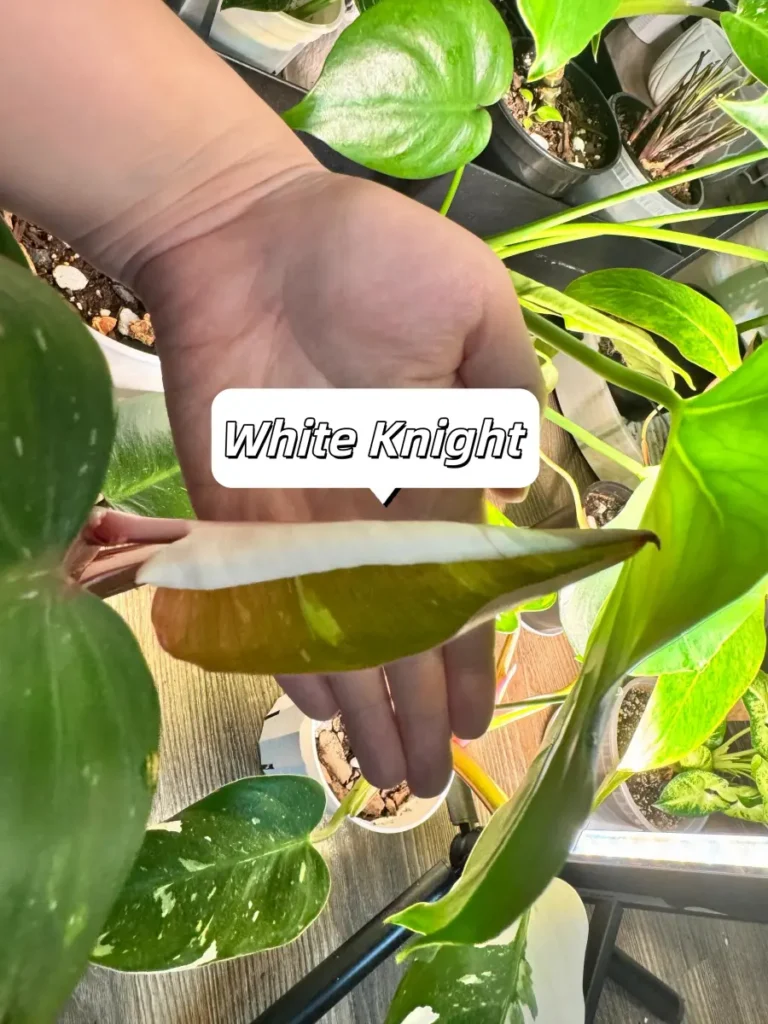
Philodendron White Knight new leaf showing white variegation, green tissue, and a reddish blush before opening
This new White Knight leaf had a reddish blush while opening, but I would not describe it as stable pink variegation.

Quick Fix or Wait? My Decision Table

With Philodendron White Knight, I try not to react too fast. A plain leaf, a damaged new leaf, or one strange color shift can feel dramatic in the moment, but not every change needs scissors.

This is how I would decide now:

SituationWhat I Would Do
One new leaf turns greenWait for the next leaf before judging the plant
Several leaves turn greenImprove light first before thinking about cutting
New leaf is damaged after moving homeStabilize care and let the plant settle
White parts are browningReduce harsh light and check whether the pot is drying properly
Plant has good roots but poor top growthCutting may be considered, but only during active growth
New growth after cutting looks strongProtect it and do not keep cutting
Plant is weak or recently repottedDo not cut; let the roots recover first

For me, the biggest lesson is that White Knight does not always need a quick fix. Sometimes the better move is to wait for one more leaf, improve the growing conditions, and avoid turning a temporary ugly phase into a bigger setback.

The Cut Was Not the Care Routine

I was happy when the new growth came back better than expected, but I do not see cutting as the normal care routine for Philodendron White Knight.

The real lesson was not “cut it and the variegation will improve.” It was learning to read the whole plant before reacting. One ugly leaf does not always mean the plant is hopeless, and one beautiful leaf does not mean I should keep pushing it for more.

Now that the new growth looks strong, my job is much simpler: keep the roots steady, give it bright but gentle light, and stop disturbing it. And in my house, that also means keeping the plant away from my cats before they decide the newest half-moon leaf is a toy.

FAQ

Q: Should I cut back my Philodendron White Knight if it turns green?
A: Not right away. One green leaf does not mean the whole White Knight has lost its variegation. I would first watch the next one or two leaves and improve the light if the plant is sitting too dim. Cutting only starts to make sense when the plant has shown good variegation before, the roots are healthy, and several new leaves keep coming out poorly.
Q: Can pruning make Philodendron White Knight more variegated?
A: Pruning can sometimes wake up a new growth point, and that new growth may show a stronger or different variegation pattern. But it is not a guaranteed way to create better white variegation. If the plant is weak, newly repotted, or sitting in low winter light, cutting can slow it down instead of improving it.
Q: Why did my White Knight grow ugly leaves after I brought it home?
A: A White Knight can grow disappointing leaves after moving home because it is adjusting to new light, humidity, temperature, and watering conditions. Winter purchases can be especially slow to settle. A damaged leaf or one mostly green leaf may be part of that transition, so I would not judge the plant too quickly unless the decline continues over several new leaves.
Q: Why are the white parts on my Philodendron White Knight turning brown?
A: The white parts are more delicate than the green parts. They can brown from harsh direct sun, dry indoor air, inconsistent watering, or root stress. If the browning happens together with wet soil, yellowing, or weak new growth, I would check the roots rather than only increasing humidity.
Q: Is Philodendron White Knight the same as White Wizard?
A: No. Philodendron White Knight and White Wizard are different plants, even though both have white variegation. I usually look for darker stems and sometimes reddish or burgundy tones on White Knight, while White Wizard tends to have greener stems and a cleaner white-and-green look.
Q: How do I care for Philodendron White Knight indoors?
A: Indoors, I would give Philodendron White Knight bright indirect light, an airy soil mix, and water only after the pot has started to dry. The white parts need protection from harsh sun, and the roots need protection from staying wet too long. Once the plant is growing well, I would keep the conditions stable instead of constantly moving, repotting, or cutting it.

Still exploring philodendron varieties?

If you are comparing variegated philodendrons, Pink Princess Philodendron is a useful next read for pink variegation, while Philodendron Florida Ghost is worth comparing for pale new growth. You can also return to my main philodendron varieties page to compare leaf color, growth habit, and care difficulty side by side.

Go to Varieties Hub →

Meet Clara
About the author

Indoor plant grower focused on philodendrons, sharing real care notes from everyday home growing.

Leave a comment