Philodendron light is one of those things that sounds simple until you actually start moving plants around your home. A plant that looks fine near one window can start stretching, shrinking, or slowing down just a few feet farther back. I’ve seen the same philodendron hold its shape well in one spot and gradually lose that compact, healthy look in another.
What makes light tricky is that philodendrons usually don’t fail all at once. They adapt for a while. That’s why low light can be easy to miss in the beginning. The plant is still alive, still green, and sometimes still putting out leaves — just not in the way it would in a brighter, more suitable spot.
Over time, I’ve stopped asking whether a philodendron can survive in a certain place and started asking whether that spot actually supports healthy growth. For me, that’s a much more useful way to think about light indoors.
The Short Answer: Most Philodendrons Grow Best in Bright Indirect Light
Most philodendrons grow best in bright indirect light. As a rough indoor reference, that often falls somewhere around 8,000–15,000 lux, though I would treat that as a useful range rather than a strict rule. In real homes, that kind of light is often found near a bright window, usually around 1–2 meters back from the glass, not deep in the room and not necessarily pressed right up against a hot sunny window either.
What Bright Indirect Light Actually Looks Like in a Real Home
A bright room is not always the same thing as bright light for a plant. A room may look open and sunlit to you, but if the plant is sitting too far from the window, tucked behind furniture, or filtered through too many barriers, the actual light level at leaf height can be much lower than it seems. Distance matters a lot, and so do things like double glazing, balcony structures, curtains, window screens, and nearby buildings.
For most philodendrons, bright indirect light usually means a position near a good window, but not one where the leaves sit against hot glass or take hours of harsh direct sun. At the same time, it also does not mean the deeper part of an otherwise bright room where the plant can still “see” the window but receives very little useful light. In real homes, the sweet spot is often somewhere between those two extremes.
How Philodendrons Usually Respond to Too Little Light
When a philodendron is not getting enough light, the changes are often gradual rather than dramatic at first. The plant may stay alive for quite a long time, which is exactly why low light can be misleading. It does not always look like a crisis right away — it often looks more like the plant is slowly losing the qualities that made it attractive in the first place.
One of the most common signs is stretching and weaker, less satisfying growth. The spaces between leaves become longer, the vines look thinner or more spaced out, and the plant starts to lose that compact, full look. New growth may also come in with smaller leaves, especially if the plant keeps trying to grow without having enough energy to size up properly.
Over time, philodendrons in low light often become looser and less balanced in shape. Instead of looking dense or well-formed, they start to look sparse, uneven, or slightly tired. Growth usually slows down too, and even when the plant is still producing new leaves, those leaves may feel less impressive than before.
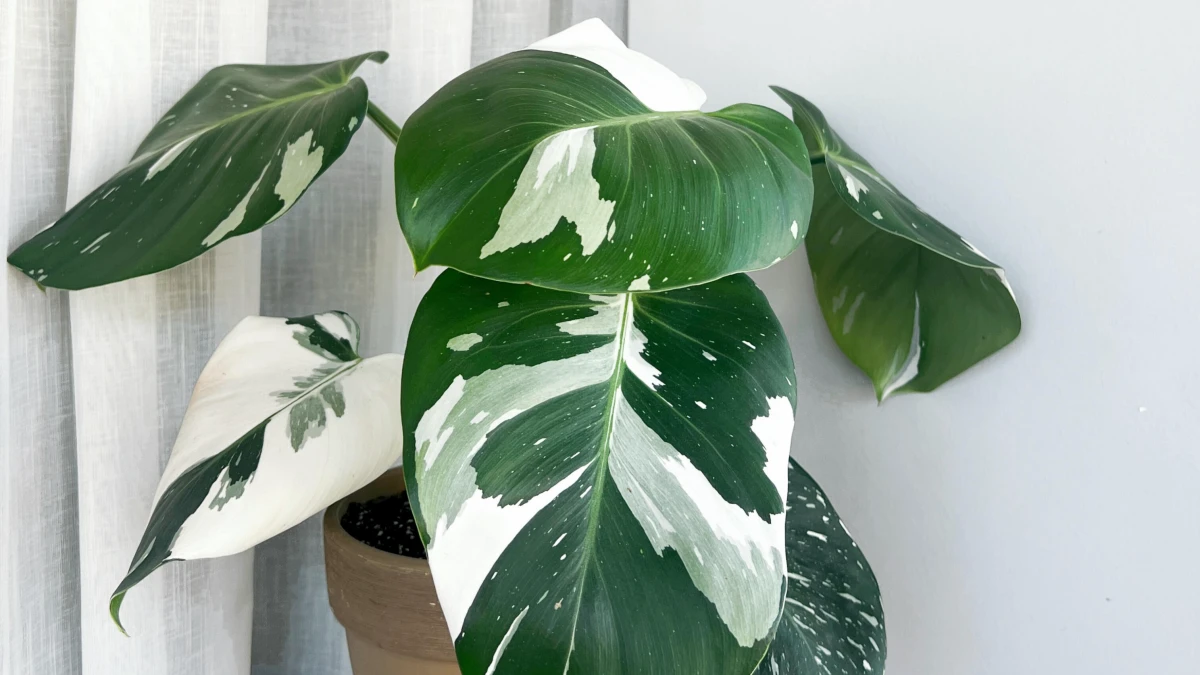
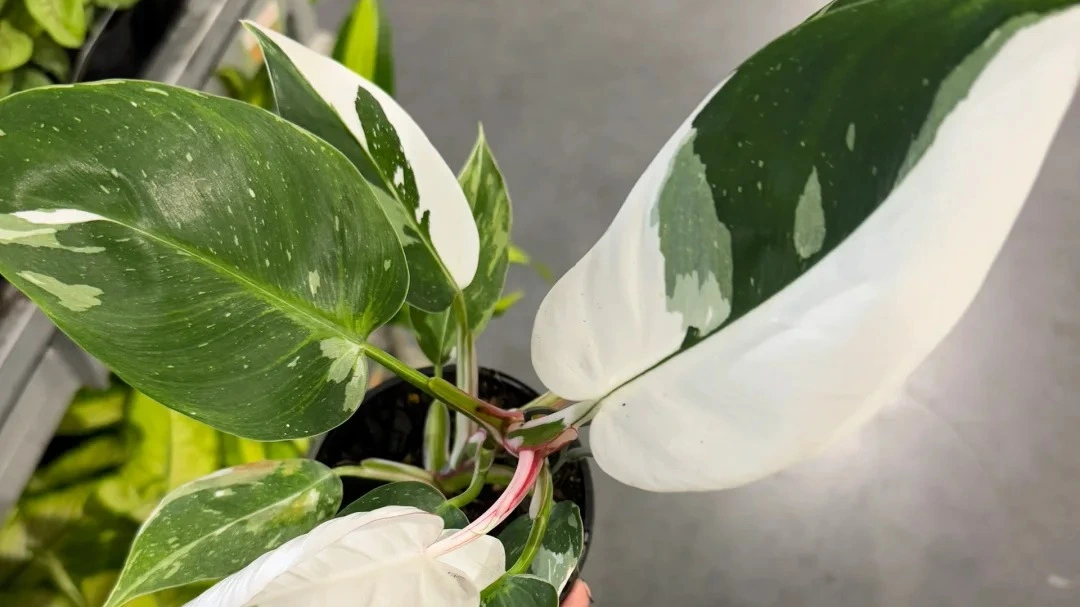
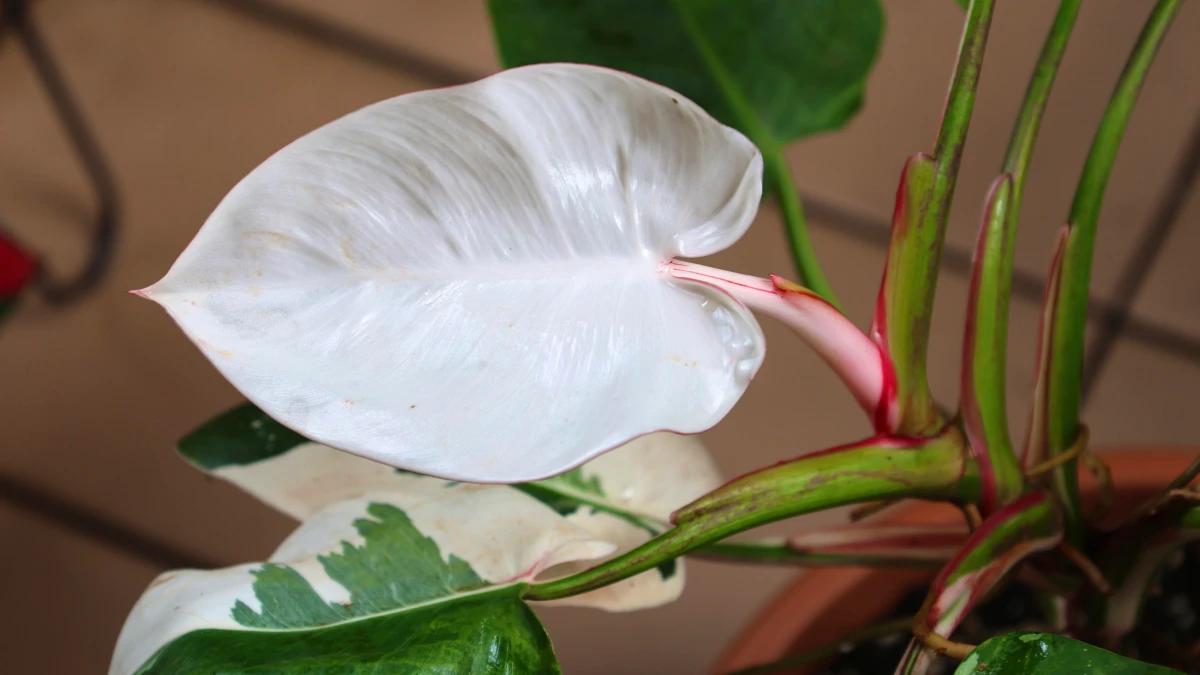
With some types, the decline shows up in more specific ways. Velvet-leaf philodendrons can lose some of their richness and texture, while colored or variegated types may look duller or less defined. In bigger climbing or crawling types, leaf size often stops increasing and may even shrink over time. So in many cases, low light does not stop a philodendron from living — it stops it from looking like the plant it is supposed to be.
How Philodendrons Respond to Too Much Light
Too much light usually shows up faster than too little light, and the leaves often tell the story quite clearly. Instead of stretching or getting smaller, the plant may start to look washed out, paler than usual, or slightly yellowed in places where the light hits hardest. In stronger cases, the surface can develop sunscald patches or crispy brown edges, especially on leaves that were not gradually adjusted to brighter exposure.
One thing I pay attention to is whether the damage looks concentrated on the more exposed parts of the plant. When a philodendron is getting too much light, the leaves facing the window or pressed too close to hot glass often show the worst fading, bleaching, or burned areas first. That pattern is different from a plant that is simply thirsty, where the whole plant usually looks tired or limp rather than selectively scorched.
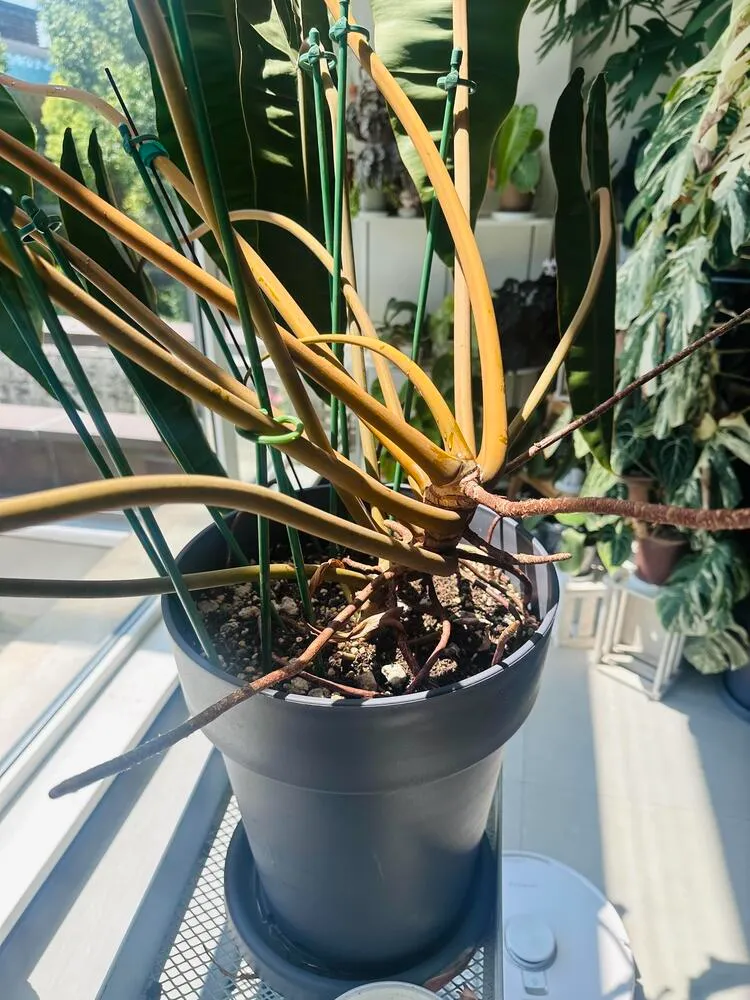
This is where people sometimes confuse light stress with watering issues. A leaf that looks yellow-white, dry at the edges, or patchy on the sun-facing side is not always asking for more water. In some cases, leaves under too much stress may also start curling at the edges before the damage becomes more obvious. When I see that kind of damage, I think about pulling the plant back first before assuming it is only a watering problem.
Not All Philodendrons Want the Same Amount of Light
One of the easiest mistakes with philodendrons is assuming they all want exactly the same light. They do not. Most still fit broadly into the bright indirect light category, but how they respond within that range can feel quite different depending on leaf texture, growth habit, and what you want the plant to do.
Velvet-Leaf Types Need Bright but Gentler Light
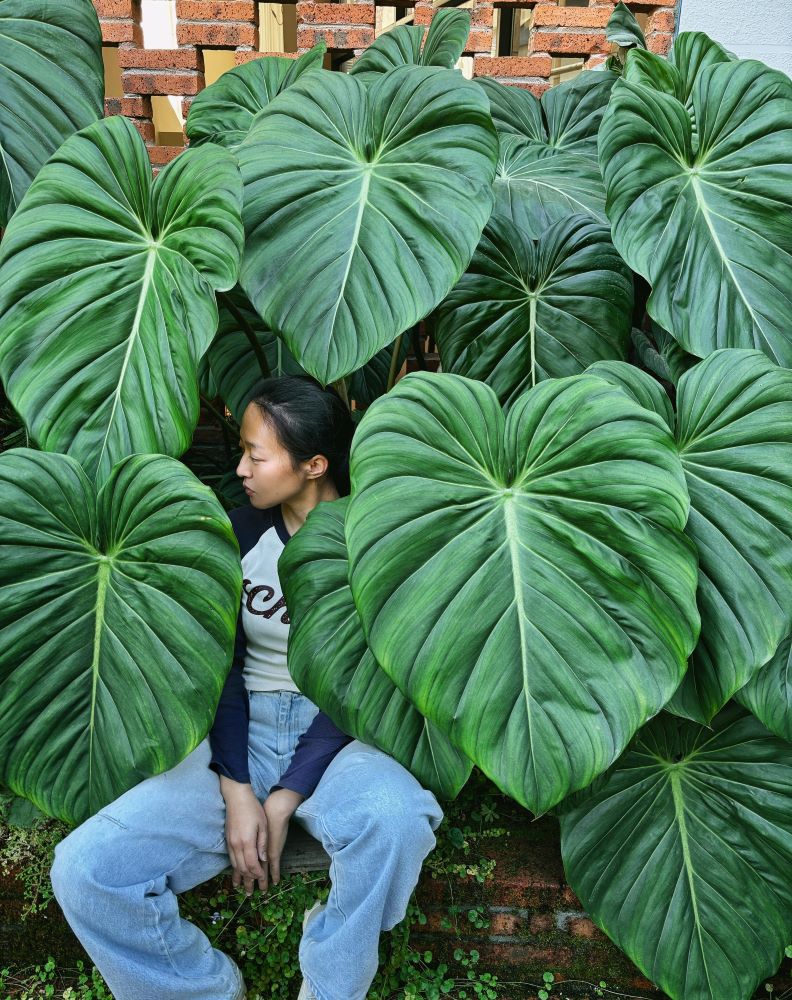
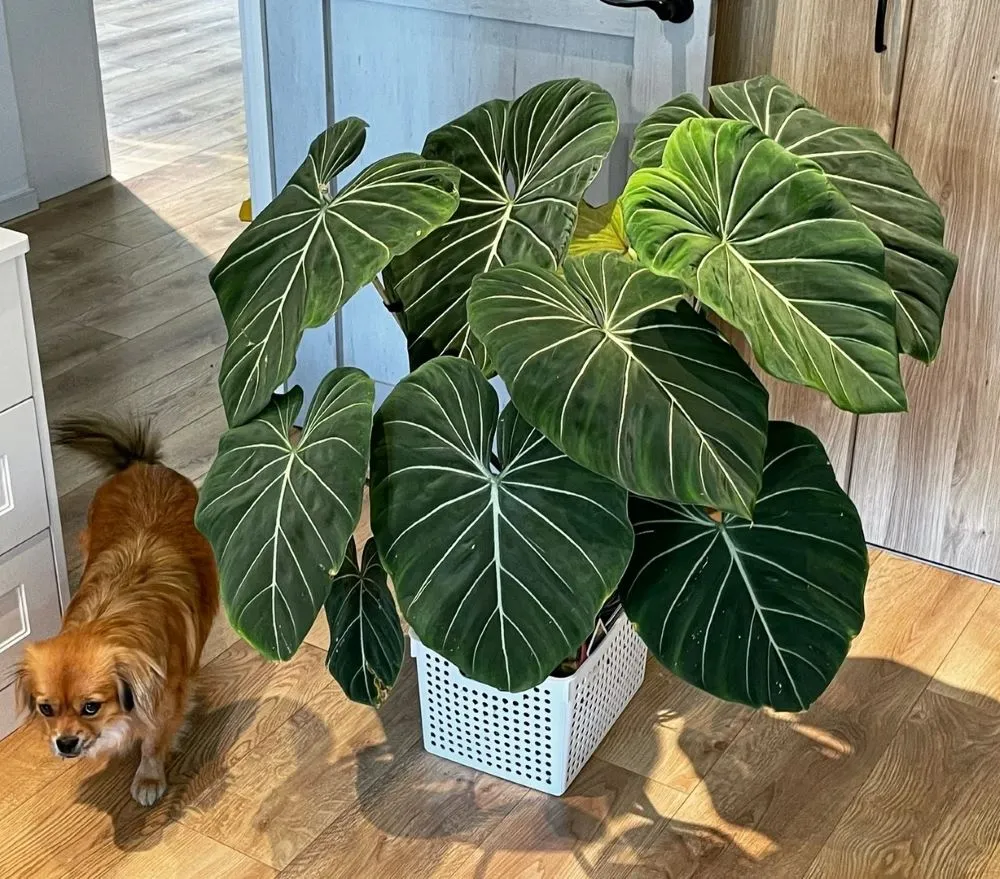
Velvet-leaf philodendrons usually look best in bright but gentler light. They often need enough brightness to stay full, dark, and textured, but they are usually less forgiving of harsh direct exposure.
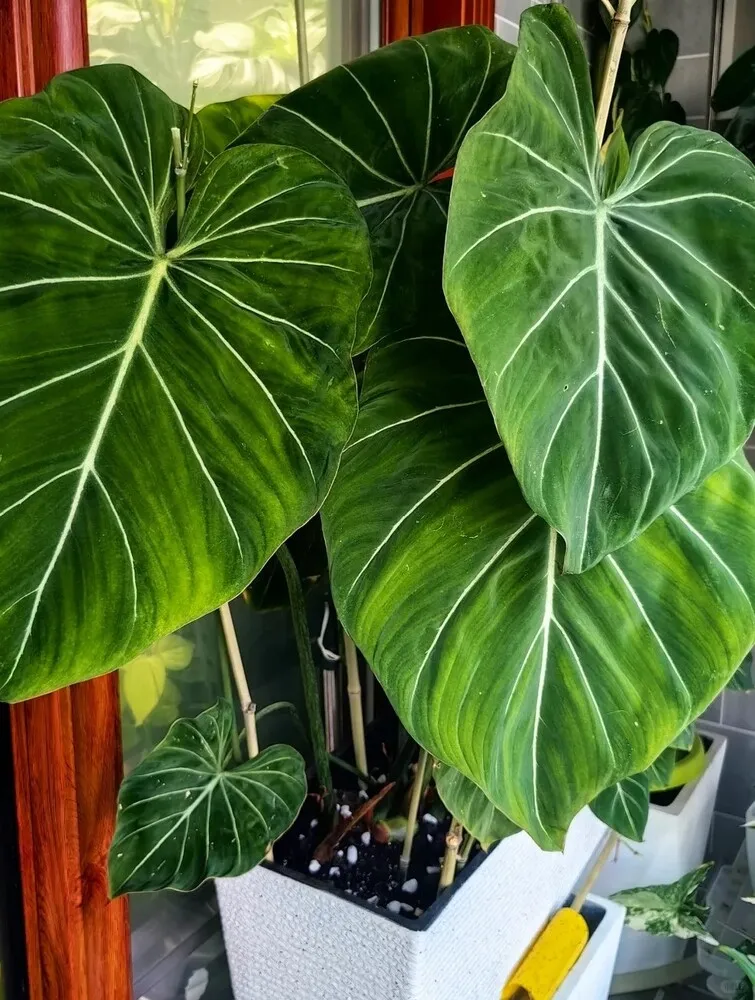
Examples include:
- Philodendron Micans
- Philodendron Melanochrysum
- Philodendron Gloriosum
- Philodendron Verrucosum
In lower light, these types often lose some of their richness and texture. In overly strong light, the leaves can start to look faded, stressed, or rough around the edges.
Common Trailing Types Tolerate More Range
Many common trailing philodendrons can handle a wider range of indoor light conditions, which is one reason they are often recommended to beginners.
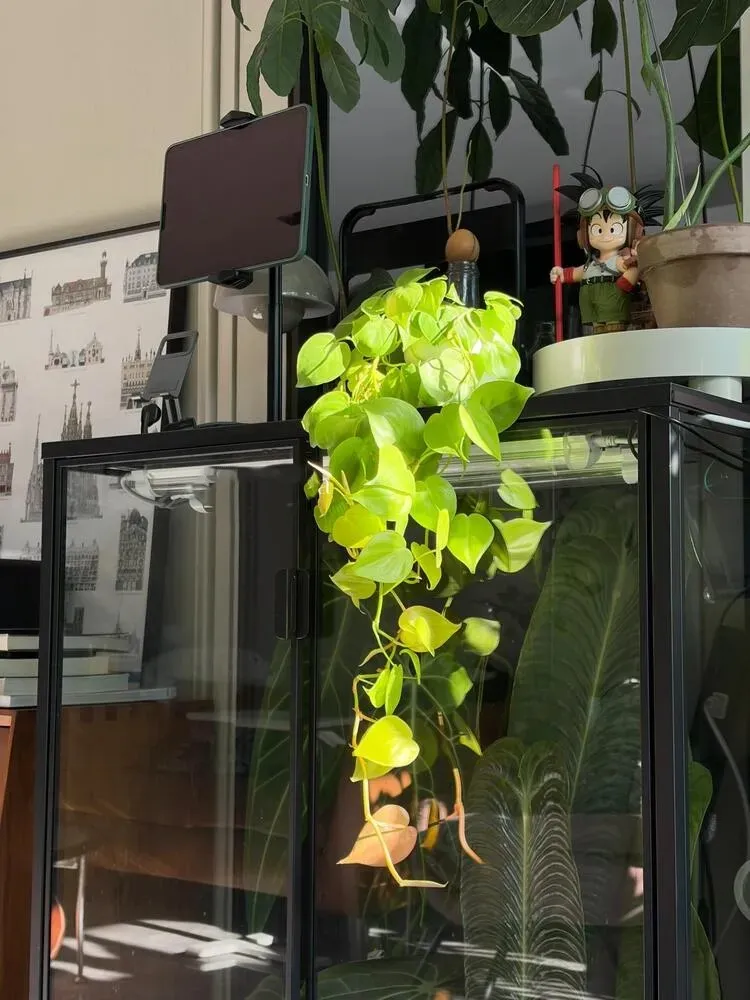
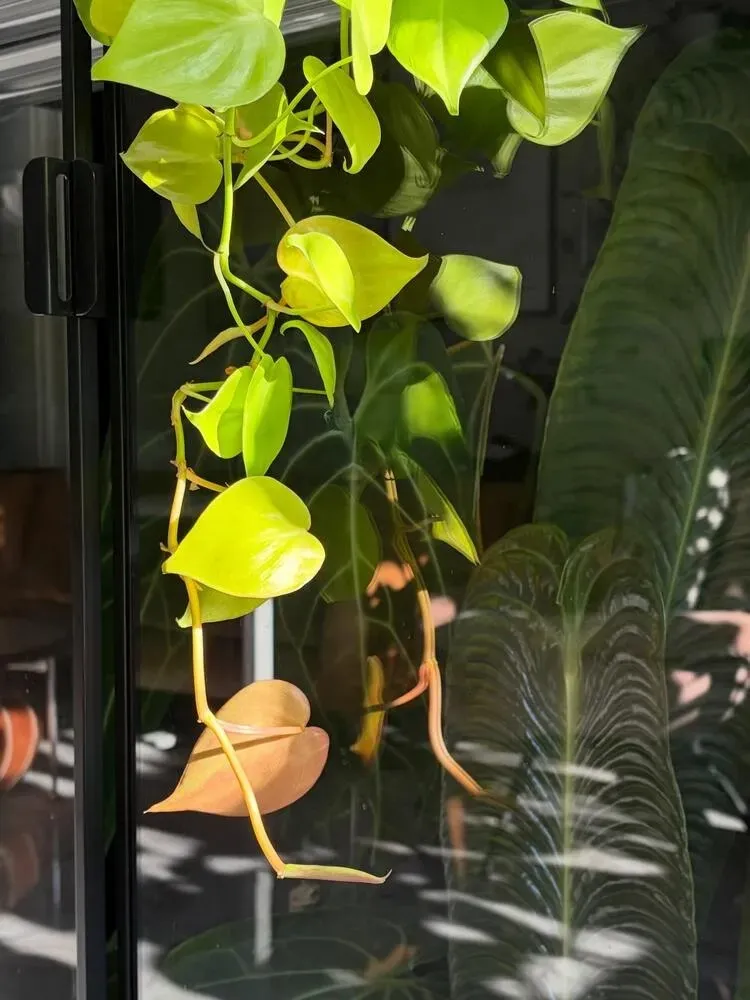
Examples include:
- Philodendron hederaceum (green heartleaf philodendron)
- Philodendron Brasil
- Philodendron Lemon Lime
Some plants, like Micans, can overlap a bit here because they trail easily but still show the texture sensitivity of velvet-leaf types.
These plants often tolerate slightly lower light better than fussier types, but they still stretch, space out, and make smaller leaves if the light stays too weak for too long.
Large Climbing or Crawling Types Need Better Light to Size Up
Large philodendrons often survive in moderate light, but they usually need stronger overall light if you want bigger, more mature-looking foliage.
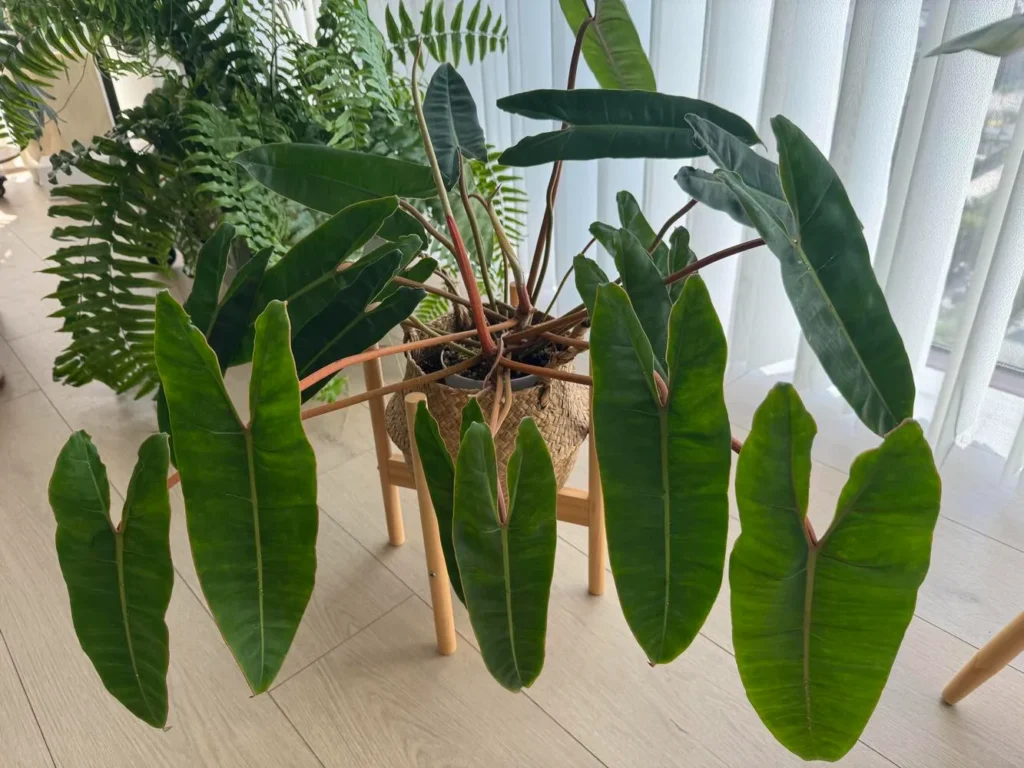
Examples include:
- Philodendron Billietiae
- Philodendron Pastazanum
- Philodendron Mamei
- Philodendron plowmanii
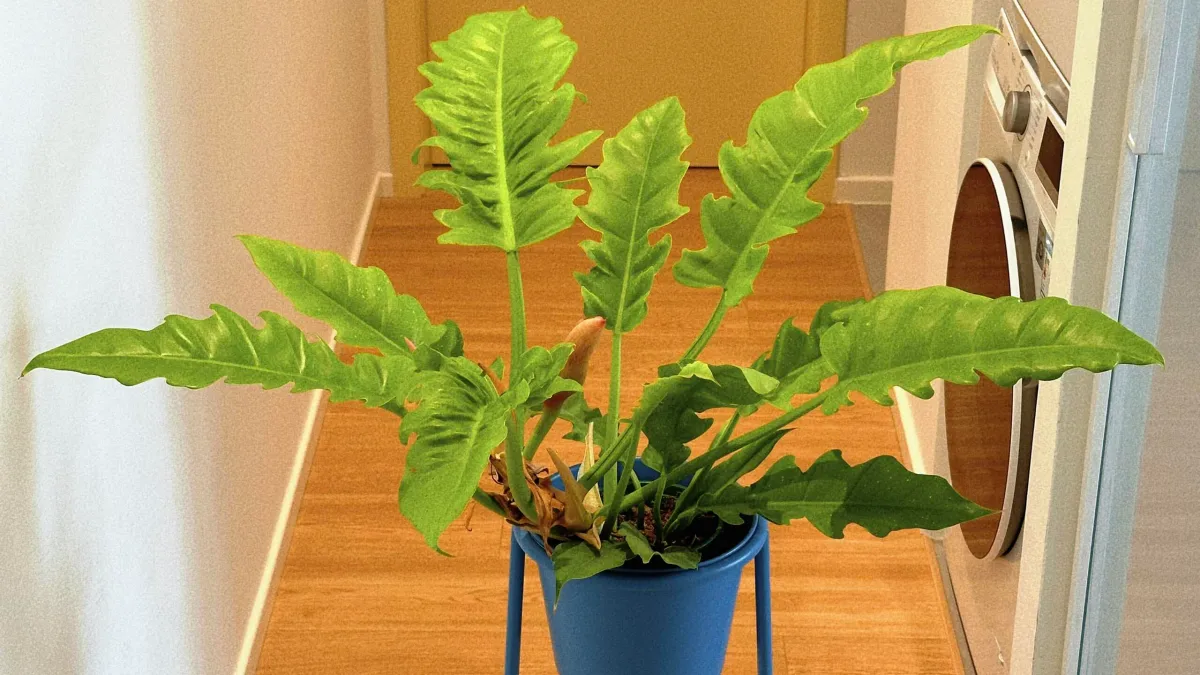
These plants may stay alive in average indoor light, but they often do not really size up there. If your goal is dramatic foliage rather than basic survival, this group usually benefits from the strongest placement of the three.
So while “bright indirect light” is still a useful general answer, it helps to think in smaller groups. Some philodendrons are more forgiving, some are more sensitive, and some simply need better light if you want them to show their full potential.
How I Decide Whether a Philodendron Needs More Light or Less
This is the part that matters most to me in real plant care: how the plant is responding in its current spot.
I Watch the New Leaves First
New leaves usually tell the truth faster than old ones. Older leaves can stay on the plant for a long time and still reflect past conditions, but new growth shows what the plant thinks about the light it is getting now. If new leaves are coming in smaller, farther apart, weaker, or less attractive than before, I start looking at light before I blame anything else, because that kind of slow, unsatisfying growth is often the real issue.
Stretching Makes Me Think Light Before Anything Else
When a philodendron starts stretching, light is usually my first question. If the spacing between leaves gets longer, the plant looks looser, or the overall shape starts losing that full, balanced look, I do not jump straight to fertilizer or repotting. In many cases, the plant is simply trying to reach for more light. That is especially true when the plant is still growing, but the new growth looks less satisfying each time.
Pale or Scorched Leaves Make Me Pull the Plant Back First
On the other hand, if the leaves start looking washed out, faded, yellowed, or slightly scorched on the side facing the window, I think about pulling the plant back first. Too much light often shows up as bleaching, dry edges, or damaged areas where the exposure is strongest. In that situation, I would rather adjust the position before assuming the problem is only watering or feeding.
Do You Really Need a Light Meter?
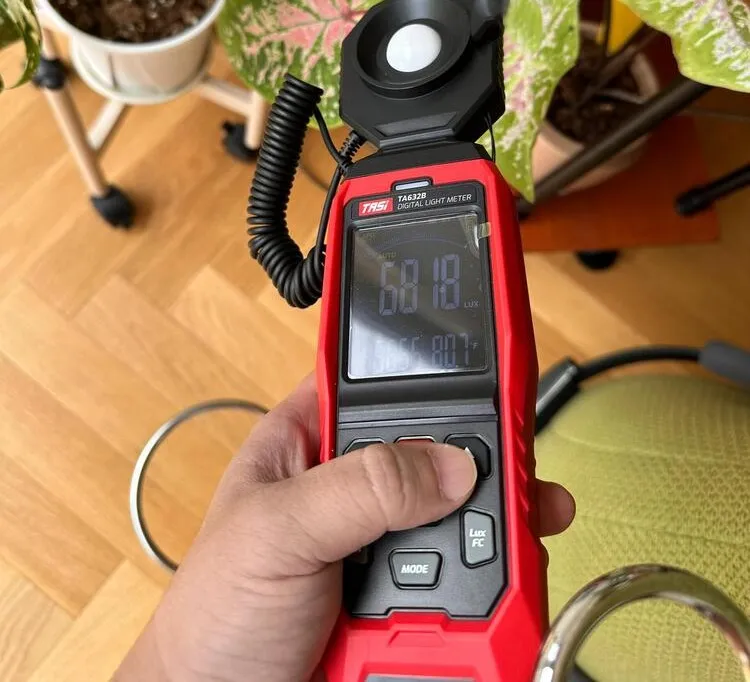
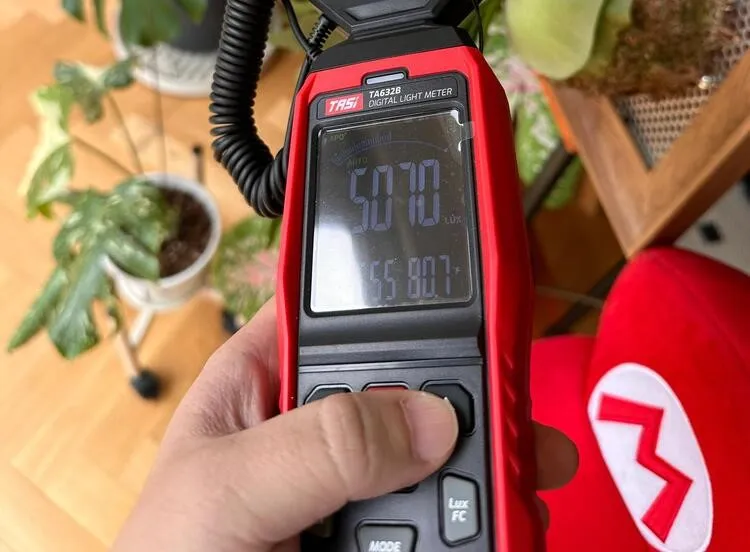
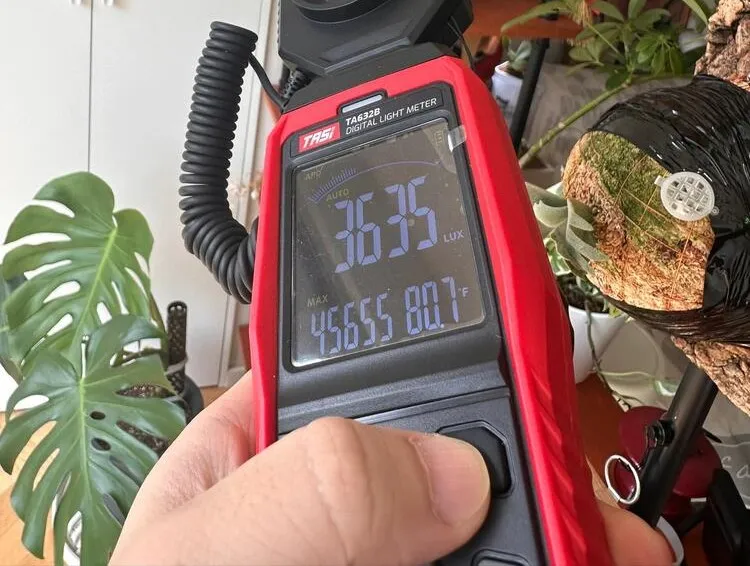
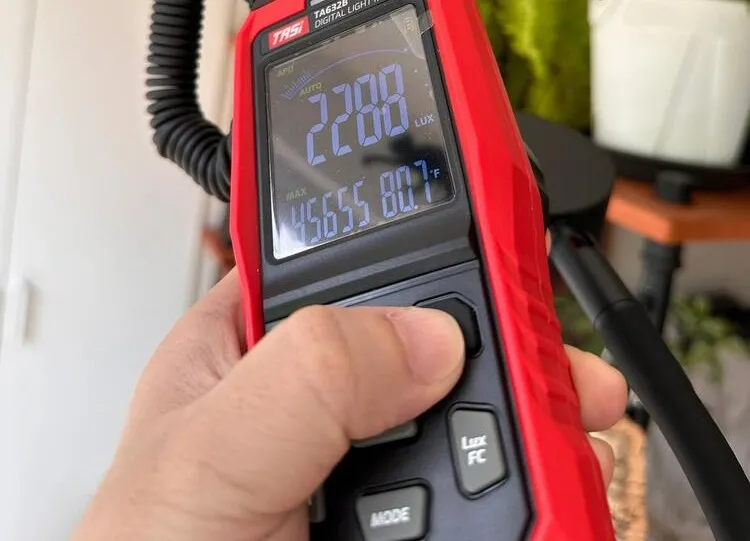
I do not think a light meter is essential for every grower, but I do think it can be surprisingly useful if you are trying to place a lot of plants well instead of just guessing. In my case, most of my plants sit near a south-facing balcony area, with the shelving about 1.6 meters back from the window. Before I measured it, I assumed some of those spots were probably much darker than they actually were.
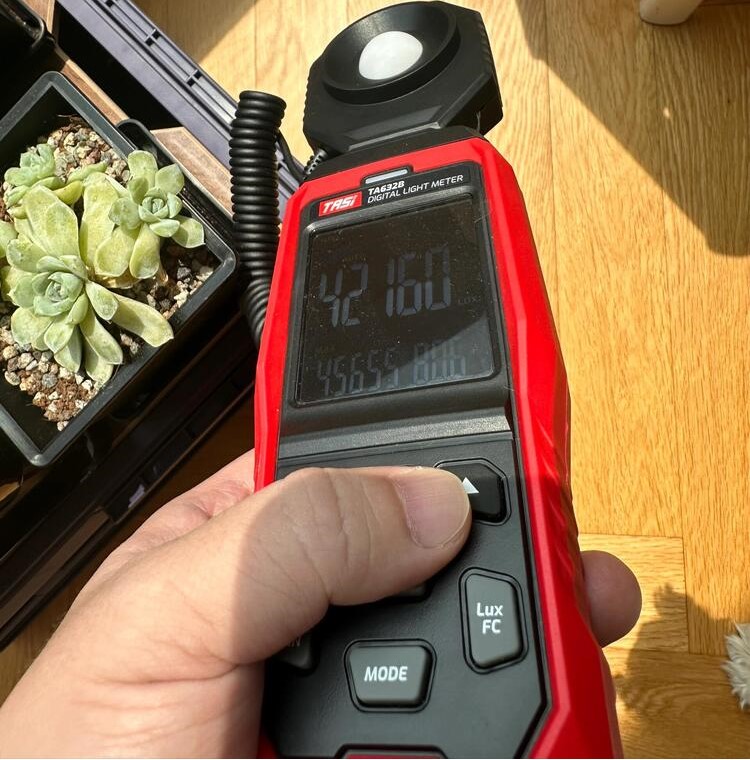
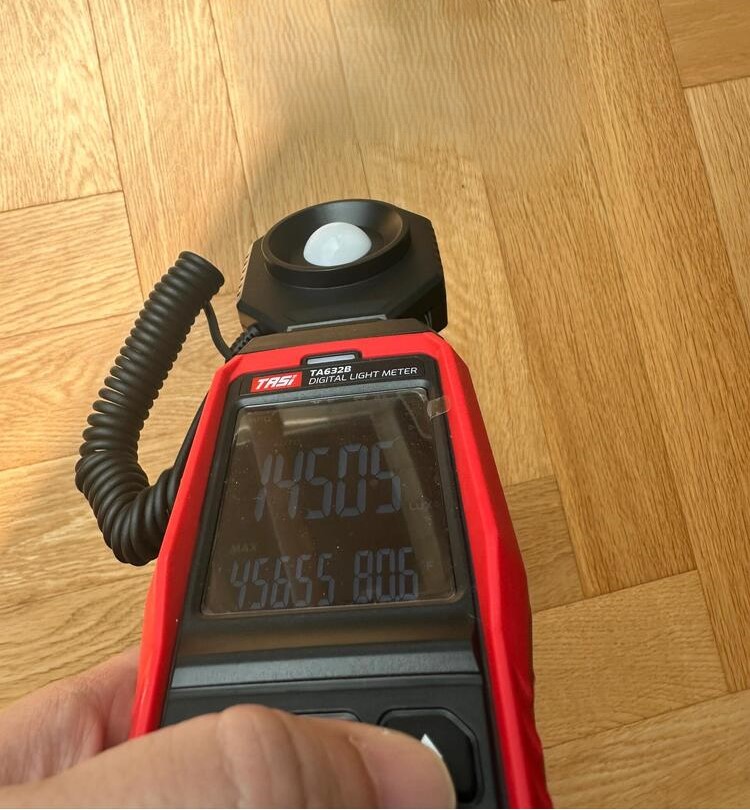
Once I checked the lux levels, I realized that on bright days, the natural indirect light in that area was already stronger than I had imagined and good enough for quite a few plants. That also changed how I thought about small grow lights. I had been running a 10W light in one spot, but compared with strong natural scattered light, it really was not doing nearly as much as I had assumed.
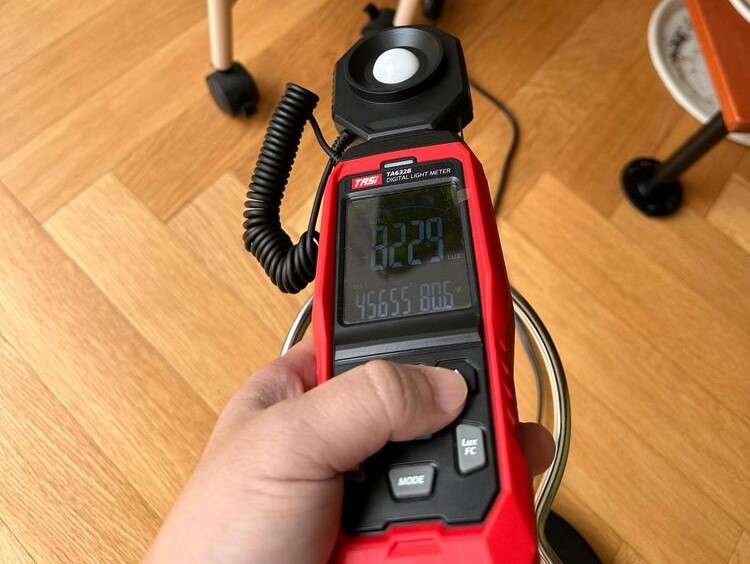
That experience made me much less likely to buy lights just because a corner felt dim. A light meter helped me plan placement more efficiently, see which spots were already usable, and decide more clearly where extra light was actually needed. So I do think a light meter is helpful — but not necessarily something everyone needs to own immediately. If you can borrow one first, that is often the smarter move.
How Window Direction and Season Change the Light You Actually Get
Window direction makes a big difference, but it never works as a fixed answer on its own. A philodendron near an east window usually gets gentler morning light, which is why that direction often feels easy to work with. A south-facing window can be excellent for growth, but the intensity changes a lot depending on distance, season, and whether the plant sits behind glass, a balcony, or some kind of filtering layer. West light can also work well, but it is often stronger and harsher later in the day. North light is usually the softest, and in some homes it may be enough for more tolerant philodendrons, while in others it may be too weak once the plant is pulled back from the window.
What makes this harder is that the same spot does not stay the same all year. A place that feels perfect in summer may become underlit in winter, especially once the days get shorter and the sun angle changes. On the other hand, a plant that can sit quite close to a south or west window in winter may need to be pulled back once the stronger spring and summer light returns.
A simple way to think about it is this:
- East-facing light is often the easiest and most forgiving
- South-facing light is usually the strongest overall, but distance matters a lot
- West-facing light can work well, though it is often harsher in the afternoon
- North-facing light is the softest and most variable depending on room brightness
So rather than asking which window direction is “best” in the abstract, I think it makes more sense to ask what that window looks like in your home, in that season, at that distance from the plant.
Do Philodendrons Need Grow Lights Indoors?
Not necessarily. In many homes, good natural indirect light is already more useful than people think, and in some cases it does more for a philodendron than a small weak lamp ever will. That is one reason I do not like recommending grow lights too quickly.
Where grow lights become much more useful is in positions that are simply too far from the window, on deeper shelves, or during the darker part of winter when the natural light drops off too much. In those situations, a grow light can make a real difference. But I still think the smarter order is to look at the plant’s position first, then decide whether extra light is actually needed. A plant placed better often improves more than a plant kept in a poor spot under a token light.
My Honest Rule: A Philodendron Can Survive Lower Light, but It Won’t Show You Its Best Form There
This is the rule I come back to most often with philodendrons: lower light does not automatically mean the plant will die. Many philodendrons can stay alive for quite a long time in less-than-ideal light. But survival is not the same thing as looking right.
In weaker light, a philodendron often loses the qualities that make the plant worth growing in the first place. The leaves may get smaller, the spacing may stretch, the texture may flatten, and the overall shape may stop looking like that variety at its best. So for me, the real question is not just whether a philodendron can live there. It is whether it still looks like itself there.
FAQ
Still exploring philodendron care?
If you’re comparing care routines, common problems, or indoor growing conditions, my main philodendron care page is the best place to keep exploring. It brings together the most useful guides in one place.
Go to Care Hub →