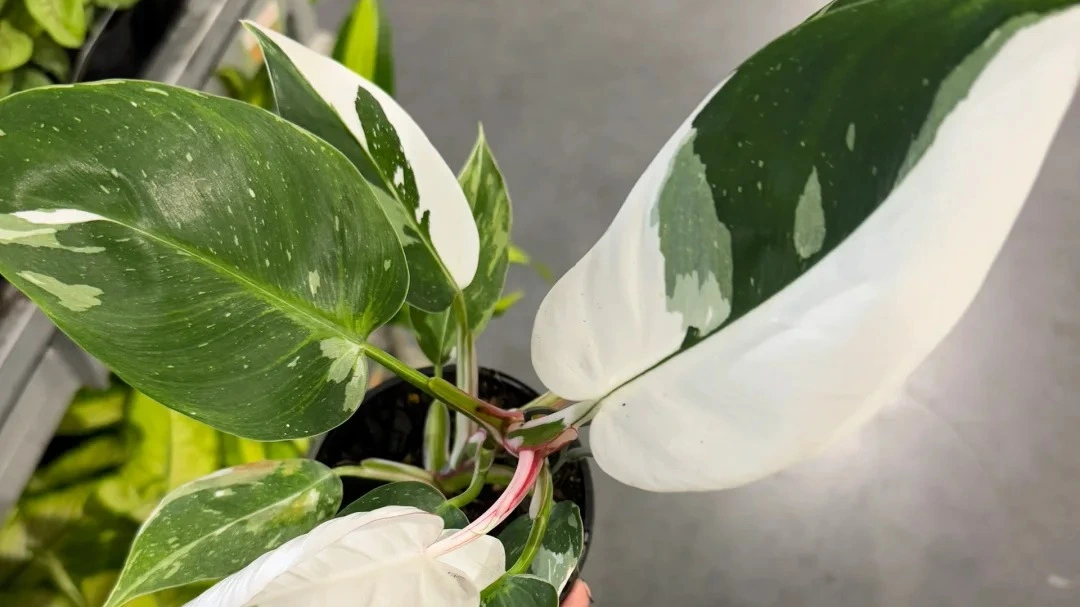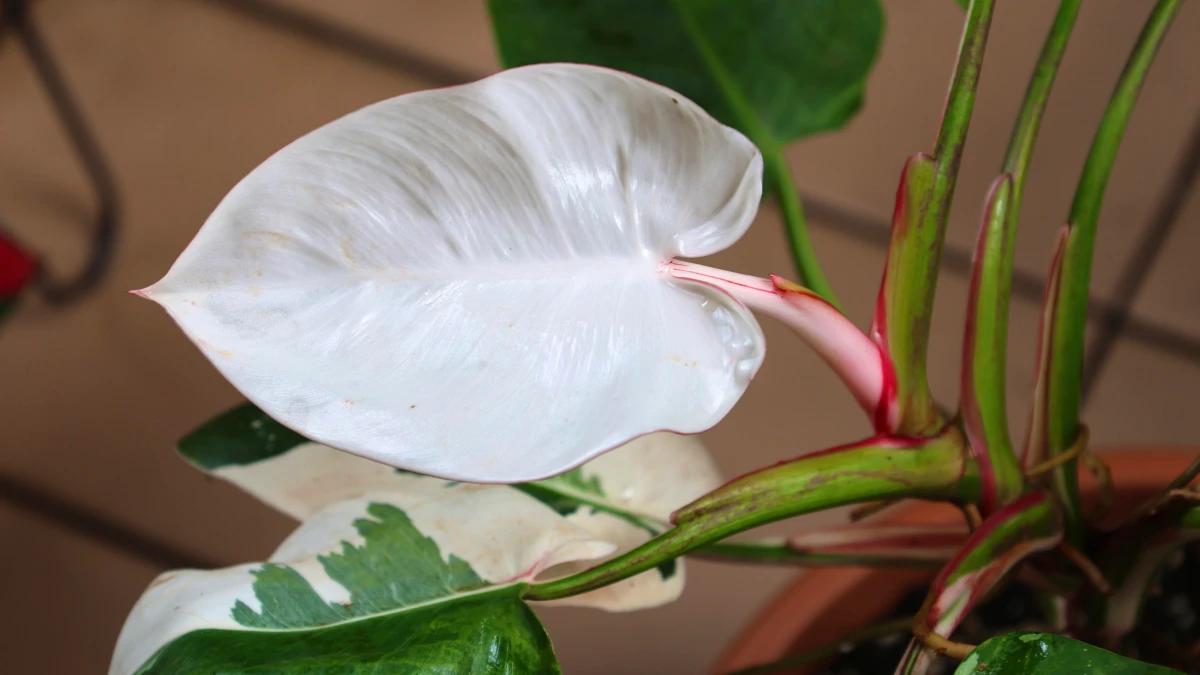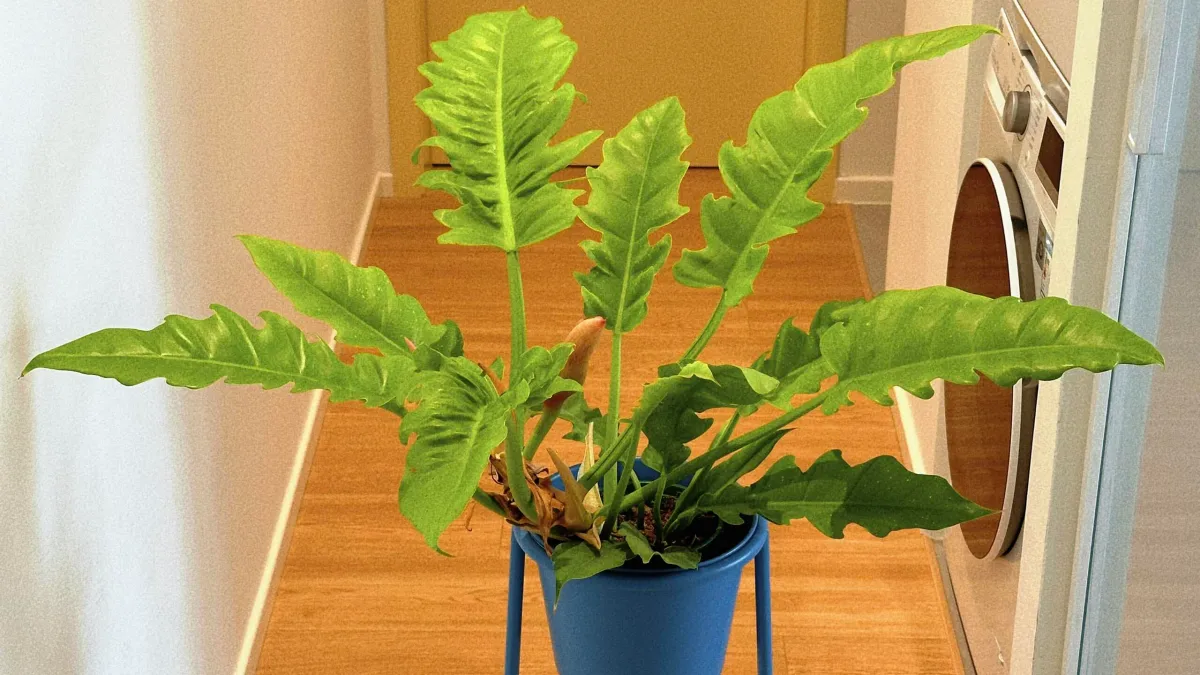
When a philodendron leaf starts curling, it is easy to assume the plant is in serious trouble. Sometimes that is true — but not always.
Over time, I’ve realized that “curling” can describe very different situations in philodendrons. Sometimes the whole plant starts looking limp, with leaves curling downward after repotting, cold weather, or sudden environmental stress. In that kind of case, I’m often really looking at a drooping philodendron, not just a cosmetic leaf issue. Other times, the plant looks fine overall, but a new leaf gets stuck and refuses to unfurl properly because conditions are too cool or too dry.
That difference matters, because the right response is not the same. A plant that is curling downward after repotting in cold weather should not be treated the same way as a winter leaf that is simply struggling to open. If you lump both situations together, it becomes much harder to tell whether the plant needs stability, patience, or a little extra humidity.
In this article, I’m not just listing generic causes of curled philodendron leaves. I’m sharing two real situations from my own plants: one Micans that curled downward and looked nearly finished after repotting into a cold, rainy spell, and another case where a new leaf got stuck and needed help opening without tearing. These experiences taught me that before trying to “fix” curled leaves, it helps to figure out what kind of curling you are actually looking at.
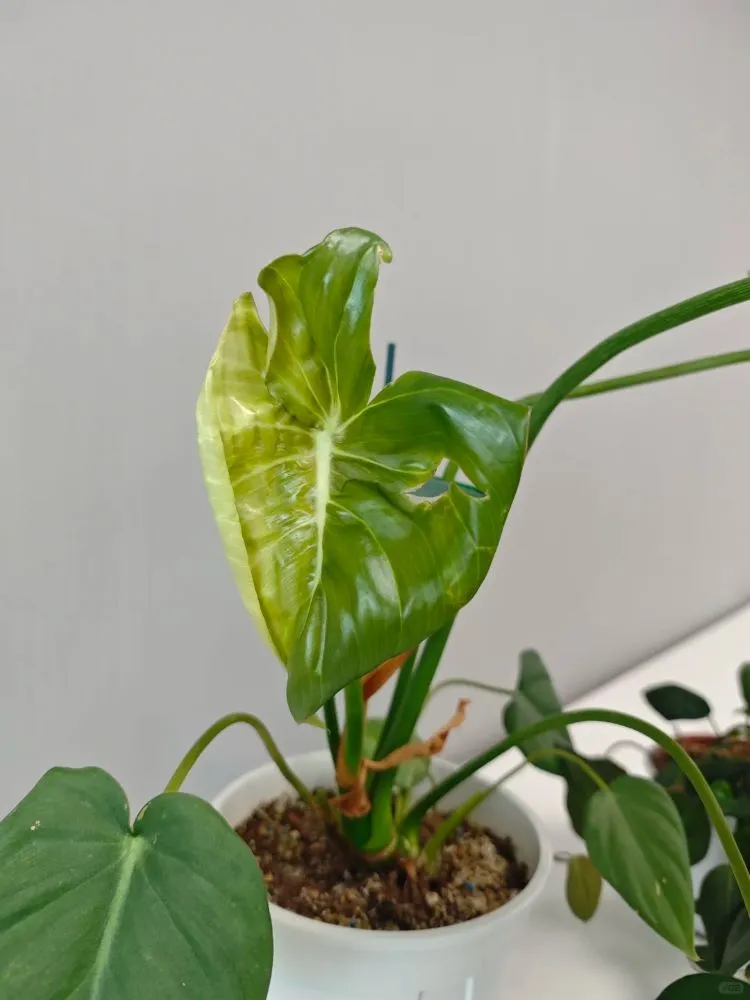
What Philodendron Leaf Curling Can Actually Look Like
One thing I’ve learned is that philodendron leaf curling does not always look the same. In some cases, the whole plant starts looking limp, and the leaves curl downward in a tired, weakened way. That kind of curling often shows up after repotting, sudden cold weather, root stress, or a sharp environmental change that temporarily affects how well the plant can take up water.
But curling can also look much more localized. Sometimes the plant seems mostly fine, yet a new leaf gets stuck and refuses to unfurl properly. I see this more often in winter, when lower humidity, cooler temperatures, and slower growth make it harder for the new leaf to open smoothly on its own. When a philodendron is moving more slowly overall, I usually read that as part of a not-growing-normally pattern rather than a completely separate issue.
That distinction matters because these two situations are not asking for the same response. A plant that looks limp after repotting in cold weather usually needs stability and time, while a stuck new leaf may simply need a gentler environment with a little more humidity. If you treat both kinds of curling the same way, it becomes much easier to misread what the plant actually needs.
Case 1: My Philodendron Micans Curled Downward After Repotting in Cold Weather
This was the kind of leaf curling that made me worry right away, because the whole plant suddenly looked tired and weak rather than simply “a little off.”
My Micans was still fairly new to my home at the time. After it arrived, I let it settle for about four days before repotting it. The original nursery pot looked much too small, and some of the roots were already showing outside the pot, so repotting felt reasonable. I watered it thoroughly after the move and thought I had taken care of it at the right time.
The problem was that I hadn’t expected the weather to turn cold so quickly. Right after repotting, we ran into several rainy days, and the temperature dropped to around 11–13°C. Soon after that, the leaves started curling downward and the whole plant looked limp and discouraged. Only one leaf still looked fairly normal, while the rest had started curling inward and downward.
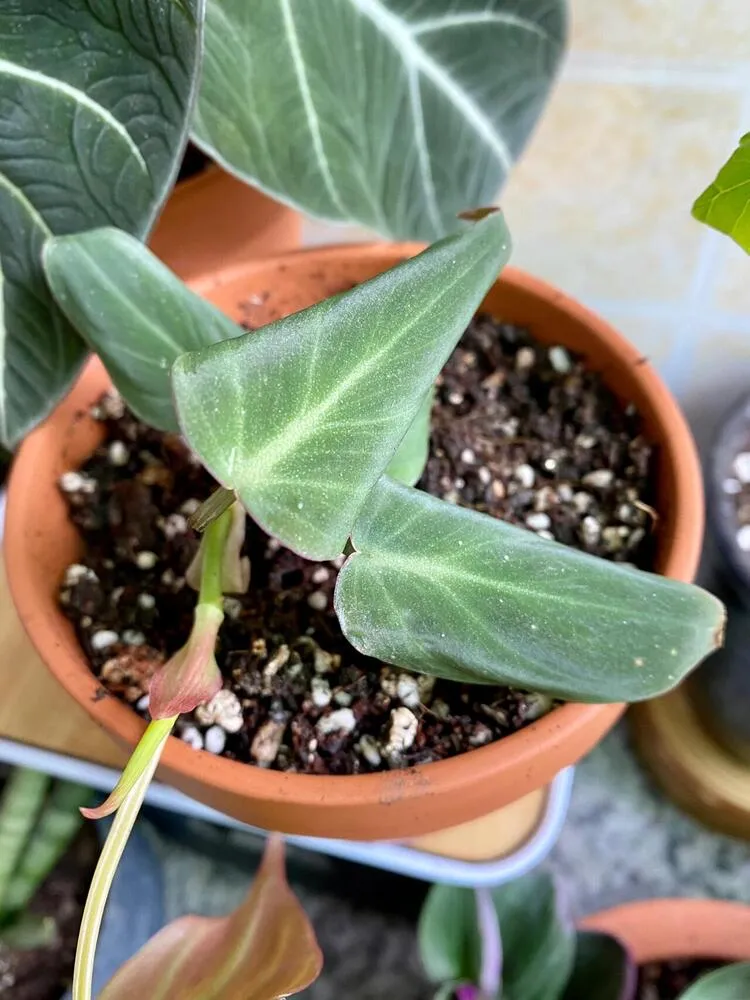
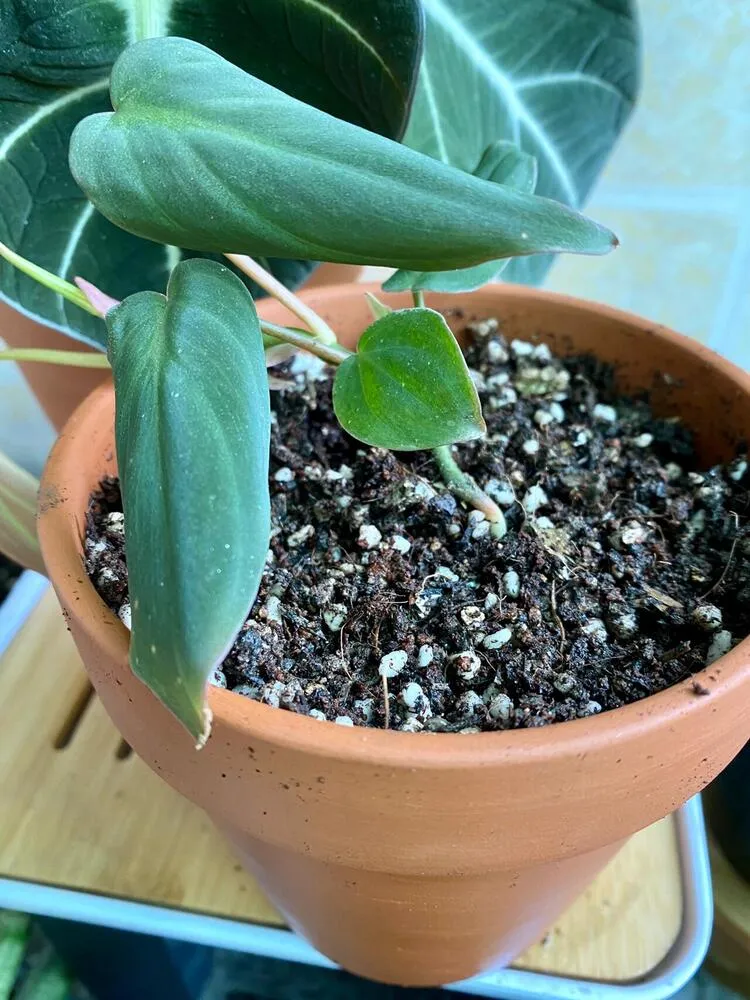
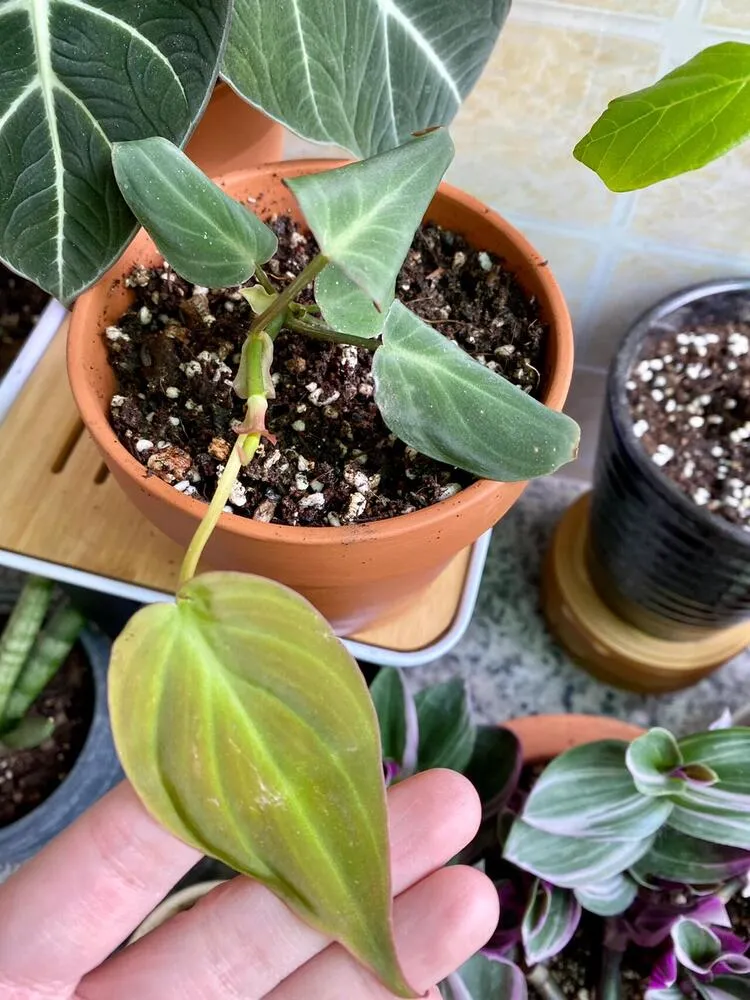
At that point, I was honestly worried the plant might not make it. The timing made the situation look much worse, because it wasn’t just repotting stress on its own — it was repotting followed immediately by cold, damp weather.
What kept me from panicking too much was that the plant did not keep collapsing indefinitely. After I gave it some airflow for a while, the leaves began to relax a little. Then, over the following days, most of them gradually returned to a more normal shape.
Looking back, I think the roots were temporarily struggling to adjust after repotting, and the cold, rainy weather made the stress look much worse than it really was. Cases like this are exactly why I try to read the pot and the recent conditions together instead of reacting to curled leaves alone.
This experience taught me that downward-curled philodendron leaves do not always mean the plant is finished. If the curling starts right after repotting and the weather has also turned cold, I now think of that as a stress response first — not an automatic sign that the plant is beyond saving.
Case 2: When a New Philodendron Leaf Gets Stuck and Won’t Open
This is a very different kind of philodendron leaf curling, because the whole plant can still look fairly healthy while the problem is concentrated in just one new leaf.
I usually notice this in winter, when a philodendron is still trying to push out new growth but the air is drier and the temperature is lower than ideal. The new leaf starts emerging, but instead of unfurling smoothly, it gets stuck partway and stays tightly wrapped for too long.
At that stage, it can be very tempting to help by pulling the leaf open with your fingers. But in my experience, that often does more harm than good. A new leaf that is still soft and trapped can tear very easily, and once it rips, the damage is permanent.
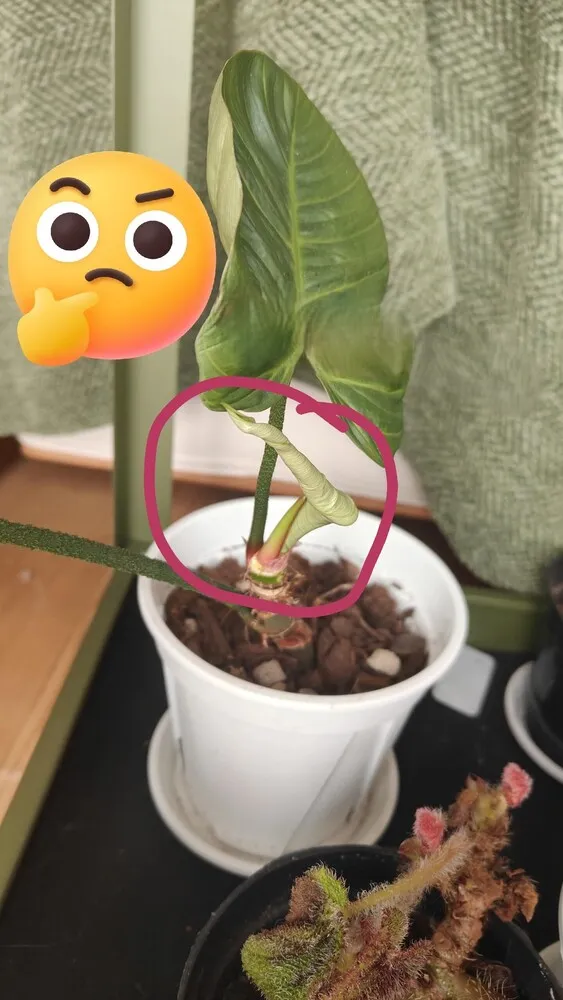
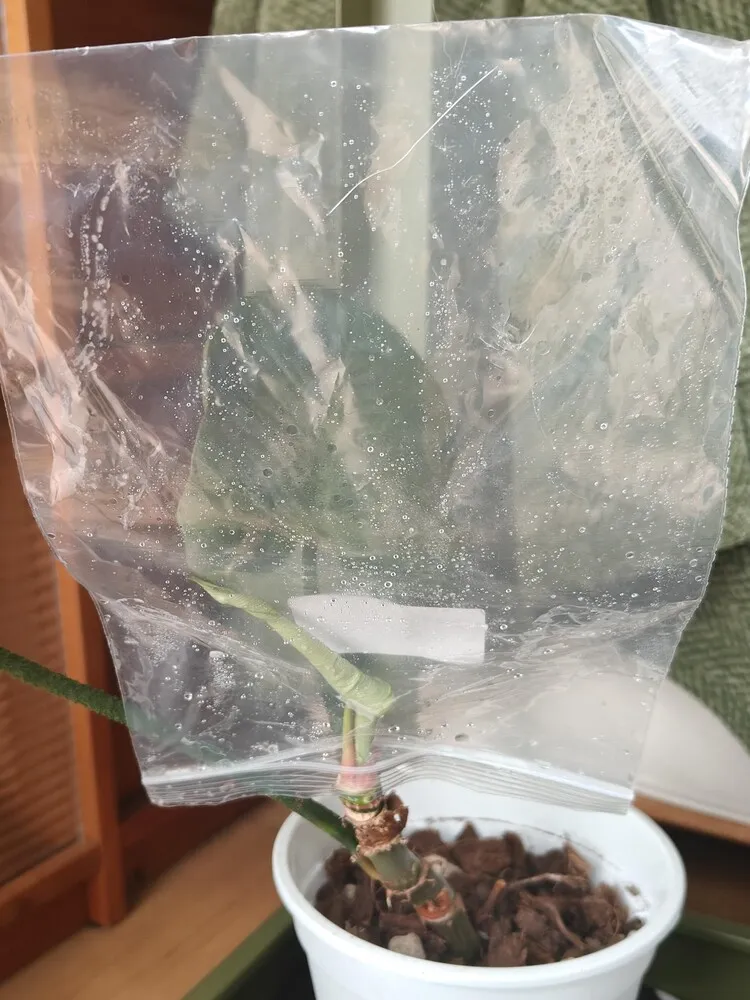
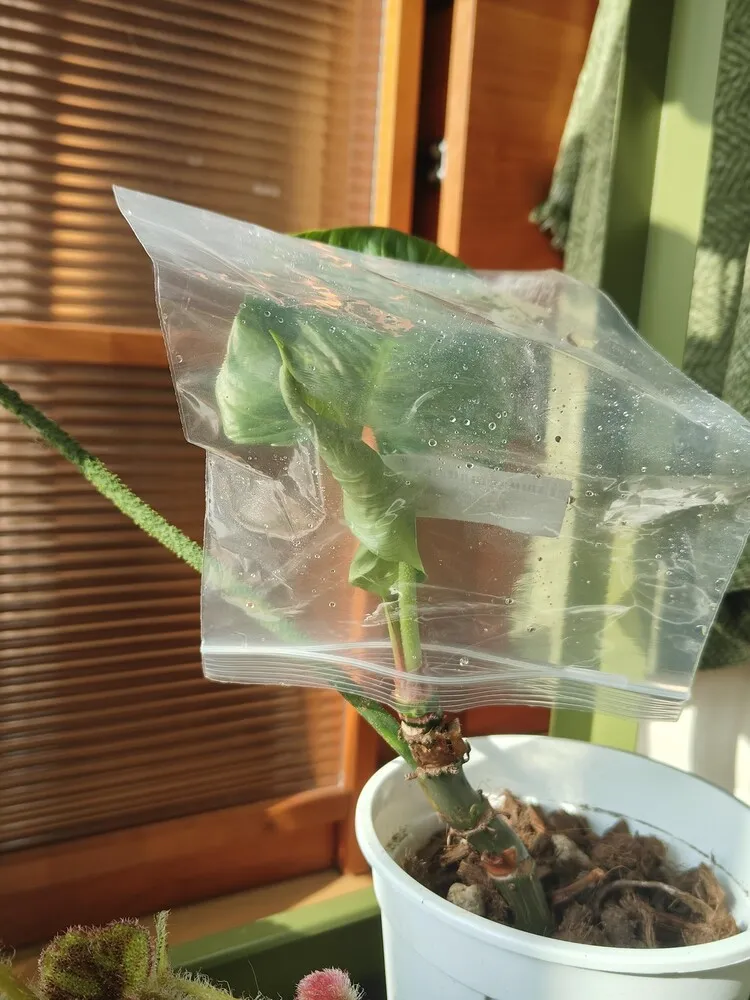
What I’ve found is that this kind of stuck leaf is usually not a sign that the plant is dying. More often, it reflects slower winter growth combined with lower humidity and cooler temperatures. The plant still has the energy to make the leaf, but the unfolding process becomes more difficult under less favorable indoor conditions.
Because of that, I now read this kind of curling very differently from a whole plant that suddenly turns limp. When only the new leaf is stuck and the rest of the plant still looks healthy, I focus less on panic and more on creating better conditions for that leaf to finish opening.
The Bag Method I Use for Stuck Leaves
When a new philodendron leaf gets stuck, I try not to force it open by hand. In my experience, that is the easiest way to tear a leaf that would have opened normally with a little more time and humidity.
What I do instead is use a simple bag method to raise the humidity around that one leaf. I take a clear plastic bag, spray a little water inside it, and then gently place it over the stuck leaf from the bottom upward. The goal is not to soak the leaf, but to create a slightly more humid pocket of air around it for a short period.
I usually leave it on long enough to let the trapped leaf loosen up, then check again the next day. In my experience, the difference can be surprisingly fast. Once the humidity around the leaf increases, it often starts opening much more easily on its own.
What I like about this method is that it helps the leaf unfurl without pulling, tugging, or forcing the plant before it is ready. It is a small intervention, but in winter it has been much safer for me than trying to open the leaf manually.
I’ve mostly used this on philodendrons, but the same idea can work for other foliage plants when a new leaf is stuck because the air is too cool or too dry. The main thing is to use it gently and temporarily — just enough to help the leaf finish what it was already trying to do.
How I Read Curled Philodendron Leaves Now
After dealing with these two very different situations, I no longer react to curled philodendron leaves in the same way I used to. The first thing I try to understand now is what kind of curling I’m actually looking at.
If the whole plant looks limp and the leaves are curling downward in a tired, weakened way, I think first about recent stress: repotting, cold weather, sudden environmental change, or roots that may not be adjusting smoothly yet. In that situation, I try not to keep disturbing the plant. I look for stability, warmth, airflow, and time before doing anything drastic, rather than assuming the plant is simply overwatered because the leaves look soft and weak.
If the rest of the plant still looks firm and healthy but one new leaf is stuck and won’t open, I read that very differently. In that case, I think more about winter conditions, low humidity, or slower growth rather than serious decline. That is when a gentler fix, like temporarily increasing humidity around the leaf, makes much more sense than forcing it open by hand.
What these cases taught me most is that curled leaves do not always mean a philodendron is failing. Sometimes the plant is stressed. Sometimes it is simply slowed down. And sometimes the leaf just needs the right conditions to finish developing normally.
What these cases taught me most is that curled leaves do not always mean a philodendron is failing. Once I stopped treating every curled leaf as the same problem, my responses became calmer, more accurate, and much less likely to make things worse.
FAQ
Still not sure what your philodendron is telling you?
If your philodendron still seems off, this may be only one part of the picture. I’ve collected the most common indoor philodendron problems — along with the patterns I watch for and the changes that have helped my plants recover.
Go to Problems Hub →