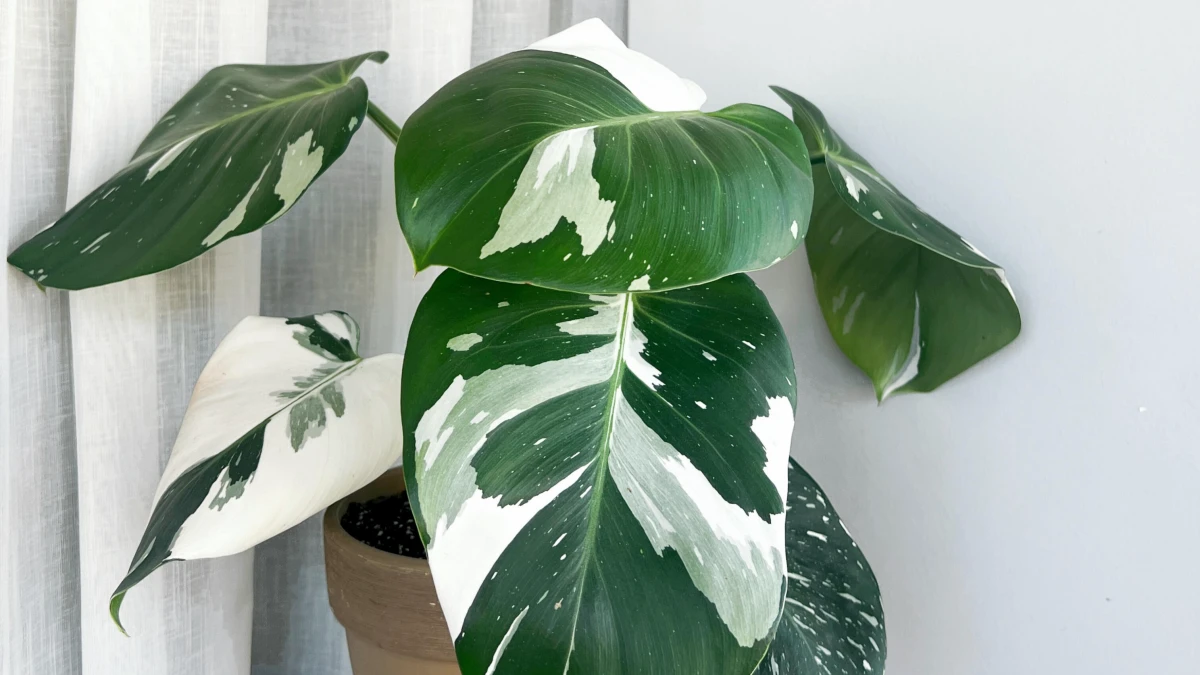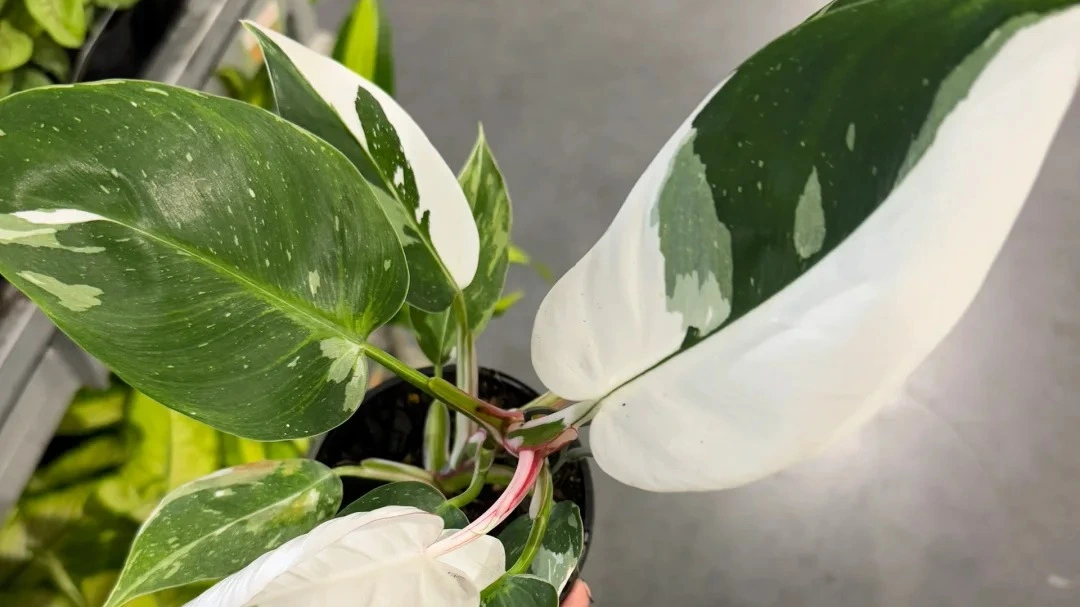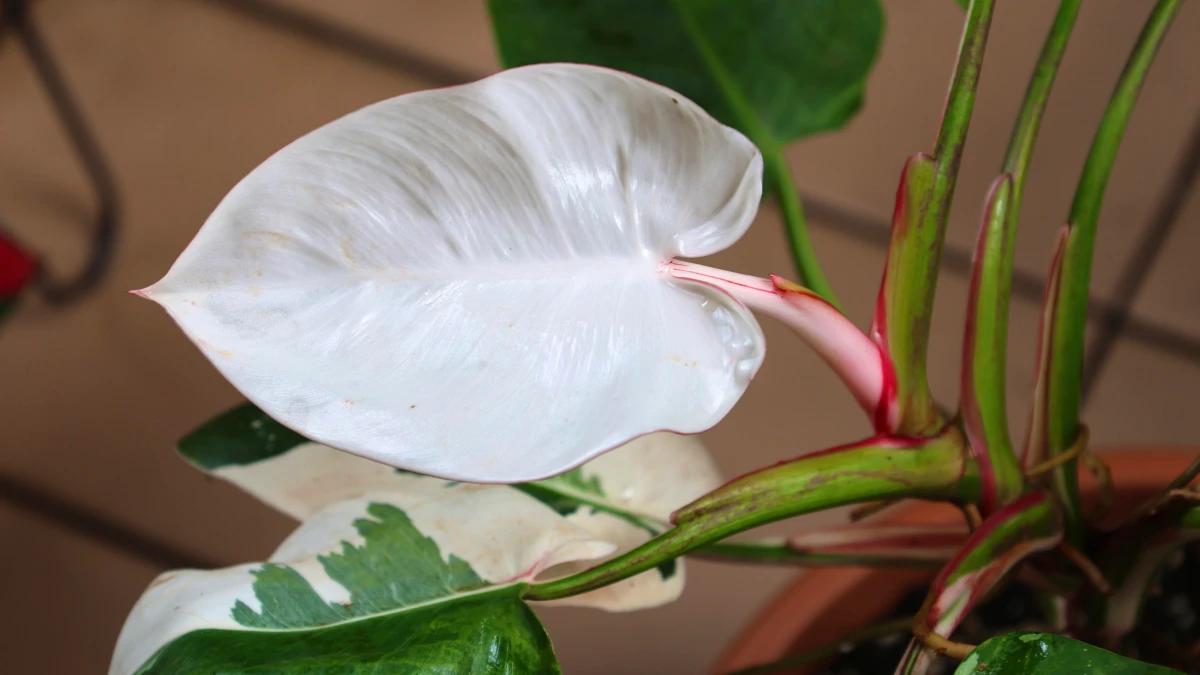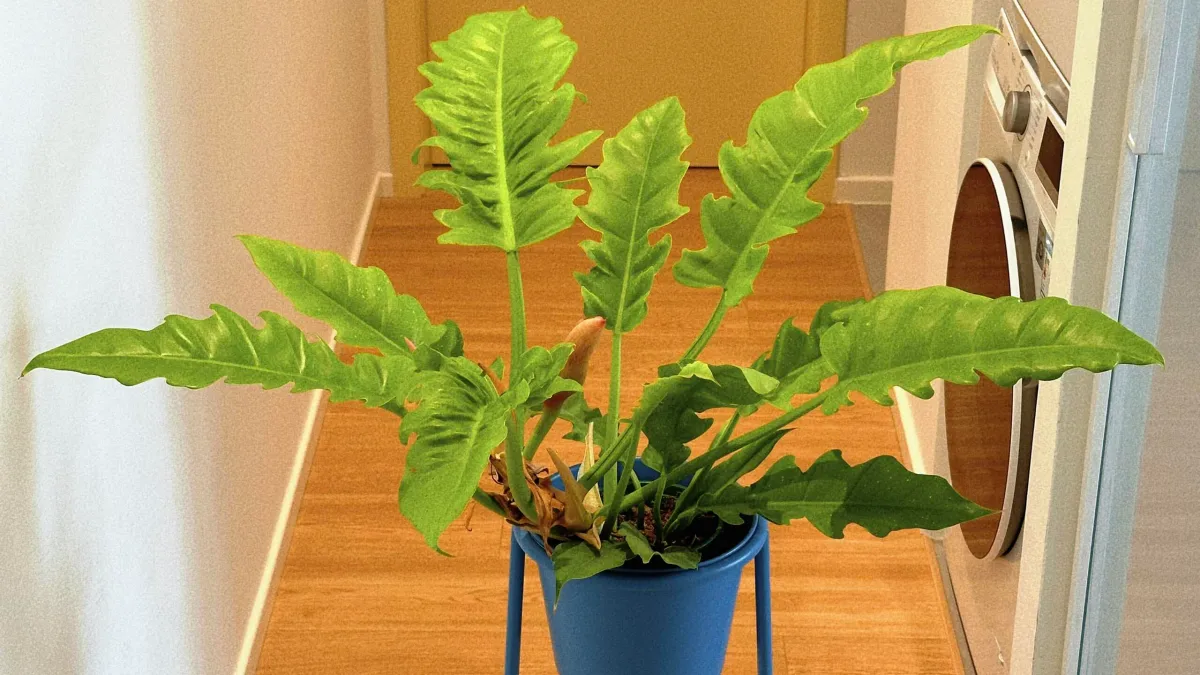
My Philodendron White Wizard came home at the end of March 2024, and for most of its time with me, it has grown under a full-spectrum grow light.
At first, it seemed like an easy plant to understand. It gave me one large new leaf, even though that leaf did not show much white variegation. Later, the plant started producing whiter leaves, but the growth also became smaller and less straightforward.
That made me look more carefully instead of simply thinking, “More white means better.” I also saw some light yellowing on older leaves, and at one point, pests damaged the new growth before I caught them early enough.
What eventually helped this plant grow taller and stronger was not just adding a moss pole. Before that, I repotted it, checked the roots, cleaned up the older stem area, and gave the plant a more stable base. Only after that did the support really make sense. This guide is about how I learned to read my White Wizard more carefully — not just by how white the leaves looked, but by whether the whole plant was actually gaining strength.
One Year Under Grow Lights: Big Leaf First, Smaller White Leaves Later
For the first part of its time with me, my White Wizard lived under a full-spectrum grow light. That made me think its growing conditions were fairly stable.
Because my White Wizard stayed under a full-spectrum grow light, I assumed the growing conditions were fairly stable. It was not sitting in a dark corner, and I was not moving it from place to place.
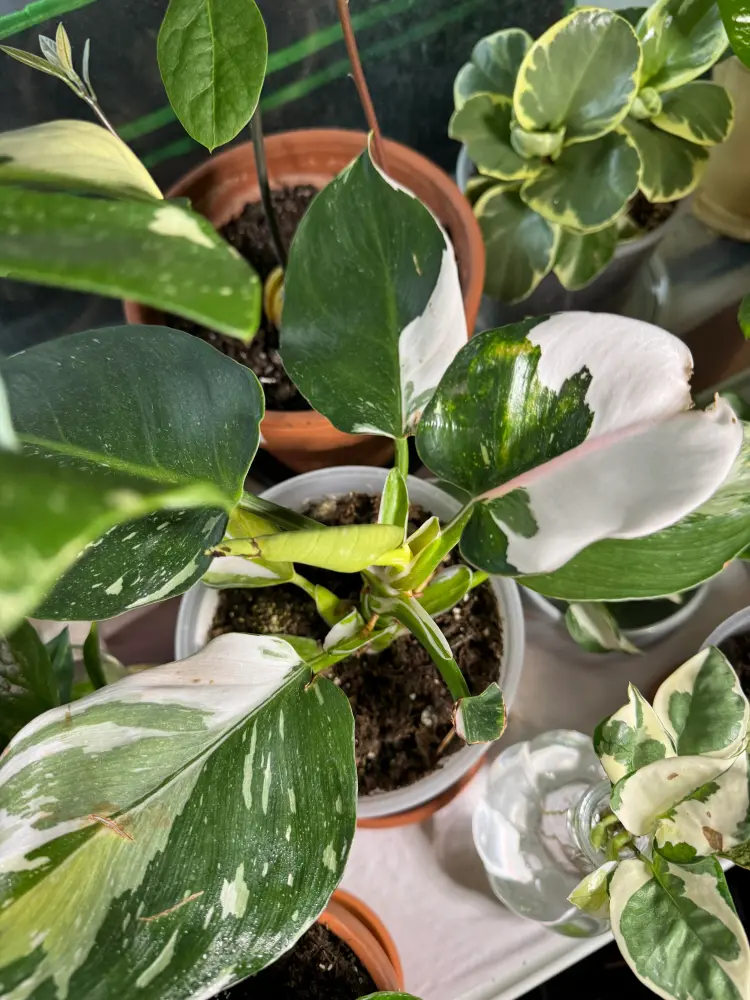
Later, the plant started producing whiter leaves. At first, that felt like a good sign. But the more I watched it, the less simple it became. The whiter leaves were smaller, and the newest growth also looked smaller than I expected. One new leaf even had a blackened tip before it fully emerged, almost as if the pale tissue at the tip was already too weak or stressed.
Around the same time, I noticed a little yellowing on older leaves. It was not a dramatic collapse, but it made me pause.
That was when I stopped reading the plant only by variegation. I started wondering whether the small white leaves were just part of the plant’s natural pattern, or whether something else was involved: weaker white tissue, root pressure, pests, watering rhythm, or the same issues that can cause philodendrons to grow smaller leaves in general.
Why I Did Not Blame Watering First
I did not blame watering right away because I had been cautious with this plant from the beginning.
When I bought it, the seller told me the pot was slightly large for the plant, so I avoided watering too often. I usually waited until the mix was about 80% dry before watering again, which is close to how I water philodendrons without keeping the pot wet all the time. I also did not bottom-water it, and I did not let the pot sit in standing water.
I still do not treat a drainage layer as a guarantee against root problems. What mattered more to me was that the mix was drying between waterings and the roots still looked active through the clear pot.
Because the pot was transparent, I could also see that the root system looked fairly developed. That made me less convinced that the plant was simply rotting from overwatering. I did mist the aerial roots regularly, but that is different from keeping the entire potting mix wet all the time.
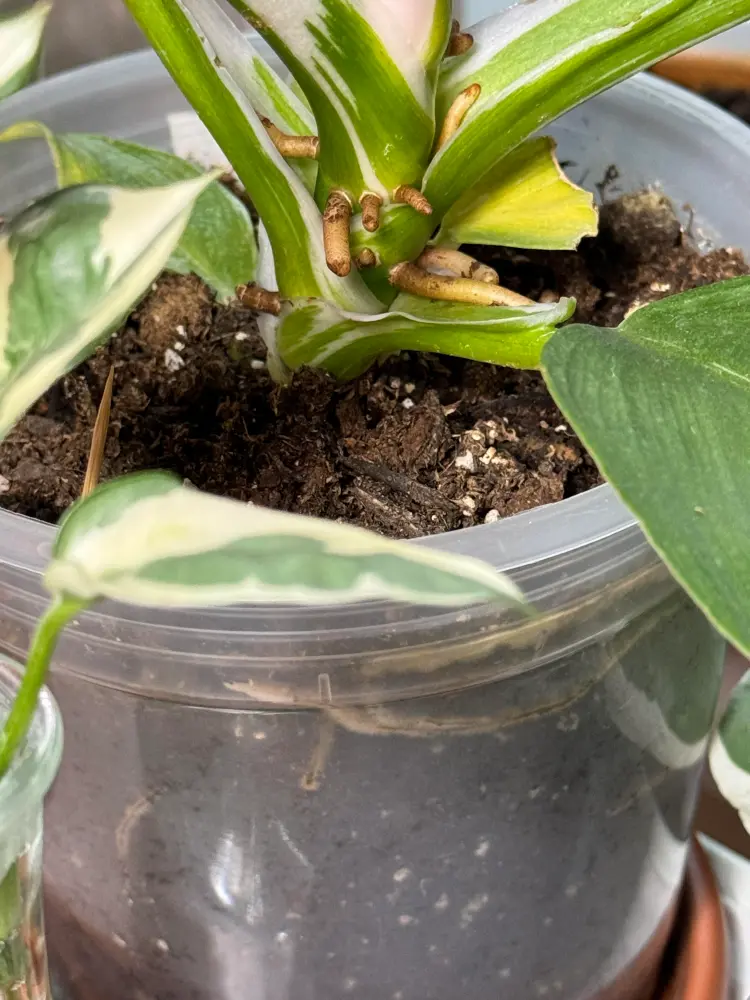
So when the leaves became smaller, one new tip blackened, and an older leaf started yellowing a little, I did not immediately think, “I watered too much.” The situation felt more mixed than that.
Even when watering does not look like the main problem, I still check the root zone before making big changes. A White Wizard can look fine above the soil for a while, but the roots usually tell me whether the plant is truly stable or whether I should start checking for early philodendron root rot.
The Repot Showed Me the Plant Was Stronger Than It Looked
The repot gave me a better answer than the leaves did.
When I took the plant out of the pot, the roots had already filled the mix much more than I expected. That changed how I read the whole situation. This was not an empty-rooted, weak plant pretending to grow. The root system was actually more developed than the smaller new leaves had made me assume.
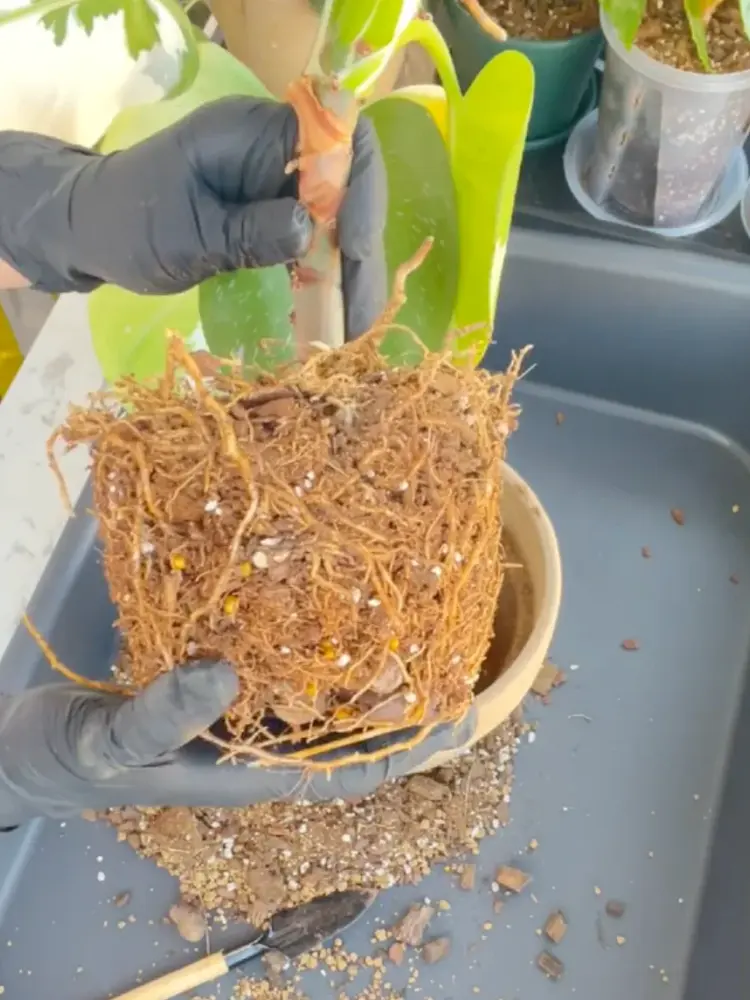
What did look tired was the older base. Some of the older stem and rhizome-like sections no longer looked useful to me, so I cleaned those parts up instead of leaving the whole tangled base as it was. I kept the stronger-looking new stem, especially the part with aerial roots, because that section looked like it still had real growing energy.
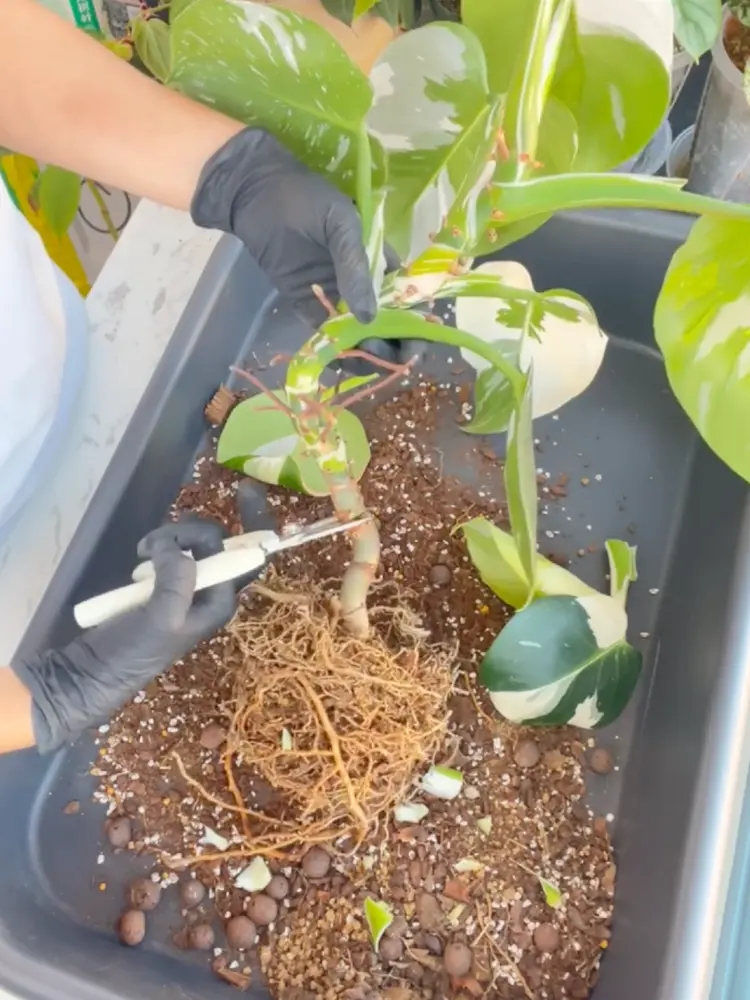
That repot was not about forcing the plant to “explode” with new growth. I was not trying to shock it into doing something dramatic. I mainly wanted to give the plant a cleaner, more stable base so the healthy roots and newer stem could support the next stage of growth.
After seeing the roots, I trusted the plant more. The small white leaves were still something to watch, but they no longer made me assume the whole plant was weak.
How I Repotted It Without Making the Pot Too Wet
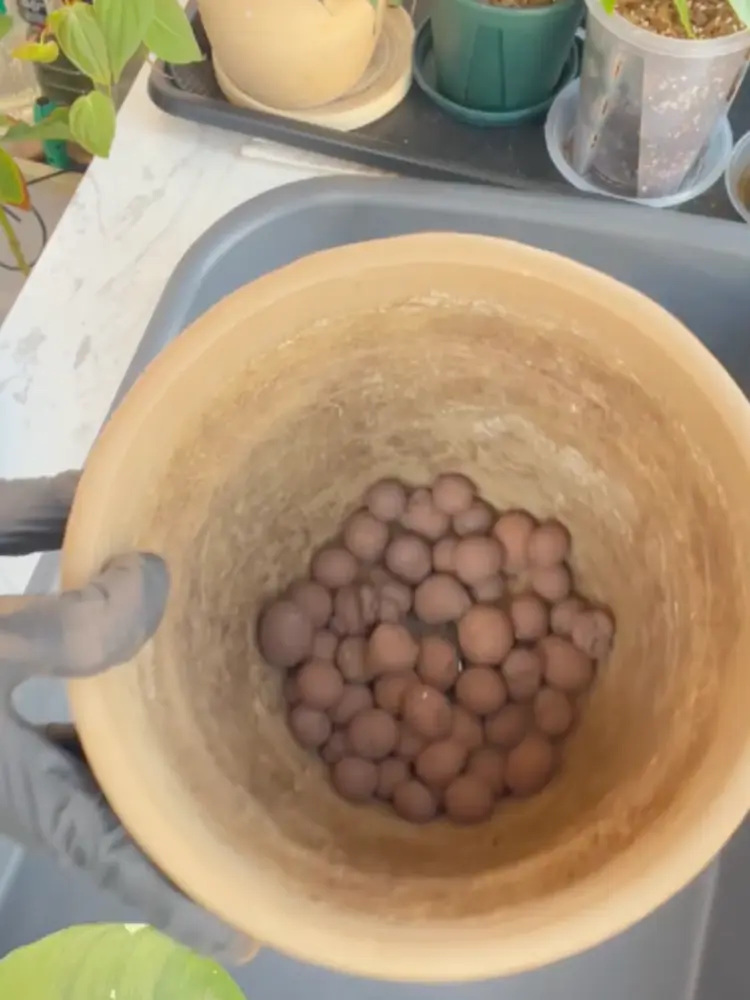
I kept the same ceramic pot instead of moving the plant into something much larger. Since the roots already filled the mix well, I did not feel the plant needed a big size jump. I just wanted to refresh the base and make the planting more stable.
At the bottom of the pot, I added a layer of LECA. Then I filled the pot with a loose soil mix for philodendrons until it was about one-third full, placed the White Wizard back in, and worked the soil gently around the roots. I tried not to pack the mix too tightly, because I still wanted air to move through the root zone.
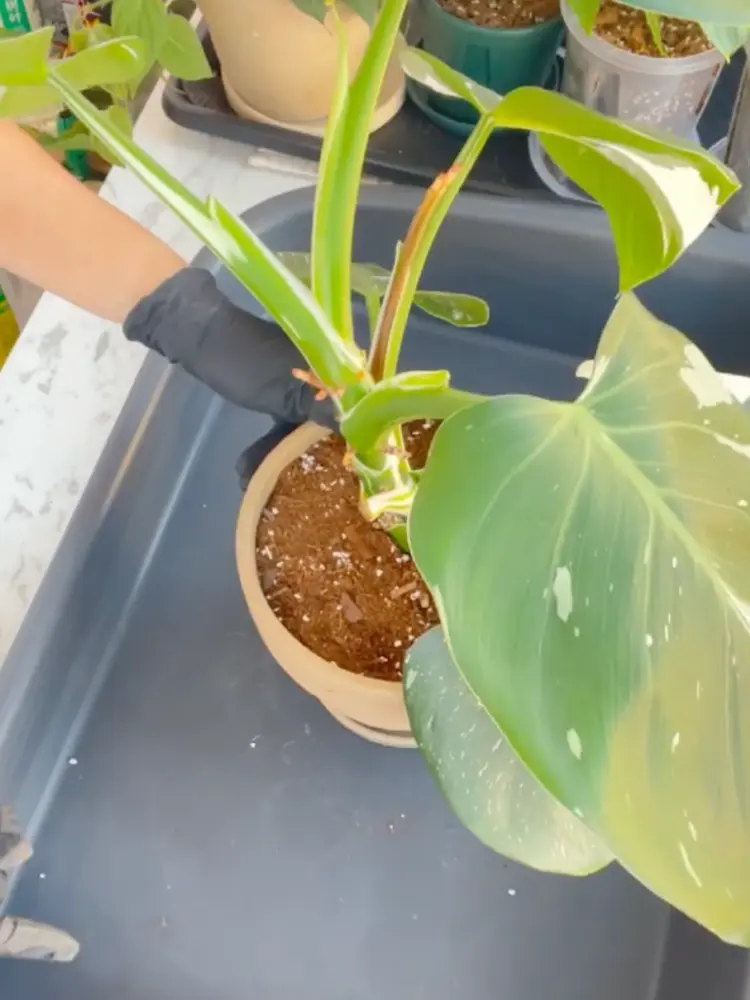
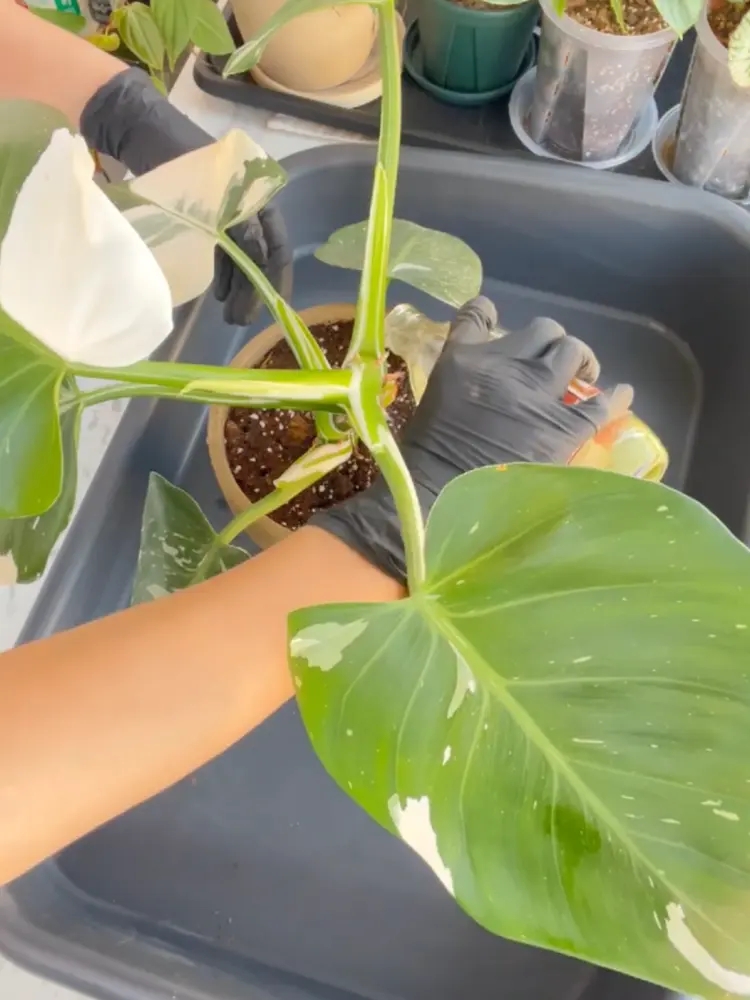
After repotting, I watered slowly and thoroughly. I did not pour a lot of water in all at once. I wanted the fresh mix to absorb moisture evenly instead of staying dry in the middle and wet only around the edges. Once water started coming out from the bottom of the pot, I stopped and let it drain.
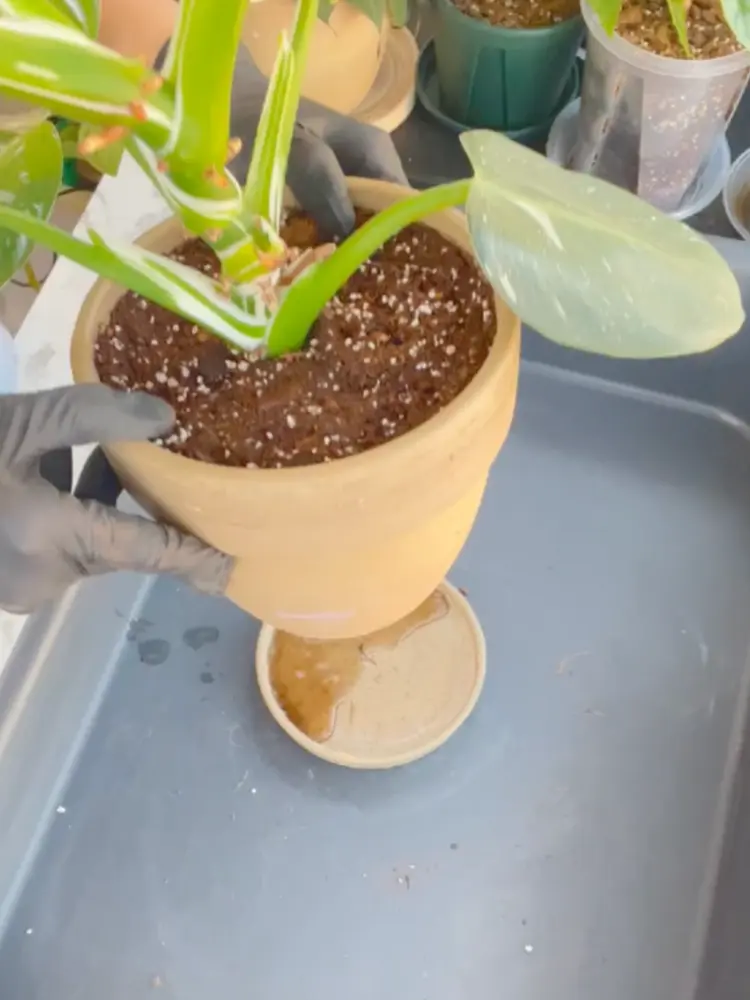
For me, this kind of first watering after repotting is not about “watering more.” It is about making sure the new soil settles around the roots without leaving dry pockets or creating a heavy, soggy pot.
Freckles, Bugs, and Damaged New Leaves
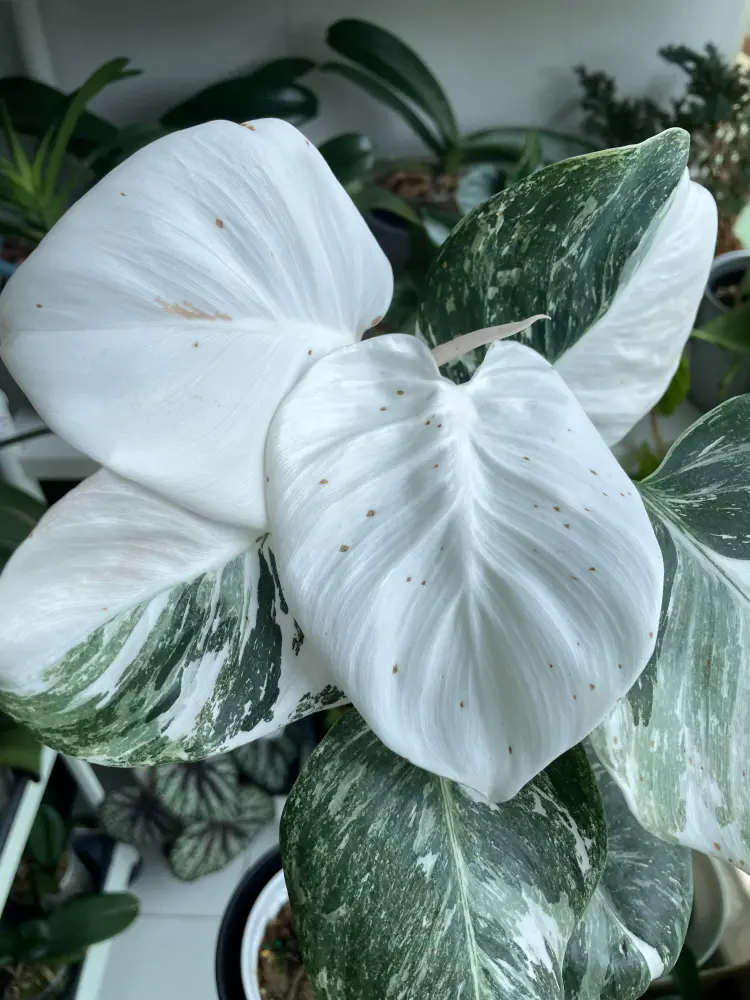
As my White Wizard started producing whiter leaves, I noticed that small marks became much easier to see. On green tissue, a tiny spot might not bother me much. On a pale white section, the same mark looks obvious.
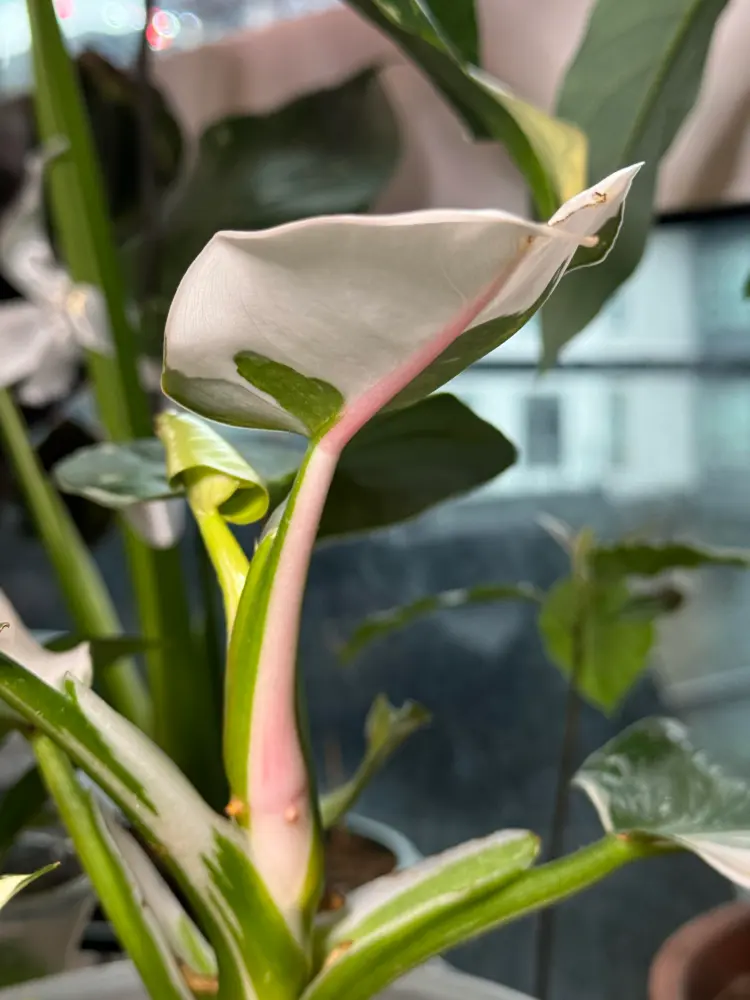
I do not panic over every freckle on a white leaf. Variegated tissue can mark more easily, and once I have ruled out spider mites or active pests, a few small freckles do not always mean the plant is in serious trouble. If the marks spread or look more like active brown spots on philodendron leaves, I take the situation more seriously.
I learned that the hard way with this plant. There was a period when I did not notice pests early enough, and some new growth was partly eaten before I caught the problem. At first glance, damaged new leaves can make the whole plant look like it is growing poorly. But pest damage is different from a plant naturally producing smaller leaves or weaker variegation.
Now I check the hidden areas more often: leaf backs, petioles, new shoots, and leaf sheaths. A pest problem caught early is much easier to manage than a new leaf that has already been chewed or scarred.
The Moss Pole Helped After the Base Was Stable
Later, I added a moss pole, and that was when my White Wizard started growing taller much faster.
But I do not think the moss pole was the only reason it improved. By that point, I had already repotted the plant, checked that the roots were strong, and cleaned up the older tired base. The plant had a better foundation before I asked it to climb.
Once the aerial roots had something to attach to, the growth habit made more sense. White Wizard is a climbing philodendron, and without support, it can start leaning, stretching, or looking awkward as the stem gets longer. With a pole, the plant had a clearer direction, and the newer growth looked more organized instead of just reaching outward.
That is why I would not wait until a White Wizard is completely bent over before supporting it. A small moss pole or simple vertical support can help while the plant is still manageable.
If your White Wizard is starting to lean or climb, my guide on how to put a philodendron on a moss pole explains the setup in more detail.
What I Would Watch First on White Wizard Now
After growing this plant for a year, I do not judge White Wizard by one white leaf alone. I look at whether the whole plant is still gaining strength.
| What I See | What I Check First |
|---|---|
| Whiter leaves but smaller size | Is the plant still growing stronger, or losing momentum? |
| New leaf tip turns black | White tissue weakness, pests, stuck growth, and root stress |
| Older leaf slowly yellows | Whether it is one old leaf or a wider decline |
| White leaves have freckles | Rule out mites and pests before calling it normal |
| New leaves get eaten | Check pests before blaming light or watering |
| Stem starts growing tall | Add support before the plant leans or grows messy |
White Wizard Is Easy, But Not Completely Hands-Off
Philodendron White Wizard is still one of the easier variegated philodendrons in my home. It does not feel as dramatic or demanding as some highly variegated plants, and once it is settled, it can grow well under normal indoor care.
But “easy” does not mean I ignore it.
With this plant, the confusing part is learning what the leaves are really telling me. Whiter leaves can look exciting, but if they come in smaller and weaker, I pay attention. A blackened new tip, a few freckles on pale tissue, pest damage, or an aging base can all make the plant look worse than it actually is — or hide a problem I should catch earlier.
For mine, the plant really started to make sense after I cleaned up the older base, confirmed the roots were stronger than the leaves suggested, and gave it time to settle again. The moss pole helped later, but only because the plant already had a better foundation.
Now I care less about whether every new leaf is whiter than the last one. I care more about whether the plant is still gaining size, climbing well, and growing with enough strength to keep moving forward.
FAQ
Still exploring philodendron varieties?
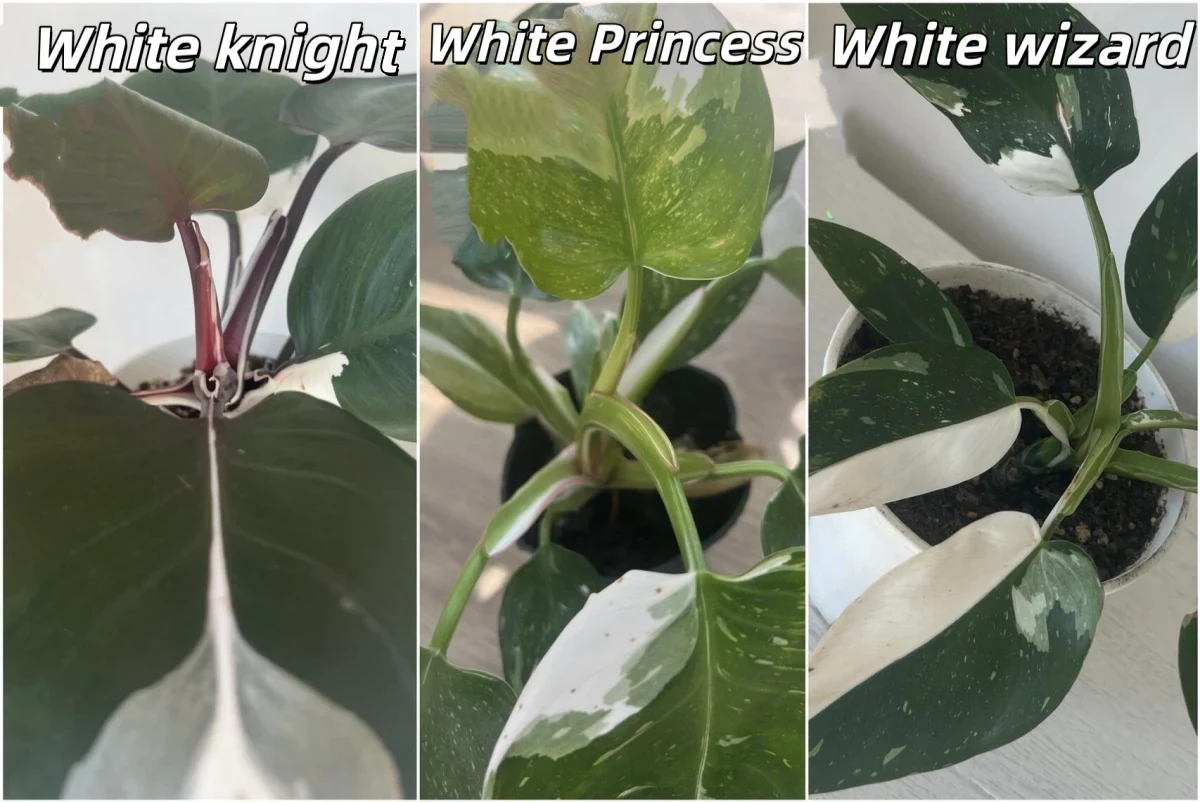
If you are trying to tell White Wizard apart from similar white-variegated plants, my comparison of White Knight, White Princess, and White Wizard will be the best next read. You can also return to my main philodendron varieties page to compare more leaf colors, growth habits, and care difficulty.
Go to Varieties Hub →