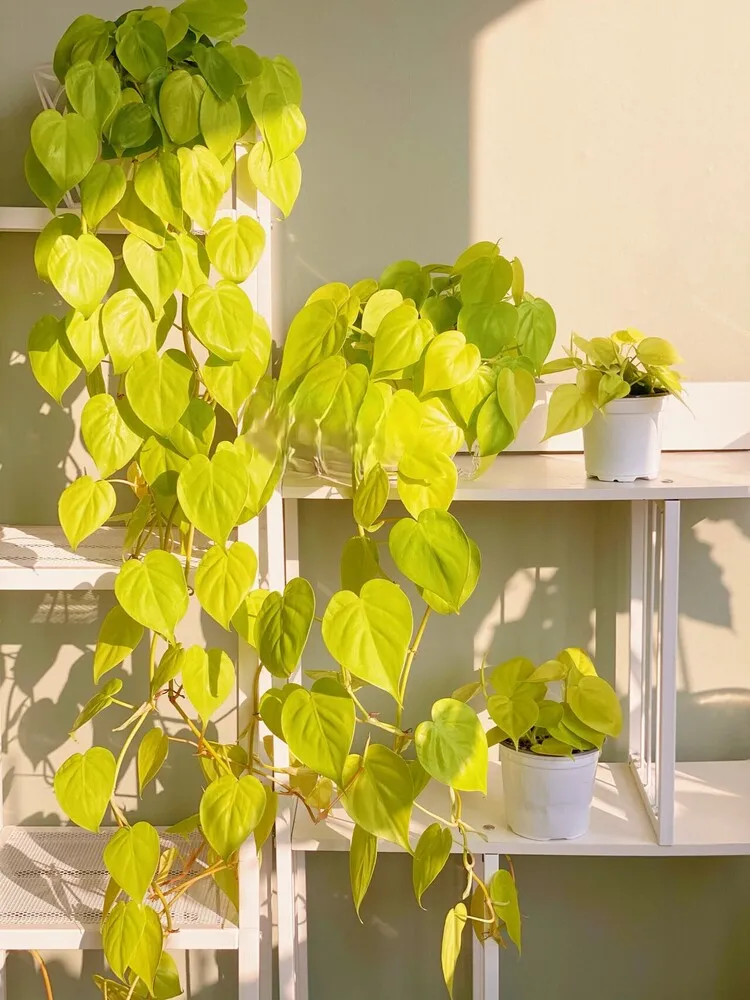
The first time I saw a Lemon Lime philodendron, the color almost looked unreal. Most houseplants lean toward deep green foliage, but this one had bright lemon-yellow leaves that seemed to glow even in ordinary indoor light.
What I like most about this plant is the shape of the leaves. They have the classic heart-shaped philodendron look, but the fresh leaves come out in a soft lemon color that gradually deepens as they mature. When several new leaves appear at once, the whole plant almost looks like it’s lit from within.
Another reason Lemon Lime quickly became one of my favorites is how fast it grows. Even when I started with a small plant, it didn’t take long before new vines began stretching out and filling the pot. Over time it became one of the most vigorous plants on my shelf.
After growing it for nearly a year, I realized Lemon Lime philodendron is not just beautiful — it’s also surprisingly resilient. It handled small mistakes, adapted to different light levels, and eventually grew into several pots through propagation. Over the past year, I’ve also learned that this plant’s color, watering response, and sun tolerance are a little more nuanced than they first appear.
My One-Year Lemon Lime Growing Journey
I bought my Lemon Lime philodendron in May last year as a small starter plant with only a handful of leaves. At the time, it looked bright and healthy, but the pot was still small and the vines were short. I honestly didn’t expect it to grow so quickly.
During the first few months, the plant focused mostly on producing new leaves. Each new leaf came out in that soft lemon-yellow color that makes this variety so distinctive. As the plant settled into my space and the temperatures warmed up, the growth became noticeably faster. New leaves started appearing one after another, and the vines gradually began to trail over the edge of the pot.
After several months of steady growth, the plant became large enough that I started taking cuttings. Lemon Lime philodendron propagates very easily, so a few nodes quickly turned into new plants. What started as a single small pot eventually became two large plants and two smaller propagated ones.
Of course, the year wasn’t completely smooth. I ran into a couple of problems along the way, including leaf damage caused by a combination of cold air and strong sun, and another moment when the plant suddenly looked droopy and I had to figure out what went wrong. Those experiences actually taught me much more about how this plant behaves in real conditions.
Looking back, Lemon Lime turned out to be one of the fastest-growing and most forgiving philodendrons I’ve grown so far. Even after a few mistakes, it kept pushing out new growth and eventually filled several pots.
What Lemon Lime Philodendron Color Really Looks Like
One thing I didn’t fully understand at the beginning is that Lemon Lime philodendron does not stay exactly the same shade all the time. The color shifts more than many plant photos suggest, especially once the plant starts putting out leaves under real home conditions instead of greenhouse-perfect light.
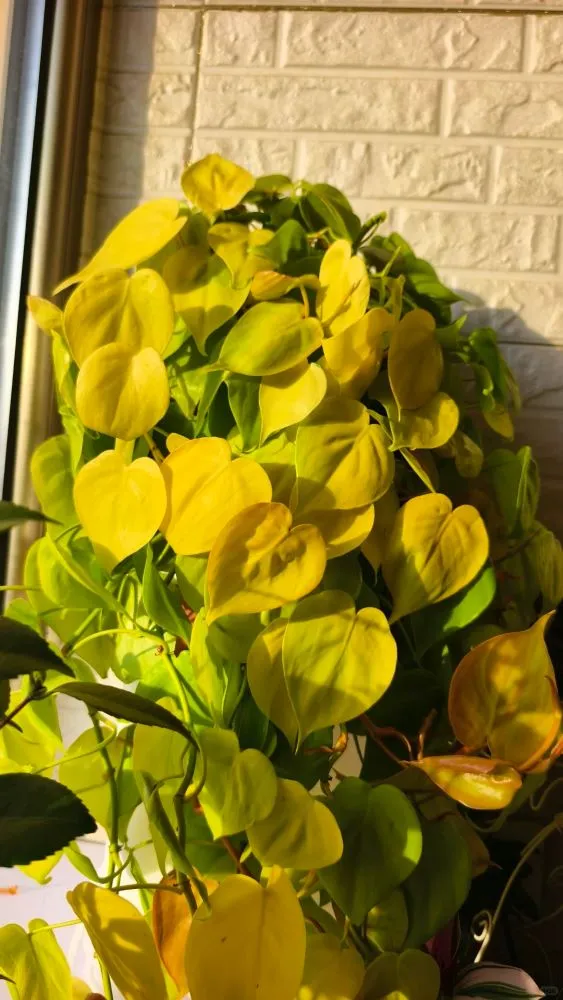
In my experience, the newest leaves are usually the brightest. They come out in a soft lemon-yellow tone that makes the plant look fresh and almost glowing. But as those leaves mature, the color gradually deepens and becomes a little greener. That change is completely normal, and it doesn’t automatically mean the plant is losing its character.
Light makes a big difference too, but not always in the simple way people expect. When my plant grows in bright conditions, the new leaves usually look cleaner and more vibrant. But if the light becomes too harsh, especially with poor airflow or unstable temperatures, the leaves can get stressed instead of looking better. So for me, the goal is not to chase the strongest sun possible, but to keep the plant in bright conditions that match real philodendron light needs indoors.
I’ve also noticed that temperature changes seem to affect the look of new growth. During periods with a bigger day-and-night temperature difference, especially in spring and autumn, the newest leaves sometimes appear a little more yellow. Older leaves still deepen over time, but the fresh growth can look noticeably brighter during those periods.
So when I look at Lemon Lime philodendron now, I no longer expect every leaf to stay the exact same lemon shade. A healthy plant usually shows a mix of tones — brighter yellow on the newest leaves, greener color on older ones, and slight shifts depending on light, season, and temperature. That variation is part of what makes this plant look alive rather than flat or artificial.
Case 1: Sunburn + Cold Damage
One of the first problems I ran into with my Lemon Lime philodendron happened when I placed it near a west-facing window. I wanted the plant to receive more light so the leaves could keep that bright lemon color, so I allowed it to get direct afternoon sun.
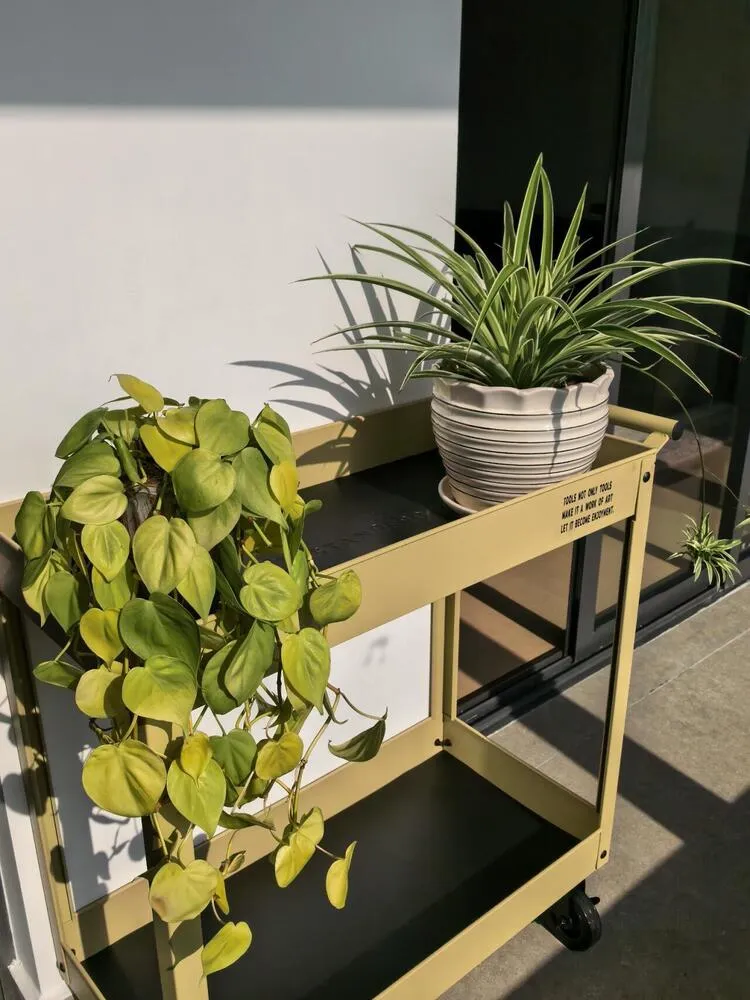
At first everything seemed normal. But after a while I started noticing strange patches on several leaves. The damage didn’t look like typical yellowing — it looked more like a brown spot pattern caused by stress, with faded, slightly dry, uneven areas on the leaf surface.
It took me a while to realize that the issue wasn’t just the sunlight.
Because the plant was sitting right next to the window, the afternoon sun heated the leaves quite strongly, especially when there wasn’t much airflow. At the same time, a cold air mass moved through the area and the room temperature occasionally dropped below about 15°C (59°F).
So the plant was dealing with two stresses at once — hot leaf surfaces from direct sun while the surrounding air stayed relatively cool.
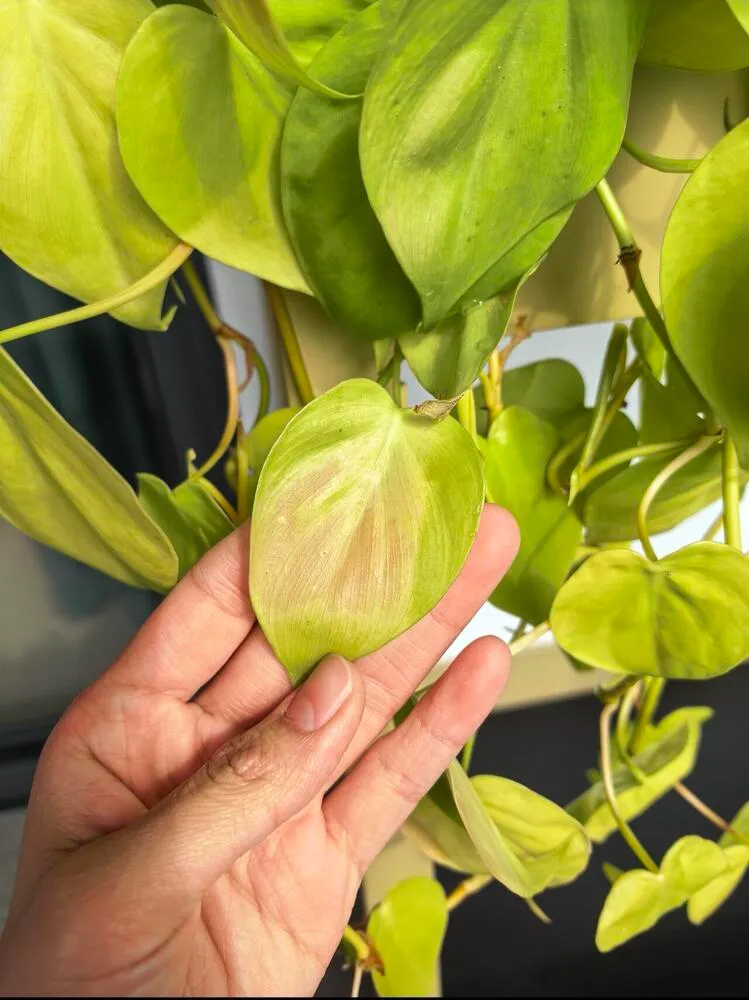
That kind of temperature imbalance can be surprisingly stressful for tropical plants. In my case, it likely caused a mix of mild sunburn and cold damage on several leaves.
Once I moved the plant slightly farther from the window and improved airflow, the damage stopped spreading and new leaves began growing normally again.
Looking back, the lesson for me was simple: bright light can help Lemon Lime philodendron maintain its color, but strong afternoon sun combined with temperature swings and poor airflow can quickly lead to leaf damage.
Case 2: Sudden Drooping
The second problem I ran into looked very different. My Lemon Lime philodendron suddenly started looking weak and droopy, and the whole plant seemed to lose its usual energy within just a few days. At that point I realized how easy it is to misread a drooping philodendron if you only look at the surface.
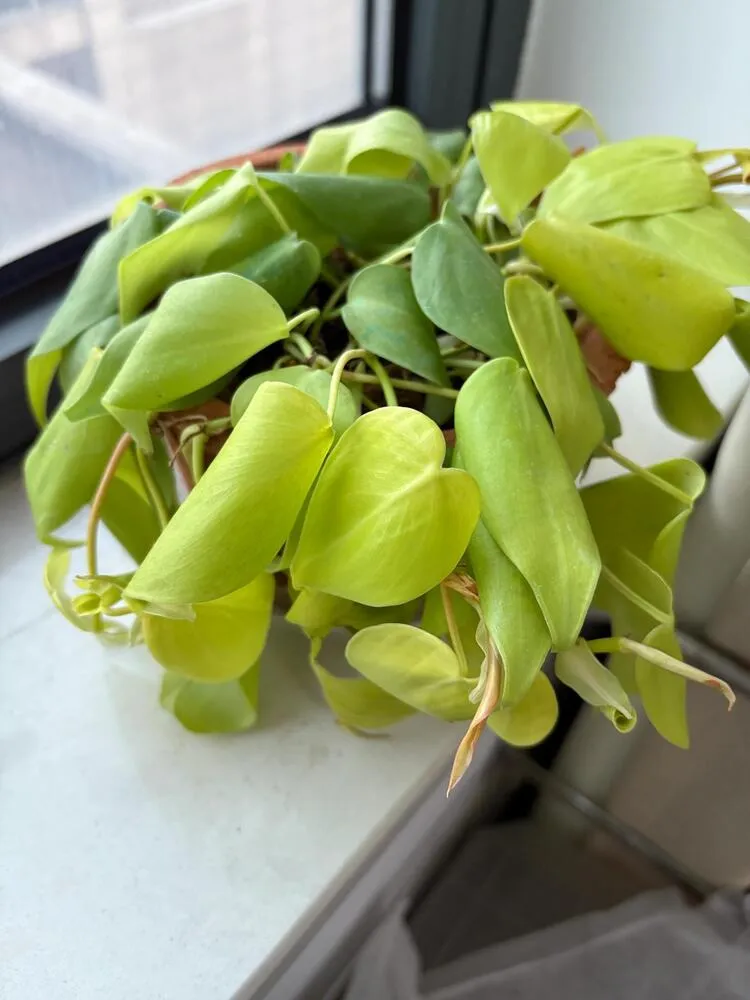
At first, I thought the issue might be related to repotting. The timing made that seem possible, and since the soil still felt slightly damp near the surface, I hesitated to water it again. I was worried that adding more water would make the problem worse.
But the plant didn’t improve. The leaves continued to look limp, and the overall posture of the plant kept getting softer instead of recovering.
After talking with other growers and checking the pot more carefully, I realized I had probably judged the moisture level the wrong way. The top of the soil still felt a little cool and slightly moist, but deeper inside the pot the mix had likely dried out more than I expected. That was a good reminder that watering philodendrons works much better by reading the pot than by trusting the surface alone.
So in this case, the problem was not overwatering at all — it was actually underwatering.
To help the plant recover, I soaked the pot in water for about five minutes so the root ball could rehydrate more evenly. After that, I placed it by the window with steady airflow, and over time the leaves slowly firmed up again.
This experience taught me that with an airy mix, the soil surface can be misleading. A plant that looks weak after repotting is not always suffering from too much water. Sometimes it is simply much drier than it appears.
What I Learned From These Problems
Looking back, these two experiences changed the way I read this plant. Lemon Lime philodendron is not as delicate as it first appears, but it does react quickly when something in the environment feels slightly off.
What surprised me most is that the problem is not always as simple as it looks on the surface. A damaged leaf does not always mean “too much sun,” and a droopy plant does not always mean “too much water.” In both cases, I had to look beyond the most obvious explanation before I could understand what was really happening.
That made me much more careful about reacting too quickly. Instead of immediately moving the plant, watering it again, or assuming the worst, I now try to look at the whole situation first — where the plant is sitting, how stable the temperature has been, whether airflow is poor, and how the pot is actually drying out over time.
More than anything, Lemon Lime philodendron taught me that plant stress is often cumulative. It is not always one dramatic mistake that causes trouble, but several smaller factors building up at the same time. Once I started paying attention to that, my decisions became calmer and much more accurate.
In that sense, this plant has been a good reminder that growing philodendrons is not just about following care rules. It is also about learning how to observe patterns, slow down, and let the plant tell you what kind of adjustment it actually needs.
How I Care for Lemon Lime Now
After growing Lemon Lime philodendron for nearly a year and learning from a few mistakes along the way, my care routine has become much simpler than it was at the beginning.
For soil, I prefer a mix that stays lightly moist but still drains well. What has worked best for me is about 70% peat, 20% perlite, and 10% medium to small chunky material, with some slow-release fertilizer mixed in. I’ve also found that a general-purpose potting soil can work well as long as it doesn’t stay too dense or soggy for too long, which is really the same principle behind a good philodendron soil mix.
For pots, I started with breathable terracotta because I wanted healthy root growth, and it did help with airflow around the roots. The only downside is that it dries faster, so I have to pay closer attention to watering, especially during active growth.
Watering is probably the part I’m most careful with now. Lemon Lime philodendron seems to prefer staying slightly on the moist side rather than drying out too hard. In summer, I usually water thoroughly once the pot feels lighter and the top layer has dried. In winter, I wait a little longer and usually water when the soil is around eighty percent dry. I no longer judge moisture by the surface alone.
For feeding, I keep it simple. During the growing season, I use a balanced fertilizer every ten days to two weeks. I’ve never used a high-nitrogen fertilizer on this plant because I prefer to keep the color brighter rather than pushing too much green growth.
When it comes to light, I still believe this plant looks best with plenty of brightness. The more light it gets, the more vivid the lemon tones tend to be, but I’ve learned not to chase color at the expense of leaf health. In my conditions, I let it get plenty of sun when temperatures stay below about 25°C, but during hotter periods I move it to bright indirect light or gentler morning and late afternoon sun instead of harsh direct exposure.
Temperature-wise, I’ve found it grows best between 20–28°C. It can survive outside that range for a while, but once temperatures drop too much, especially with drafts near windows, the risk of stress becomes much higher.
Humidity has never been the most important factor for mine. Around 50% humidity has been perfectly fine in my home, and I haven’t found this plant nearly as demanding as some other aroids. What has mattered much more is airflow. Good ventilation makes a big difference, especially when the plant is getting strong light or after watering. If natural airflow is weak, even a small fan can help keep conditions more stable.
At this point, I think of Lemon Lime philodendron as a very rewarding plant as long as its basic needs are met: enough light, steady watering, reasonable warmth, and good airflow. It’s not a difficult philodendron, but it does teach you to pay attention. And once you understand how it responds, it becomes one of the easiest and most satisfying plants to grow.
FAQ
Still exploring philodendron varieties?
Lemon Lime is one of the easiest philodendrons I’ve grown, but it behaves very differently from darker, thicker-leaved types. If you’re comparing colors, leaf shapes, or growth habits, I’ve put together my main philodendron varieties page to help you explore more.
Go to Varieties Hub →