One reason I’ve kept recommending Philodendron Prince of Orange is that it gives visible feedback so often. When it’s happy, it doesn’t just sit there looking healthy — it keeps moving. Mine has been putting out a new leaf about every two to three weeks, and that steady growth is a big part of why I enjoy growing it so much.
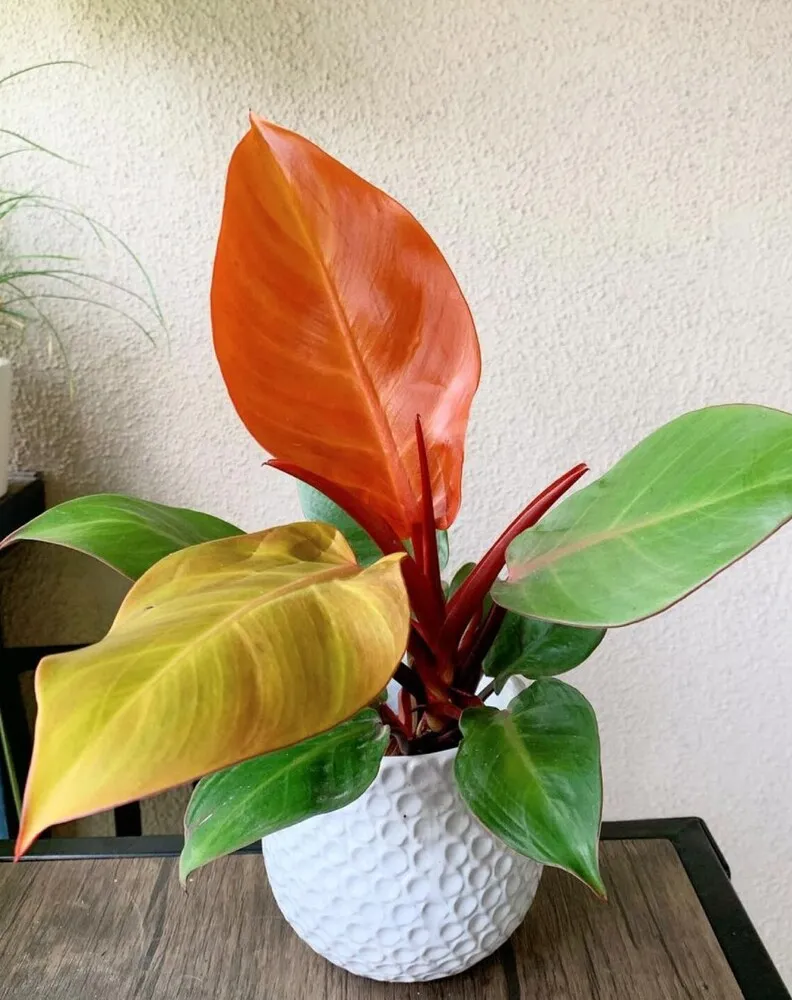
What makes this plant especially fun to watch is that the color doesn’t stay fixed. A new leaf usually starts out deep red, then shifts into orange, softens into yellow, and eventually settles into green. On a healthy plant, you can often see several of those stages at once, which gives it far more character than a plant that stays the same color all year.
It’s also one of those philodendrons that looks more dramatic than it really is. In my experience, it has been much easier to keep happy than many plants with similarly colorful foliage, which is part of why I keep recommending it.
What Makes Prince of Orange So Popular
The Leaf Color Changes Are the Main Attraction
The biggest reason people fall for Prince of Orange is the color shift. It isn’t just an orange plant in the usual sense. What makes it interesting is the way each leaf changes over time. New growth often emerges in a deep red tone, then opens into bright orange, softens into yellow, and eventually matures into green.
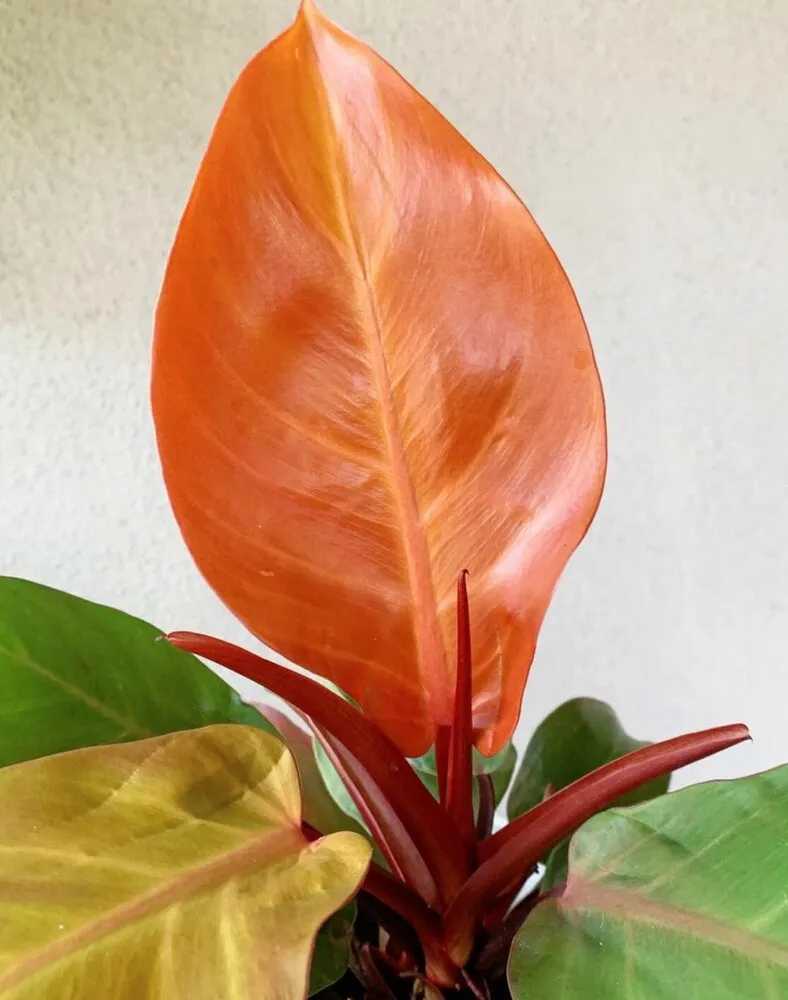
That means the plant rarely looks flat or one-dimensional. On a healthy specimen, it’s common to see several color stages at once, which gives the whole plant a layered, glowing look. For me, that constant change is what makes it more rewarding than many philodendrons that look almost the same from one month to the next.
It Stays Compact and Works Well Indoors
Another reason this variety is so popular is that it has a very manageable shape. Unlike some larger philodendrons that quickly start taking over shelves, corners, or floor space, Prince of Orange stays relatively compact and keeps a neat, upright form for quite a long time.
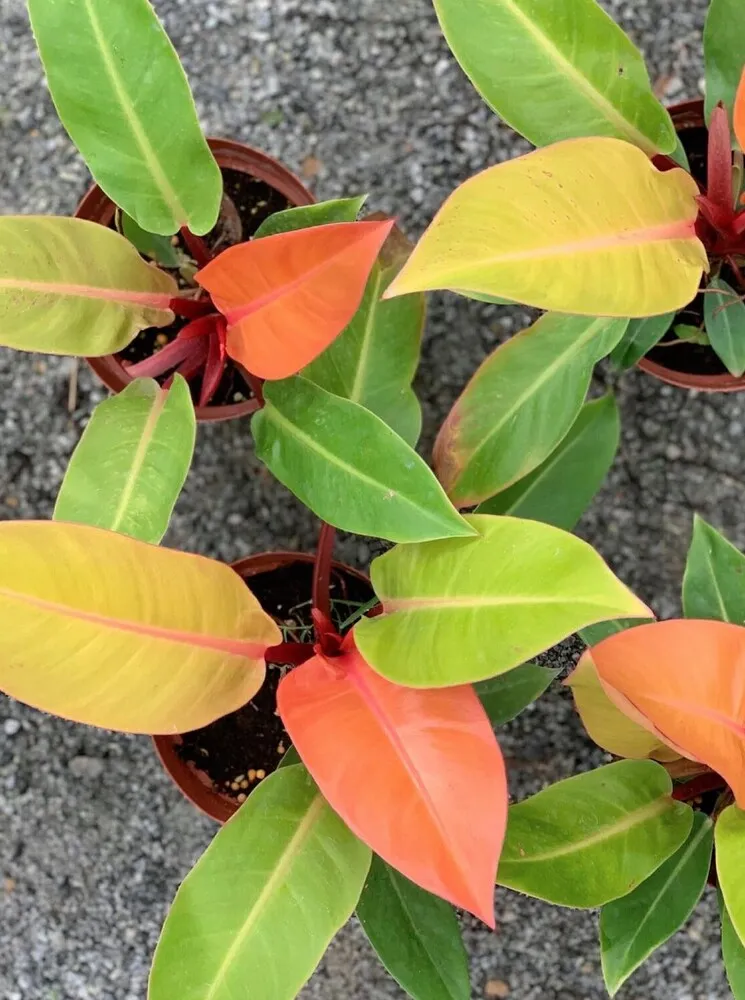
That makes it especially easy to place indoors. It works well on a plant stand, near a bright window, or as part of a smaller indoor collection without immediately becoming too large to handle. If you want a philodendron with strong visual impact but don’t want something sprawling or oversized, this is one of the easier choices.
It’s Easier Than It Looks
Prince of Orange has the kind of foliage that makes people assume it must be difficult, but in my experience, it’s actually one of the more approachable colorful philodendrons. It gives you that warm red-orange-yellow growth without acting delicate all the time.
That’s part of why I think it has stayed so popular for so long. It offers more color and personality than many common green houseplants, but it doesn’t feel nearly as unstable as some pricier or trend-driven aroids. If you want a plant that looks special without constantly making you nervous, Prince of Orange is one of the best-value philodendrons to grow indoors.
How Fast Does Prince of Orange Grow?
In my growing conditions, Prince of Orange is not a slow philodendron at all. When the plant is actively growing and the environment is stable, mine usually puts out one new leaf every two to three weeks. That’s actually one of the reasons I enjoy it so much — it gives regular, visible progress instead of sitting still for long stretches.
That said, the growth rate depends heavily on conditions. Warm temperatures, bright indirect light, and consistent moisture make a big difference. In spring and summer, growth is usually much faster and more reliable. When light is stronger and the plant is using water well, new leaves tend to come in one after another with much less hesitation.
If your Prince of Orange goes for a long time without producing a new leaf, I wouldn’t immediately assume the variety itself is slow. In most cases, it’s more likely that the light is too weak, temperatures are too cool, the roots are under stress, or the watering rhythm is off. In my experience, a long stall usually points to the setup rather than the variety itself. When a philodendron stays stalled for too long, I usually start reading it as a plant that is not growing normally rather than just a naturally slow variety.
How I Care for My Prince of Orange
Light: Bright Indirect Light Keeps the Colors Better
In my experience, Prince of Orange does best in bright indirect light. Plants with this much color usually need a brighter position to show their full range well, and this one is no exception. If you are unsure what “bright indirect” really means in practice, it helps to understand how much light philodendrons actually need indoors. When the light is good, the new leaves come in with much stronger red and orange tones, and the whole plant looks more vibrant overall.
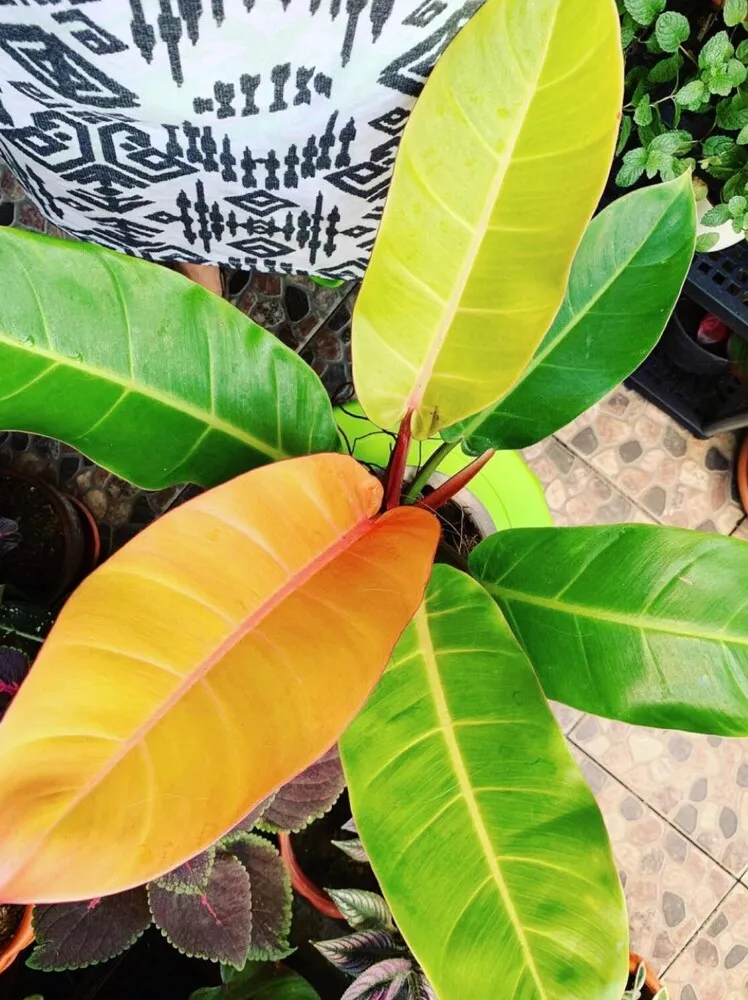
When the light is too weak, the plant may still survive, but it won’t show the same color depth. The newer leaves usually look less vivid, and the whole plant loses some of that layered look that makes this variety special. That’s why I wouldn’t keep it in a dim corner for long if color is one of the main reasons for growing it.
Watering: Don’t Let It Stay Dry for Too Long
Prince of Orange has fairly broad leaves, and in warm weather it can go through water faster than people expect. When temperatures are high and the plant is actively growing, I’ve found that it does better when I water as soon as the surface of the soil dries out rather than letting the whole pot stay dry for too long. For me, this is one of those plants that does better when I watch the pot instead of following a fixed watering schedule.
If it repeatedly gets too dry during active growth, the plant may not collapse immediately, but the growth rhythm often slows down. New leaves can take longer to emerge, and overall performance becomes less consistent. Once temperatures cool down, I naturally stretch the watering interval more. The key is not using the exact same routine year-round.
Humidity: Helpful, But Not the Main Difficulty
This isn’t the most humidity-sensitive philodendron I grow, which is one reason I think it suits regular indoor conditions quite well. It can adapt to average household air, but I do think it looks and grows better when humidity is around 60% or a bit higher.
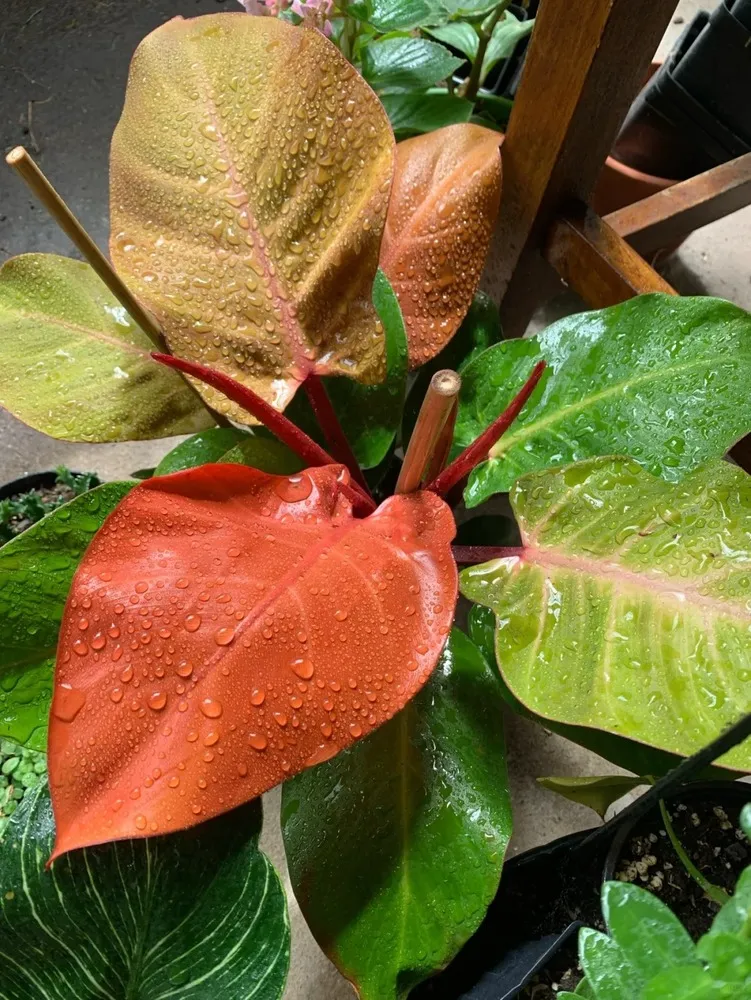
In hotter weather, extra humidity can help, but only if airflow is good enough to balance it out. For me, high heat, high humidity, and good ventilation have to work together. In hotter weather, extra humidity can help, but only if airflow is good enough to balance it out. For me, high heat, high humidity, and good ventilation work best as a package. If the air is hot and stagnant, adding more moisture usually doesn’t make the plant look better for long.
Soil: Chunky Aroid Mix Works Better
Prince of Orange does better in a loose, breathable mix than in heavy standard potting soil. Its roots are not especially fine, and once the plant settles in, it can also produce aerial roots, so I prefer a chunky aroid-style mix that leaves room for airflow and root movement.
A blend with bark, perlite, and other coarse materials usually feels much safer to me than anything dense or muddy. What I try to avoid is soil that stays compressed and wet for too long. In practice, that usually comes down to using a potting mix that gives philodendron roots both moisture and airflow instead of trapping them in something dense. This plant is quite forgiving, but it still grows more steadily when the root zone has both moisture and oxygen.
Feeding: Simple Feeding Is Enough
I don’t think Prince of Orange needs an aggressive fertilizer routine. During active growth, a slow-release fertilizer every two to three months is usually enough for a low-maintenance approach. If I want to push growth a little more, I may also use a diluted liquid fertilizer every 15 to 20 days.
What matters more than the exact fertilizer schedule is whether the plant is actually in a position to use that nutrition well. If light, temperature, watering, and root health are off, adding more fertilizer usually doesn’t solve much. For this plant, feeding helps most when the basic growing conditions are already working.
Why Is My Prince of Orange Turning Green?
Not Enough Light
The most common reason Prince of Orange starts looking greener is simply that it isn’t getting enough light. This plant can tolerate average indoor conditions, but if the light level is too low for too long, the new growth usually loses some of its warmth and comes in less vibrant than expected.
Instead of showing strong red or orange tones, the leaves may open with a softer, duller color and shift to green more quickly. The plant may still look healthy overall, but it won’t show the same layered color effect that makes this variety special in the first place.
Older Leaves Naturally Mature to Green
It’s also important to remember that older leaves turning green is completely normal on this plant. Prince of Orange is not meant to stay bright orange on every leaf all the time. The color show happens mostly during the newer stages of growth, and that temporary change is part of what gives the plant its charm.
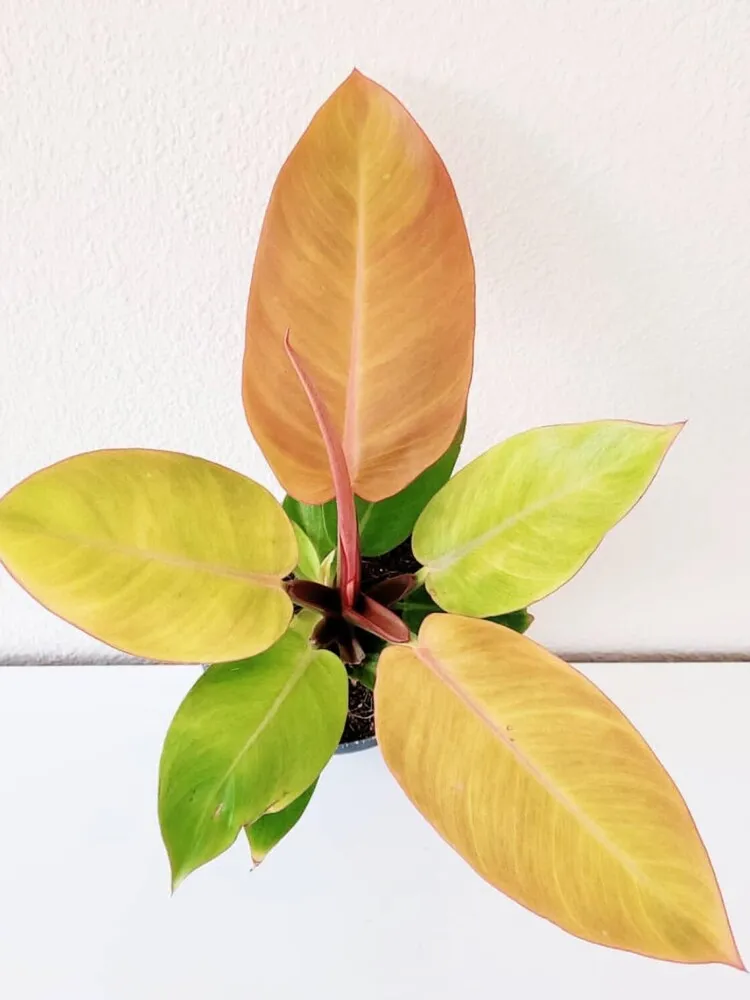
So if only the older leaves are green while the newer ones still come in red, orange, or yellow, that usually isn’t a problem at all. In fact, that pattern is exactly what a healthy plant is supposed to do.
Growth Conditions Affect Color Intensity
Even when the plant is not in very low light, the overall growing conditions still affect how intense the color looks. If the plant is under mild stress — such as weak light, irregular watering, poor root conditions, or sluggish growth — the new leaves may appear less saturated and less dramatic.
In other words, color is not only about genetics. It also reflects how well the plant is growing. A strong, actively growing Prince of Orange usually shows better contrast and richer tones, while a plant that is stalled or slightly stressed often looks flatter and greener overall.
Is Prince of Orange Worth Growing?
I do think Prince of Orange is a good philodendron for beginners. Not because it’s impossible to mess up, but because it tends to grow steadily, adapts well to normal indoor conditions, and usually feels much more stable than many rarer aroids. It gives you interesting color changes without acting overly delicate, which is a big part of its appeal.
That said, it still does best when the basics are right. I wouldn’t keep it in a very dark spot, let it stay bone dry for too long, or grow it in dense, airless soil. But compared with plants that constantly decline for no obvious reason, this one is much easier to read and much easier to enjoy.
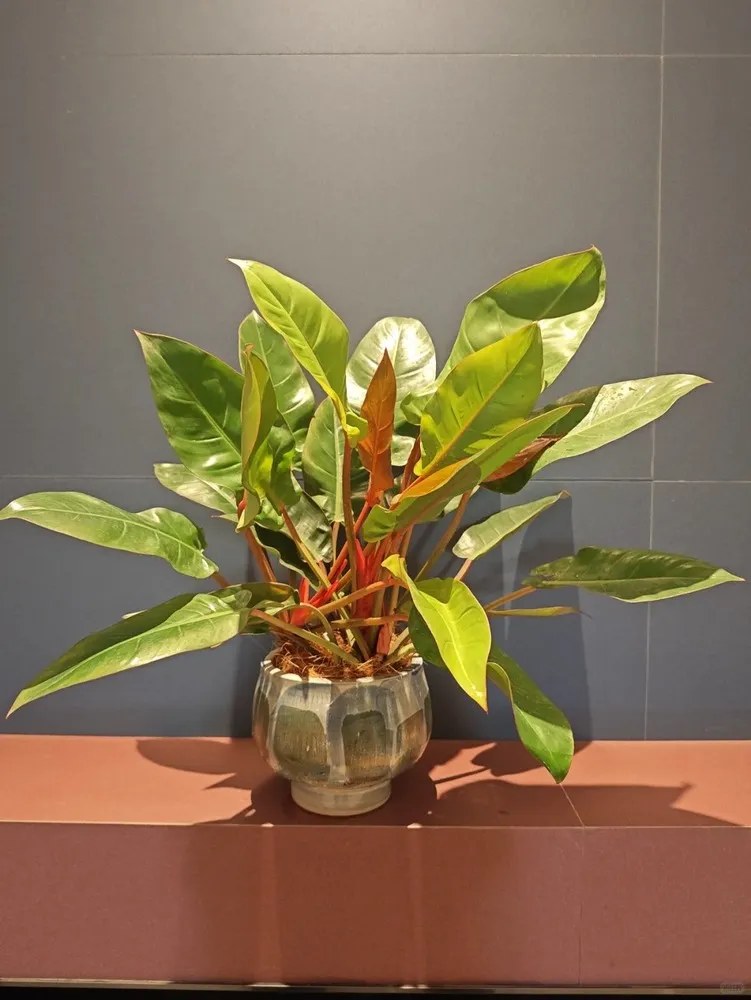
For me, that’s what makes it so worth growing. Prince of Orange is not the rarest philodendron, but it’s one of the most rewarding. It grows fast enough to keep things interesting, the leaf colors change in a way that feels genuinely fun to watch, and it gives a strong sense of progress without demanding too much. If someone wanted a philodendron that looks special but doesn’t feel high-maintenance, this is one I’d gladly recommend.
FAQ
Still exploring philodendron varieties?
If you’re comparing leaf shapes, colors, or growth habits, my main philodendron varieties page is the best place to keep exploring and find similar types side by side.
Go to Varieties Hub →