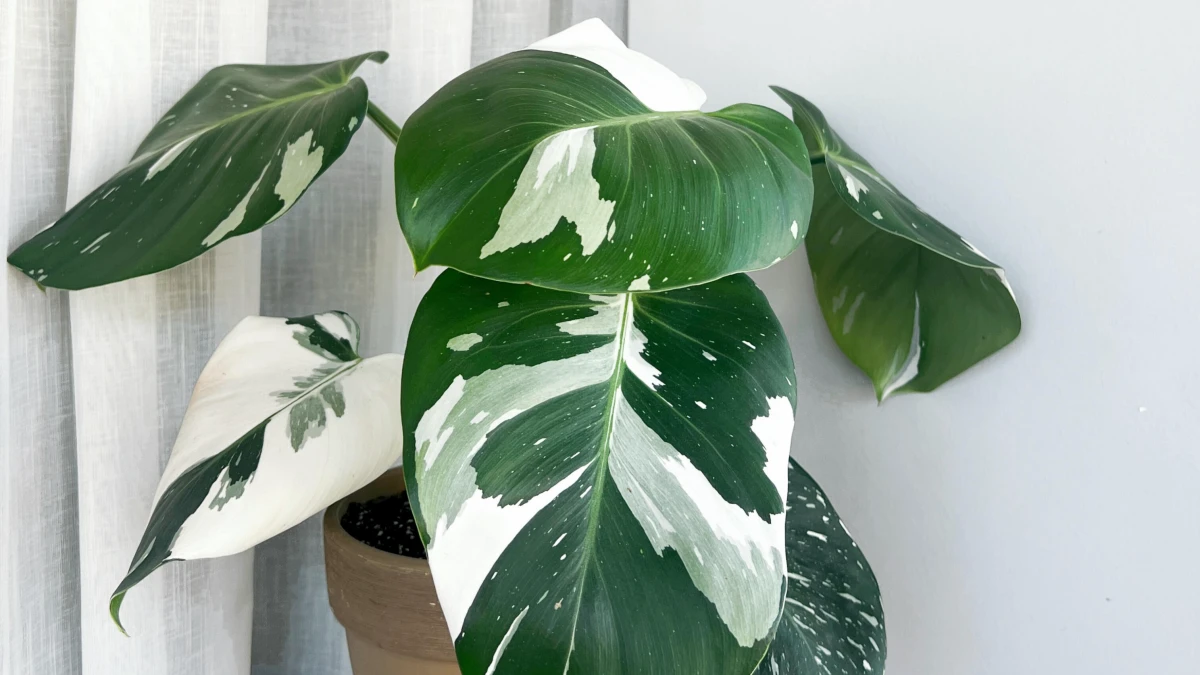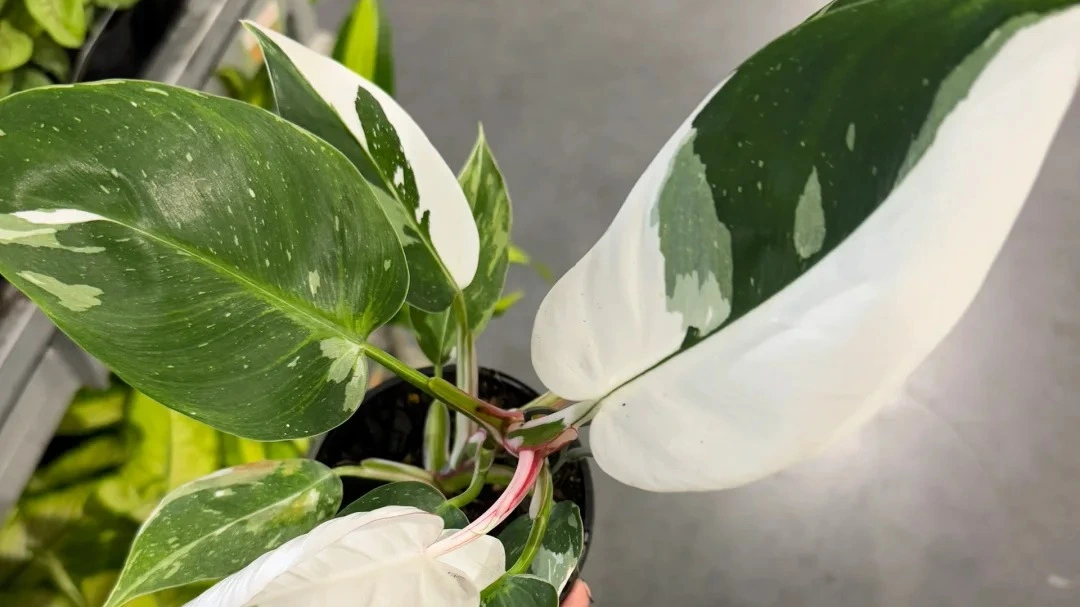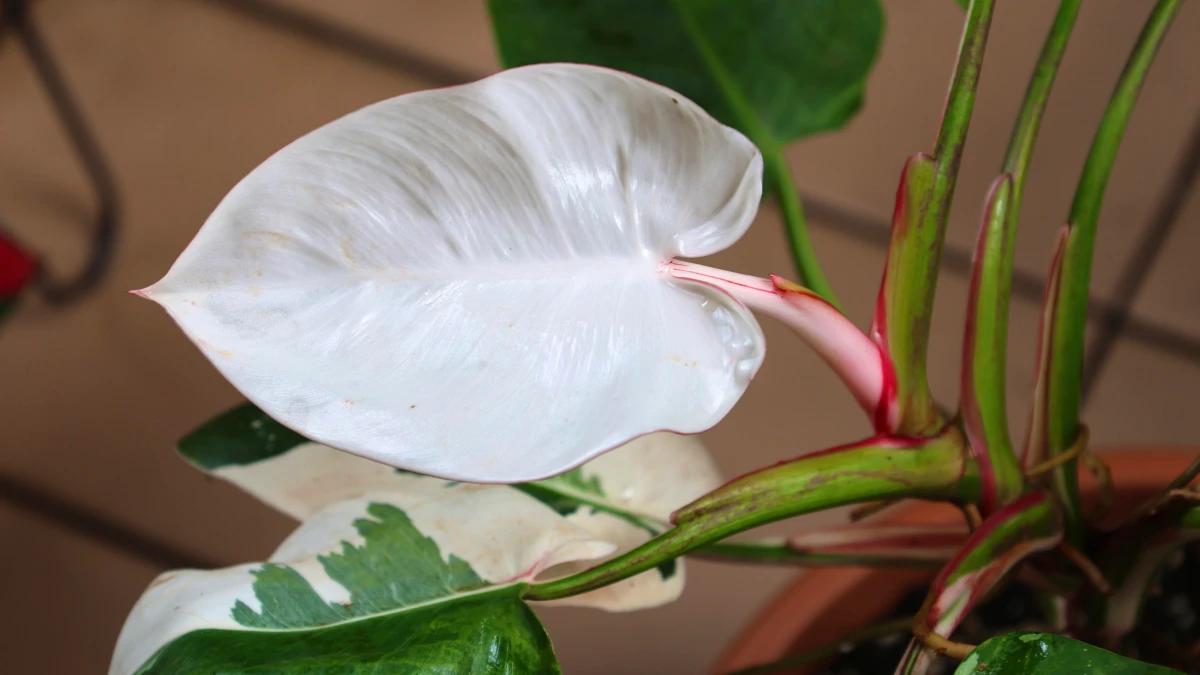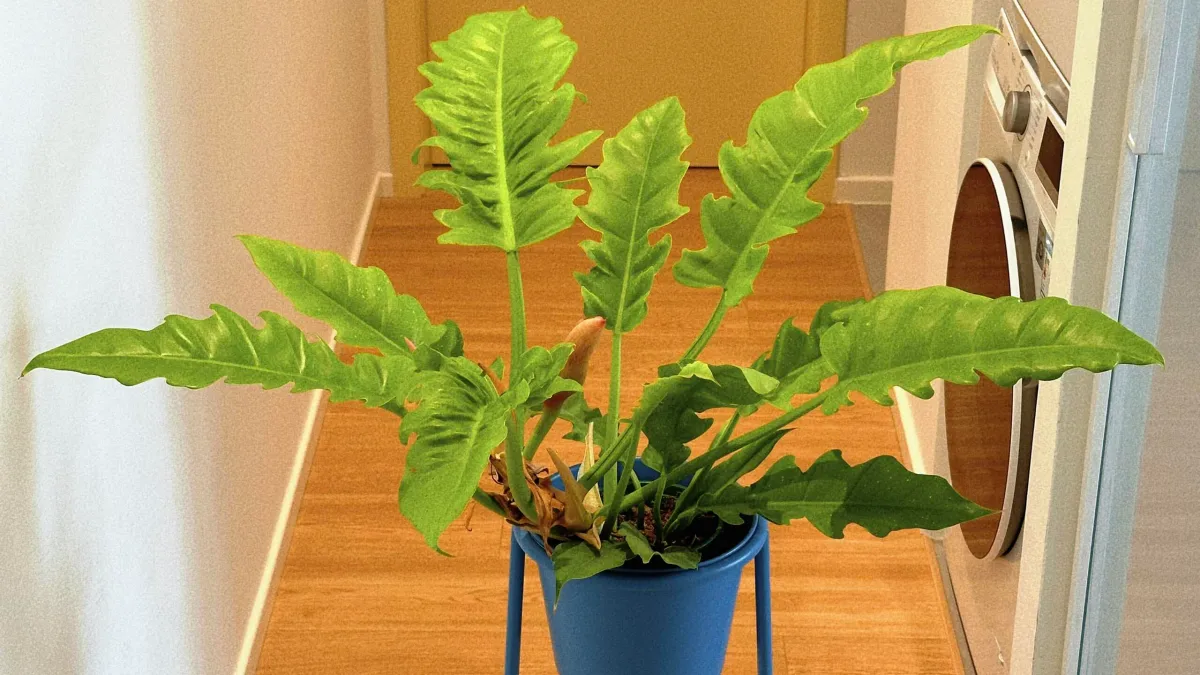
When I first bought Philodendron Birkin, I was completely drawn in by the creamy white stripes. At that stage, the plant looked exactly like the kind of houseplant people fall for online—compact, neat, and full of contrast. The leaves looked almost painted, and I honestly thought it would stay that way as long as I just kept it alive.
But that didn’t last.
After I brought it home, I played it a little too safe with light because it was summer and I was worried about burning the leaves near the window. I kept it about two meters away from the windowsill instead. At first, that seemed harmless. But over time, the new leaves started losing more and more of their striping, and eventually some of them came out almost entirely green.
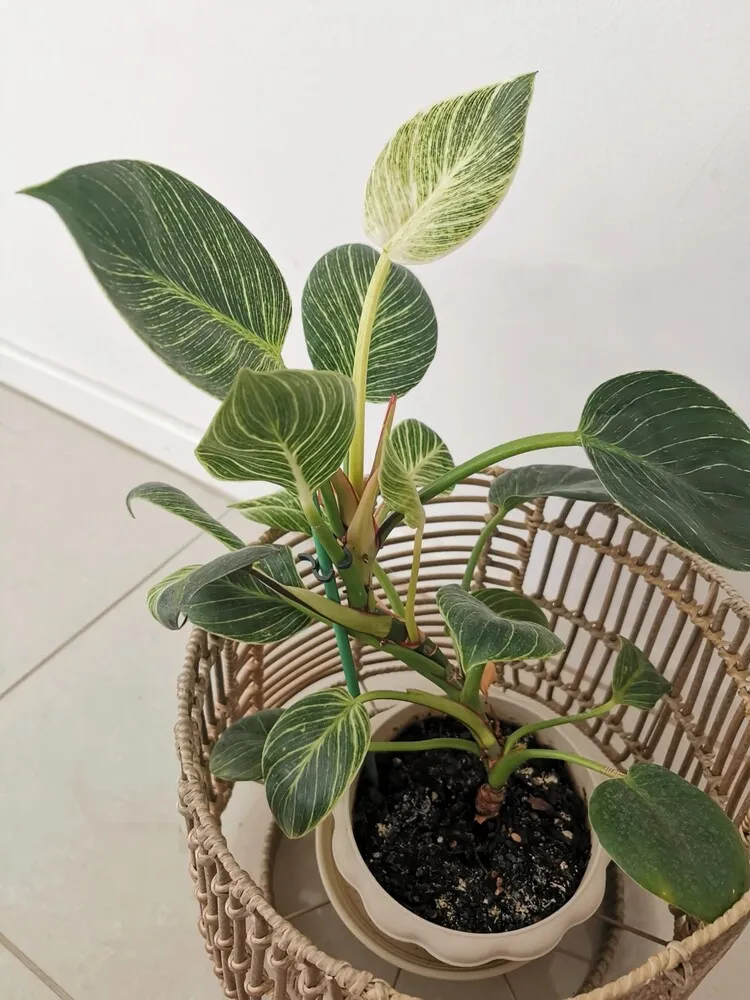
That alone already taught me a lot about how sensitive Birkin’s appearance can be to growing conditions. But the story didn’t end there. About a year later, the plant became more and more awkward in shape, leaning to one side and looking much less attractive overall. Eventually, I reached the point where I no longer wanted to keep it in that form and decided to start over.
Looking back, Birkin turned out to be one of those plants that taught me much more in the messy middle than in the pretty beginning. It is still a beautiful philodendron, but in my experience, it is also one that changes a lot over time.
Why Birkin Doesn’t Always Stay White and Striped
One thing I learned fairly quickly with Philodendron Birkin is that it does not always keep the exact look that made people fall in love with it in the first place. The creamy white pinstripes, compact shape, and strong contrast can all shift over time. In real home conditions, Birkin is often less visually consistent than nursery photos or plant tags make it seem.
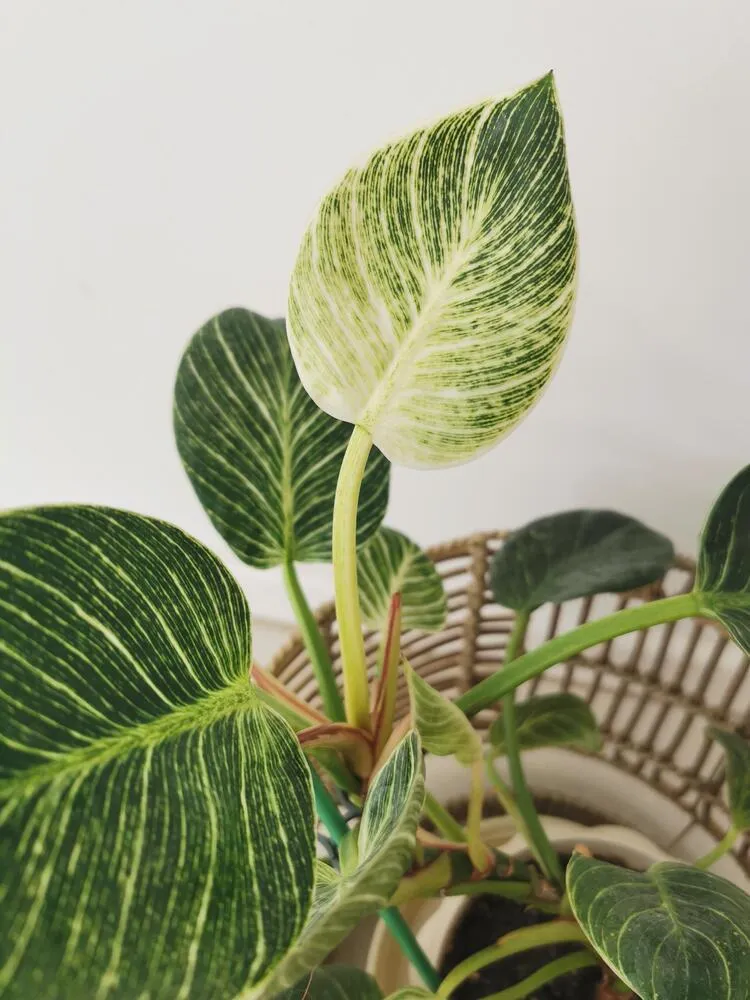
New leaves do not always come out with the same amount of striping, and I do not think that automatically means the plant is failing. Birkin seems to be one of those philodendrons whose appearance responds quite visibly to changing conditions. Light is a major factor, but plant vigor, temperature, and seasonal growth rhythm seem to matter too. For me, growing Birkin became less about expecting every leaf to look perfect and more about learning how much window light actually helps bring the pattern back.
What Happened When I Moved Mine Away From the Window
What surprised me most was that my Philodendron Birkin did not immediately look unhealthy after I moved it away from the window. It kept growing, which made me think the placement was probably fine. But over time, the newer leaves became greener and less defined, and the striped look that had attracted me in the first place slowly started fading.
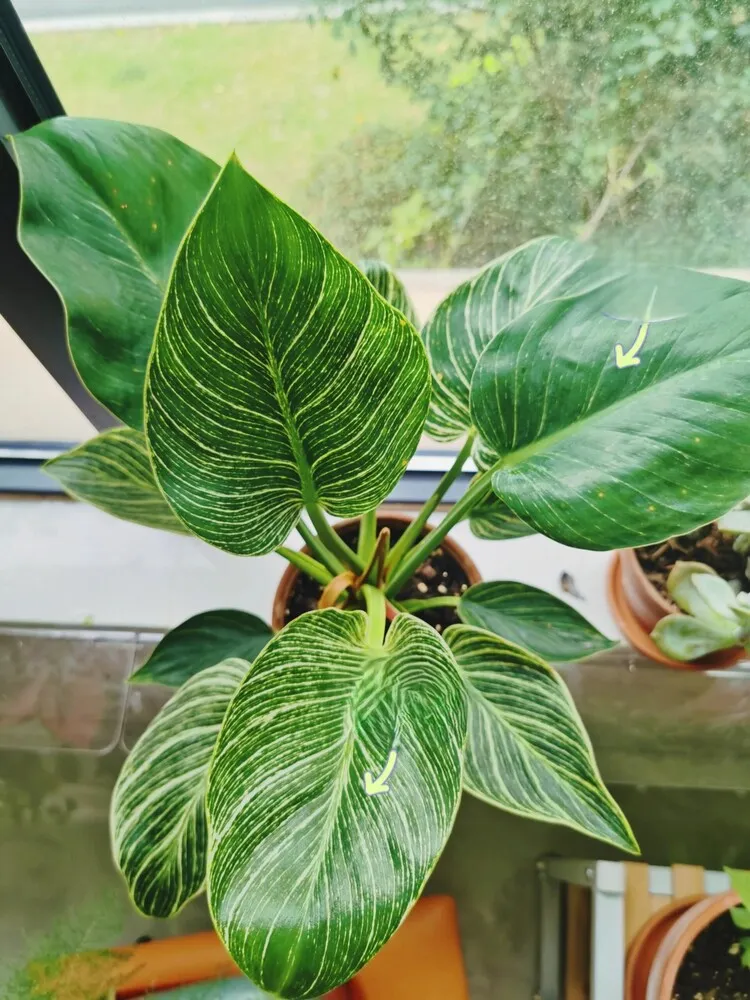
That experience changed how I judge indoor light. A plant does not have to wilt or burn to tell you the placement is wrong. Sometimes the first sign is simply that the foliage starts losing its character. With Birkin, that character is the contrast. Once mine sat too far from the window, that contrast gradually faded.
What Changed After I Gave It More Light Again
Once the hottest part of the weather had passed, I moved my Philodendron Birkin back closer to the window. This time, I was less focused on “protecting” it from light and more focused on giving it the brightness it seemed to be missing. In that spot, it was getting around five hours of sun a day, and the difference showed up gradually in the newer leaves.
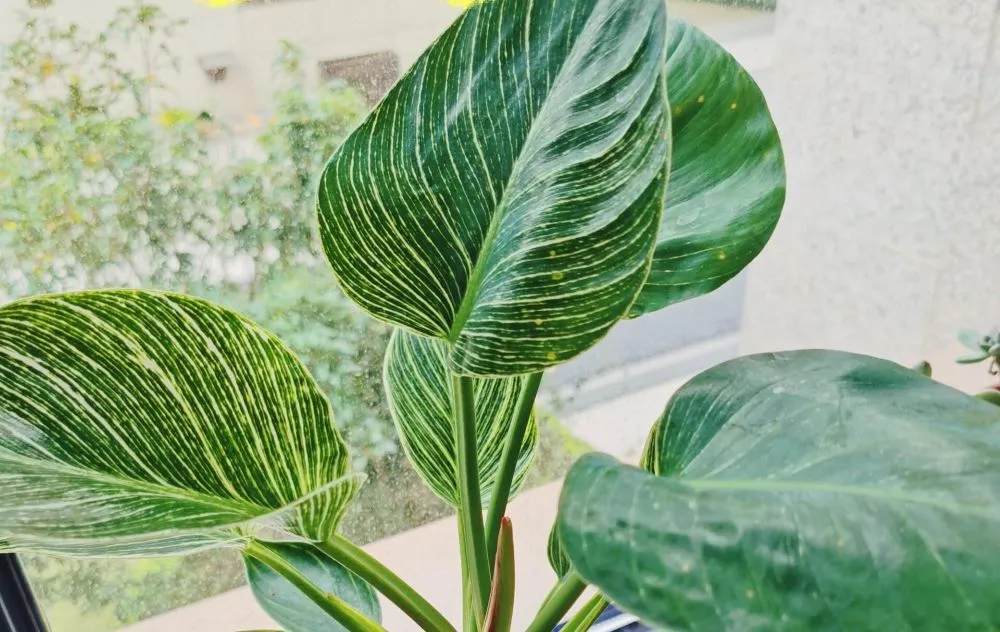
The new growth started looking more like the Birkin I had wanted in the first place. The striping became more visible again, and the plant no longer looked like it was drifting toward plain green foliage. It was not an instant transformation, but the pattern slowly returned in a way that felt much more convincing.
Of course, stronger light also meant the pot dried out faster. I could not treat it the same way I had in the dimmer spot. Instead of following a fixed schedule, I started watering when the pot felt noticeably light. On average, that worked out to about twice a week for me, though it still depended on the weather. That was when I started paying much more attention to the plant’s watering rhythm instead of treating every week the same. I also fed it once a month, which seemed enough to support active growth without pushing it too hard.
Over time, I also started noticing a pattern of my own: cooler weather tended to bring whiter growth, hotter weather pushed it greener, and the best striping seemed to happen when the temperature sat somewhere in between. I would not treat that as a universal rule for every Birkin, but on mine, the pattern felt consistent enough that I still think it is a useful way to read how the plant is responding.
A Year Later, I Cut It Back and Tried Water Propagation
Even after the striping improved again, my Philodendron Birkin still became less attractive over time. About a year later, the biggest problem was no longer the pattern — it was the shape. The plant had started leaning to one side and looked more and more awkward as it grew. At that point, I felt like I had already lost patience with its overall form. Birkin is one of those self-heading philodendrons that does not really behave like a climber, so trying to force it upward was never going to solve the whole problem. I no longer wanted to keep it just because it was technically still alive.
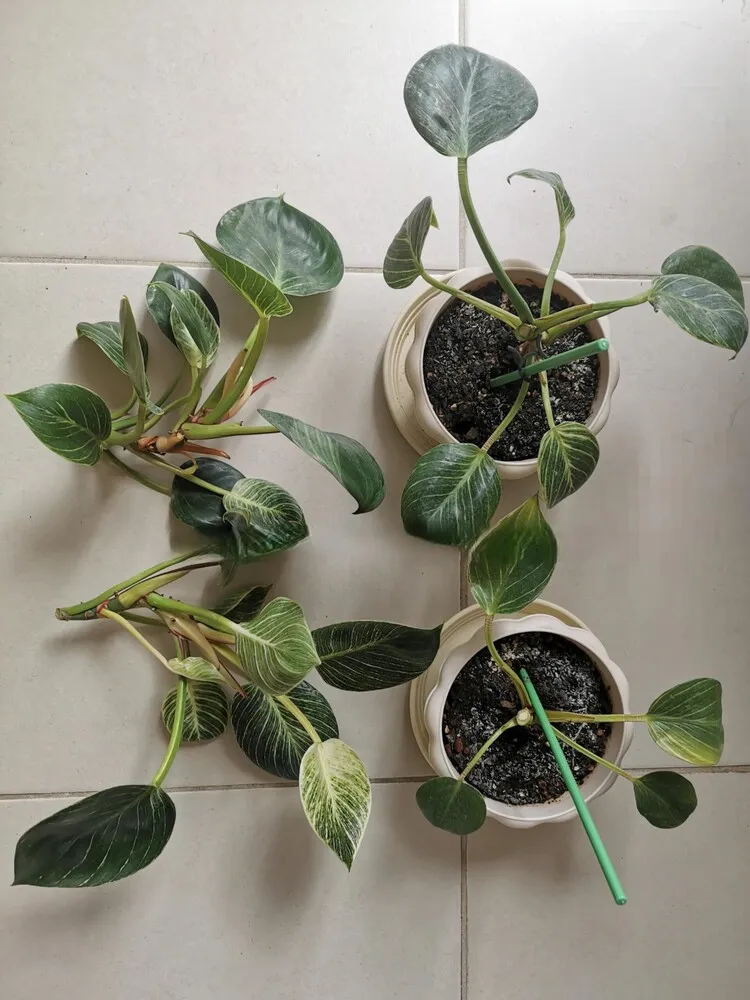
That was when I started looking into propagation. I had seen people on plant forums mention that philodendrons could be cut back and rooted in water, so I decided to try it with my Birkin instead of continuing to tolerate a shape I did not like. Of course, I still made sure the cuttings had viable nodes, so I was not treating it like a guaranteed success. Honestly, it still felt a little like an experiment, and I was fully prepared for at least some of the cuttings to fail.
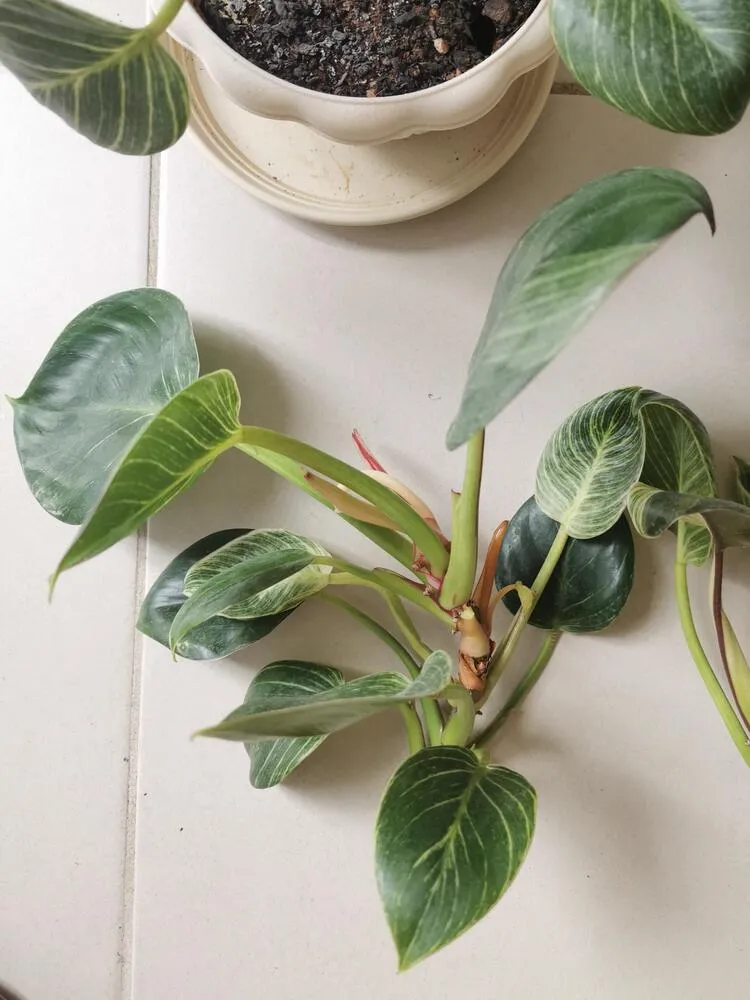
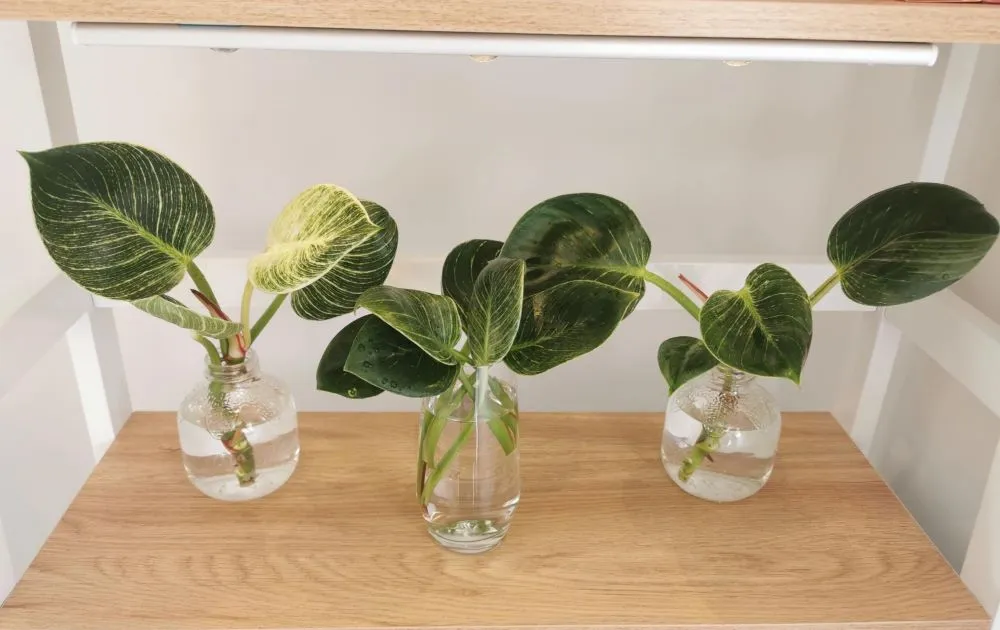
But to my surprise, the freshly cut Philodendron Birkin really did start pushing new growth in water. I made three separate water-propagation setups, and in the end, all three survived. That was the moment when I stopped seeing the plant as something that had simply become ugly and started seeing it as something I could reset.
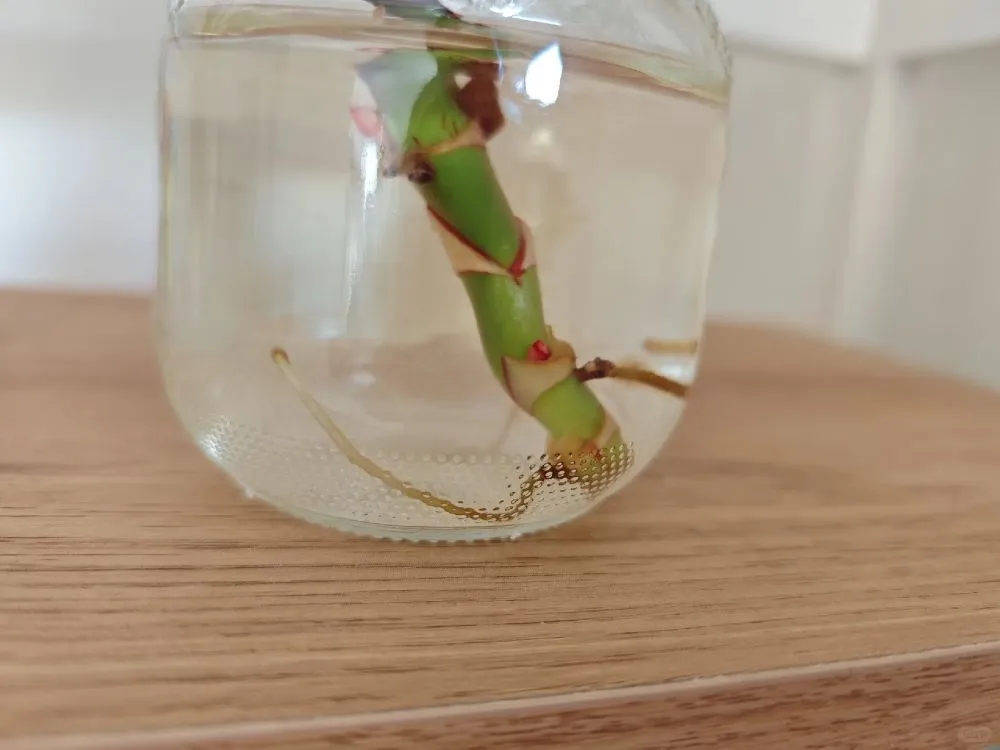
Even the smaller single leaves did not go to waste. I used them for pressed-leaf decoration, which made the whole process feel less like throwing the plant away and more like reusing every part of it in a different form. Looking back, cutting it back was probably the best decision I made with this plant. It gave me a second chance to enjoy Birkin again, instead of just feeling annoyed every time I looked at the old leaning stem.
What My Birkin Taught Me About Light, Pattern, and Starting Over
Looking back, Philodendron Birkin taught me that a plant can stay alive and still slowly lose the qualities you bought it for. With Birkin, light made a bigger difference than I expected, not just for growth, but for keeping the striped pattern that gives the plant its character. The changes were not completely random. In my case, the plant really did respond to shifts in light, temperature, and growing conditions.
It also taught me that not every disappointing plant needs to be thrown away. When mine became awkward and unattractive, cutting it back and starting over turned out to be far more satisfying than forcing myself to keep a shape I no longer liked. For me, Birkin ended up being less about perfection and more about learning when to adjust, when to wait, and when to start over.
FAQ
Still exploring philodendron varieties?
If you’re comparing leaf shapes, colors, or growth habits, my main philodendron varieties page is the best place to keep exploring and find similar types side by side.
Go to Varieties Hub →